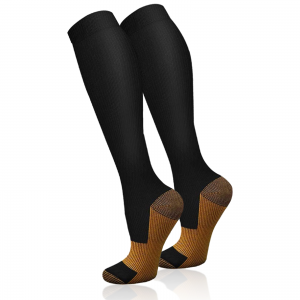
Calf Support Leg Compression Sleeves

£9.99

  • What they are
    FootReviver medium‑compression calf support leg sleeves for men and women, running from the mid‑foot and arch up to just below the knee, with an open‑toe design and a sports‑sock‑thickness knit that fits into most everyday shoes and trainers.
  • Sizes and fit
    Available in multiple adult sizes (such as Medium, Large and Extra Large) to match different calf and foot measurements. The fit should feel snug and even from foot to upper calf – firm, but not painful, and without numbness or colour change.
  • Who they’re designed for
    Adults who often have:

    • Tired, heavy or aching calves, shins and feet.
    • Mild to moderate vein‑related heaviness or swelling.
    • Shin splints‑type pain along the front or inner shin.
    • Achilles or back‑of‑heel discomfort.
    • Tired legs from long work shifts on their feet.
    • Calf and foot fatigue during and after running or sport.
    • Swelling and tightness around the ankles after long journeys.
      Medium compression should only be used if a clinician is happy with this level when there are conditions such as diabetes, neuropathy or previous circulation issues.
  • How they help your circulation
    Graduated compression is firmer around the foot and ankle and gentler towards the upper calf. This supports the veins and small drainage vessels exactly where pressure and pooling are usually worst, helping blood and fluid move back up the leg and making ankle swelling and end‑of‑day heaviness easier to manage for many people.
  • How they support muscles and tendons
    Mapped ribbed bands over the shin muscles, calf and Achilles gently hold these structures, reducing shake and repeated strain at key points such as the shin bone lining (often involved in shin splints) and the Achilles tendon. This can make walking, standing and running feel more controlled and less tiring.
  • How they support your heel, arch and ankle
    Reinforced zones under the heel, around the ankle and along the arch give a firmer base inside your footwear. This helps spread impact across the plantar fascia and forefoot, steadies the ankle joint and can ease heel, arch and mid‑foot soreness on hard floors, hills and longer walks or runs.
  • Made to stay comfortable all day
    The breathable, moisture‑wicking knit and flat‑finished seams help keep your lower legs drier and reduce rubbing. Silicone cuffs at the top and near the open toe help the sleeves stay smooth and in place without cutting in, so the compression pattern and support stay where they should through work shifts, exercise and travel.
  • Who should be careful or seek advice first
    These FootReviver sleeves are not a substitute for stronger, prescribed compression in serious vein or lymph problems, and they are not for use during pregnancy. If you have a history of deep vein thrombosis, severe varicose veins with skin changes, leg ulcers, significant heart or kidney disease, complex oedema, serious circulation problems or moderate to severe neuropathy, speak to your GP, physiotherapist, podiatrist or other clinician before using any compression sleeve.
  • How to get started
    Measure your calf and choose the FootReviver size that matches. Put the sleeves on earlier in the day, build up wear time gradually, and check your skin and how your legs feel. If you are generally healthy and your symptoms match those described, trying these sleeves for a short period is usually reasonable. If you are unsure or have more complex medical conditions, it is sensible to talk it through with a clinician before you start.
Clear

Targeted relief for tired, aching calves, shins and feet

If your calves, shins or feet often feel sore, heavy or swollen, it makes sense to look for something that eases that. The FootReviver Calf Support Leg Compression Sleeves are medium‑compression sleeves that cover the mid‑foot and arch, ankle and calf up to just below the knee, with an open‑toe finish. They are for adults and are made to give your lower leg firm, steady support without feeling uncomfortably tight.

Medium compression here means a snug, even pressure most adults can wear through a working day, a run or a long journey. It is a moderate level, not the very strong medical‑grade compression sometimes prescribed for severe circulation or lymph problems. With the right size, the sleeves should feel supportive but not painful. They should not cause numbness, pins and needles or changes in skin colour.

The knit is about as thick as a good sports sock. That gives more substance than a thin stocking, so the fabric does not quickly go loose and your legs feel well contained, but it is still slim enough to fit into normal shoes and trainers. This FootReviver design includes:

  • Graduated compression from foot to upper calf.
  • Extra support around the heel, ankle and arch.
  • Ribbed bands along the shin, calf and Achilles.
  • Silicone cuffs at the top and near the open toe.

These firmer zones are placed over areas physiotherapists and podiatrists often support with taping or strapping – the shin muscles, calf, Achilles and arch – so the sleeve works in line with how these structures are usually supported in practice.

For the mild to moderate end of problems described on this page, a medium level of compression is usually a better balance between support and comfort than stronger grades that are difficult to tolerate for long periods.

What you might feel in your lower legs and feet

By the end of the day, many people notice their lower legs and feet feel very different from how they did in the morning.

You might recognise:

  • An ache or sharp soreness down the front or inner edge of the shin when you walk briskly or run, often more noticeable on hard surfaces or after a recent increase in training.
  • A burning or cramping feeling in the calves after standing or walking for a long time, especially on firm floors.
  • A dragging, heavy sensation in the lower legs by evening, with ankles that look puffy and small surface veins that seem more obvious.
  • Soreness at the back of the heel, just above where the shoe sits, especially when walking uphill, going up stairs or taking the first few steps after sitting.
  • Aching across the arch or ball of the foot, particularly in less supportive footwear or on hard ground.

For some, these problems appear mainly during or after activity – longer walks, runs, gym sessions or sport. For others, they are linked to long shifts on their feet or to hours of sitting on journeys. Conditions such as varicose veins, diabetes, neuropathy or oedema can make the legs more prone to swelling, altered sensation or discomfort, so that even ordinary days feel demanding on the lower legs and feet.

Why your lower legs can feel sore, heavy or swollen

Several structures in the lower leg and foot are under constant load:

  • Calf muscles at the back of the leg (gastrocnemius and soleus), which help you push off the ground.
  • Smaller muscles along the front and sides of the shin, which lift and control the foot as it lands.
  • The Achilles tendon, which links the calf to the heel bone and carries large forces with each push‑off.
  • The plantar fascia and small joints in the foot, which help support the arch and share impact.
  • Veins and small drainage vessels, which have to move blood and fluid upwards against gravity.

Pain often called “shin splints” usually involves the muscles on the front and inner side of the shin. They lift the foot and slow it as the heel and forefoot land. If you suddenly increase how far, how fast or how often you run or walk, especially on hard surfaces, these muscles can be asked to do more than they can easily cope with. The fine attachments where they join the lining of the shin bone (periosteum) become irritated. In milder cases, the problem is mainly in the muscles and bone covering. In more severe cases, the bone itself can become stressed, which is why very sharp, pinpoint shin pain that lingers needs checking.

At the back of the leg, the calf and Achilles tendon handle powerful push‑off forces. Walking uphill, going up stairs, running and jumping all increase the pull through the tendon. If the calf is tight, weaker than needed, or not given enough time to adapt to new loads, the tendon and the tissues around it can become sore. The mid‑portion of the Achilles has a fairly limited blood supply, which is one reason it can be slow to settle once irritated.

Veins in the lower legs carry blood back towards the heart. Small one‑way valves help stop blood slipping back, and the “muscle pump” of the calf and foot – the squeezing effect when these muscles contract and relax as the ankle moves – pushes blood upwards. When you walk, that pump is active. When you stand mostly still, or sit for long periods with bent knees and hardly any ankle movement, it is much less active. Gravity then draws blood and fluid downwards, so they collect around the ankles and calves.

This pooling raises pressure in the veins and nearby tissues. Fluid can seep into the surrounding tissues, leading to swelling (oedema). The legs may feel tight, heavy and uncomfortable. In people with varicose veins, previous clots, heart or kidney problems, or lymphatic conditions, the veins or drainage systems already have less reserve, so these effects are often stronger.

Diabetes and neuropathy affect the nerves, skin and small blood vessels in the feet and legs. That can change how pain and pressure are felt, how well the skin heals, and how the tissues cope with being loaded. This makes it especially important to handle support and compression thoughtfully.

When you change how these forces and fluids act on your leg, symptoms can feel different. That is where a well‑designed compression sleeve can be useful.

How compression and support change what’s happening

A compression sleeve changes two key things:

  • How blood and fluid move in and out of the lower leg.
  • How much the muscles and soft tissues move with each step or while standing.

Graduated compression means the sleeve squeezes more firmly around the foot and ankle and a little less as it goes up the calf. This pattern helps the veins and drainage vessels carry blood and fluid back towards the body. A firm, even squeeze around the ankle and lower calf supports the vein walls so they are less able to expand under pressure. That makes it harder for fluid to collect in the tissues and can reduce end‑of‑day swelling and heaviness for many people. It also works alongside the calf muscle pump: when the calf contracts under a sleeve, the extra external pressure helps push blood and fluid upwards.

Because the sleeve wraps the whole calf and shin, it also affects how the muscles experience repeated load. Each time the foot hits the ground, the muscles and soft tissues shake slightly. Over many steps, that small but constant movement can add to fatigue and to strain at the points where muscle fibres attach to tendons and bone. A well‑fitted sleeve gently squeezes the bulk of the calf muscles and the shin muscles, so they move and shake less. That can make walking, running or standing for longer periods feel more controlled and may delay the point at which the legs feel tired and sore.

Compression around the ankle and arch can give gentle support to the plantar fascia (the strong band under the arch) and to the joints in the mid‑foot and forefoot. On hard floors or during long walks and runs, these areas often ache first. A snug wrap under the arch and around the heel helps the foot keep its shape and spreads pressure more evenly under the heel and the ball of the foot, which can reduce hot spots of soreness.

FootReviver sleeves do not apply the same pressure everywhere. Ribbed bands and denser sections run along the shin, around the calf and Achilles, and around the heel, ankle and arch. These firmer zones line up with structures clinicians often aim to support with taping. By giving a little more hold here, the sleeve supports the leg where it tends to need it most, rather than simply squeezing equally in all directions.

Who FootReviver sleeves are most likely to help

FootReviver Calf Support Leg Compression Sleeves are often chosen by adults who:

  • Spend long stretches on their feet, so their calf and foot muscles are working for hours and their veins are constantly dealing with gravity.
  • Run, play sport or do other impact exercise that puts repeated strain through the calf muscles, shin muscles, Achilles tendon and plantar fascia.
  • Notice that their lower legs feel heavy or swollen by the evening, usually easing overnight, suggesting the veins and tissues are under pressure through the day.
  • Have discomfort linked with milder varicose vein patterns, such as aching and fullness in the calves.
  • Find that their calves tire quickly when walking or standing and would like extra containment around the muscles.
  • Have certain nerve‑related symptoms in the lower legs and feet, and have been advised by a clinician that medium compression is safe for them, so are looking for support that helps both comfort and circulation.

To see how this fits real‑world problems, it helps to look more closely at how the sleeves work on your leg and foot, and then at some specific situations where people commonly use them.

How FootReviver compression sleeves work on your lower leg

FootReviver sleeves feel closer to a firm sports garment than to a thin stocking. The fabric is about as thick as a typical sports sock and is knitted with zones of different firmness to match common problem areas in the lower leg: the shin muscles, bulk of the calf, Achilles tendon, ankle joint, heel and arch.

Graduated compression runs from the mid‑foot up to just below the knee. Around that, ribbed bands and reinforced areas are placed to give extra hold where it makes most difference. Silicone strips at the top of the sleeve and around the open‑toe border help keep it in place. The knit tends to keep its stretch under repeated use, so the support does not quickly fade after a few washes.

In developing this design, FootReviver has mapped the firmer zones to match where clinicians routinely support the lower leg – along the shin muscles, over the main bulk of the calf, around the Achilles area, and under the heel and arch – rather than simply applying even pressure from ankle to knee.

Medium, graduated compression from foot to just below the knee

FootReviver sleeves are made to squeeze more firmly at the foot and ankle and more gently higher up the calf.

This supports blood and fluid moving back up your leg. The ankle and lower calf are where pressures are highest and swelling tends to collect. By giving these regions the most support, and easing off as you go upwards, the sleeve supports your veins and small drainage vessels without creating a tight band near the knee.

For many adults, wearing the sleeves in appropriate situations can mean:

  • Less fluid pooling around the ankle.
  • Calves that feel less heavy or “full” by evening.
  • A sense that the legs are being gently held rather than dragged down.

The fit should feel firm from foot to upper calf but not painful. The sleeve should not dig in, cause pins and needles or leave grooves that take a long time to fade. It should lie smooth against the skin, without folds or rolled edges. If it is very hard to pull on, or you notice numbness or colour change while wearing it, it may be the wrong size or not suitable for you and should be removed.

Because the compression is a moderate level, these sleeves can be used across work days, exercise and travel. They are not a direct replacement for stronger stockings prescribed by a clinician.

Foot coverage with open‑toe design

The sleeve covers the mid‑foot and arch but leaves the toes free. The area around the arch and just behind the ball of the foot often aches on hard floors or after long walks. A close wrap here supports the plantar fascia and the joints in the front of the foot, helping them share load more evenly and reducing the sense that the mid‑foot is collapsing or working too hard.

Leaving the toes open allows:

  • Normal toe movement inside your shoes.
  • Quick checks of toe colour and skin, which matters if you have circulation or nerve problems.
  • The option to wear an ordinary sock over the top without bunching at the toes.

This means you can wear the sleeves in most normal shoes without feeling cramped, while still being able to see and feel how your toes are doing.

Reinforced zones around the heel, ankle and arch

The knit is thicker and firmer around the heel, ankle and arch. These relatively small areas carry a lot of load.

At the heel, every step brings impact through the heel bone and its cushioning fat pad. Repeated loading, especially on firm ground, can irritate the underside of the heel and the points where the plantar fascia and Achilles attach. A denser knit over and around the heel spreads this impact across a larger area of the covered foot, so no single patch of tissue has to absorb it all.

At the ankle, several ligaments and the joint capsule keep the joint steady, particularly on uneven ground or when you are tired. A snug wrap here helps the ankle feel more secure and can gently resist excessive rolling inwards or outwards. That extra support and awareness can be useful if you feel your ankles are prone to giving way or if you stand for long periods and are making constant small balance corrections.

Under and around the arch, reinforced zones give the mid‑foot a firmer base. When you stand for a long time or walk a lot, the tissues under the arch and the joints at the front of the foot can start to feel as if they are burning or dropping. Extra structure here can take some of that strain and make standing or walking on hard surfaces feel less punishing on the feet.

This combination of heel, ankle and arch panels in one sleeve is specific to this FootReviver design. It creates a more supportive base inside your footwear so that the shin, calf and Achilles are not being pulled around as much from below.

Different knit patterns and ribbed zones through shin, Achilles and calf

The fabric around the shin, calf and Achilles includes ribbed bands and changes in knit pattern that follow the main muscle and tendon groups.

Over the front and inner side of the shin, ribbed lines track the muscles that lift and control the foot as it lands, such as tibialis anterior. By gripping these muscles a little more firmly, the sleeve reduces how much they move side to side and how much they shake with each step. That can ease the repeated small pulls where they attach to the lining of the shin bone – the same area described earlier in relation to shin splints‑type pain.

Around the back of the leg, ribbing follows the outline of the calf muscles and Achilles tendon. As your calf contracts and relaxes, this close contact helps the sleeve stay in step with the moving muscle and tendon. It reduces some of the up‑and‑down bounce in the calf muscles and helps the sleeve resist twisting or sliding. Over time, that may ease calf fatigue and reduce some of the extra strain that reaches the Achilles when the calf is tired.

By shaping the knit in this way, the sleeve can support areas that often need more control and support, such as the shin muscles, calf and Achilles, rather than squeezing the whole lower leg in exactly the same way.

Silicone anti‑slip cuffs at the top and toe borders

The top cuff and the border near the open toe have small silicone strips on the inside. These create gentle grip against the skin so that the sleeve is much less likely to slip down or roll at the edges.

This matters for comfort and for how the compression works. A sleeve that creeps down or forms tight rolls can rub and dig into the skin. It also moves the firmer part of the sleeve away from the ankle and lower calf, where most support is needed, and can leave an uncomfortable band of pressure higher up.

By helping the fabric stay smooth and in place, the silicone strips support a more reliable compression pattern from foot to upper calf. The silicone is used with a stretchy but not overly tight cuff, so the aim is to hold the sleeve in place without cutting into the leg.

Breathable, moisture‑wicking knitted fabric with all‑day heat control

The knit, similar in thickness to a sports sock, allows air to move through the fabric and draws sweat away from the skin. Moisture is spread through the fabric so it can evaporate more easily rather than sitting in damp patches against your leg.

This is important when you are standing, travelling or exercising for long periods. Warmth and moisture can make vein‑related symptoms feel worse because heat encourages veins to widen, and damp skin is more prone to rubbing and irritation. A fabric that lets heat escape and manages sweat can make it more comfortable to wear the sleeves for the time you need them.

Antibacterial treatment helps reduce odour from sweat, which is helpful if the sleeves are worn most days.

Seam placement, smoothness and compatibility with footwear

Seams in FootReviver sleeves are placed and finished to reduce rubbing over bony areas such as the front of the shin and the inner and outer ankle bones. Flatter seams and a smoother inside surface lower the risk of small pressure points and friction. This is particularly important if you have more fragile skin or reduced feeling in your feet and lower legs.

Because the sleeves are about as thick as a sports sock, they can usually be worn inside everyday shoes and trainers. Some people wear them on their own; others prefer a light sock over the top. The open‑toe design and shaped foot section help avoid bunching of fabric at the toes or under the ball of the foot, which could otherwise cause discomfort in closer‑fitting footwear.

Close‑fitting, easy‑on design, sizing and durability

FootReviver sleeves are meant to feel close‑fitting without being a struggle to get on. The knit has enough stretch to let you work the sleeve gently up over the foot, ankle and calf, then return to a firm fit once in place.

Several sizes are available so that people with different calf and foot measurements can achieve an appropriate level of compression. Once on, the sleeve should feel snug and even from foot to just below the knee. It should not feel as if it is cutting in at the top or bottom. You should not develop numbness or sharp tingling. If you do, the size or style may not be right for you.

The knit and silicone cuffs are intended to hold their shape over repeated washing and wearing, so that the level of support stays useful for longer. Over time all elastic fabrics loosen, and as that happens they give less compression. When a sleeve starts to feel very easy to pull on and no longer feels firmly supportive, it is likely not giving its intended effect.

Following the care instructions – for example, using gentle washes and avoiding very high heat – helps maintain the elasticity of the knit and the way the sleeve fits and supports your leg.

How FootReviver sleeves fit into work, sport and travel

Whether you wear these sleeves at work, for sport or on journeys, the main aim is the same: to give the lower leg a steady, comfortable wrap when it is under more strain.

At work, if you spend most of the day on your feet, the combination of calf and shin support, reinforced heel, ankle and arch, and medium compression can help reduce the heavy, swollen feeling in the calves and ankles by the end of a shift. On hard floors, extra structure under the heel and arch helps spread pressure, which can reduce foot ache.

During running and sport, the sleeves help dampen some of the shaking in the calf and shin muscles and support the heel, ankle and arch through repeated landings and push‑offs. Some people notice their calves feel less tight and their feet less sore after longer sessions when using this type of support.

On long journeys, the firm but gentle squeeze around the ankle and calf supports the veins and helps limit ankle swelling that often builds up when you are sitting still. The breathable knit and open‑toe design make it easier to wear the sleeves for hours at a time, and the silicone cuffs help keep them in place as you shift position or walk short distances.

Because they fit into normal footwear and can be worn either alone or with socks, you can move between work, exercise and travel without changing the type of support you are using.

How FootReviver sleeves relate to common problems

The issues described so far do not look exactly the same in everyone. The sections below focus on common situations – shin splints, Achilles pain, vein‑related heaviness, tired legs from standing, sport‑related fatigue, travel swelling, neuropathy‑linked symptoms and oedema – and explain what tends to be happening in the tissues, how FootReviver sleeves may help, and when extra care or further advice is important.

Shin splints and pain along the front of the lower leg

Pain along the front of the shin is a common reason people look for extra support around the lower leg. It often shows up as an ache or sharp soreness down the inside or front of the shin when you walk briskly or run, and it tends to build the longer you stay on your feet.

This pattern is often called “shin splints”. The muscles along the front and inner side of the shin lift your foot and slow it as your heel and forefoot land. Each time your heel hits the ground, these muscles pull at the places where they attach to the lining of the shin bone (periosteum). If you suddenly increase how far, how fast or how often you run or walk, especially on hard surfaces, these pull forces can be more than the tissues can easily cope with.

The pain is usually felt:

  • Along the inner border of the shin bone, or
  • Across the front of the lower leg a short distance above the ankle.

It may ease once you have been moving for a while, then build again as the muscles tire. Pressing along the shin can feel tender, and hopping or running can make the pain flare. In many cases, the problem is mainly in the muscles and the bone covering. If the overload continues, the shin bone itself can become stressed. In that situation, pain is often sharper, very focused in a small area and may be present even at rest.

Why this tends to hurt in this way

With each step, impact and the pulling action of the front‑of‑shin muscles are transmitted through their attachments into the periosteum. When training loads outpace the tissue’s ability to adapt, this repeated traction and impact irritate that muscle–bone junction and, in more severe cases, the bone itself. That irritation is what you feel as the nagging, sometimes sharp pain along the shin.

How FootReviver sleeves may help here

In shin splints‑type problems, FootReviver sleeves are trying to:

  • Reduce how much the front‑of‑shin muscles move and shake with each step.
  • Limit the repeated small pulls where they attach to the shin bone lining.
  • Steady the way the foot and ankle land, so less twisting and strain travel up into the shin.

The ribbed zones and slightly firmer knit over the front and inner shin in FootReviver sleeves run along the main muscles involved, such as tibialis anterior. By holding them more closely, the sleeve reduces side‑to‑side movement and shaking within the muscle. That can reduce repeated tugs at the sore area where muscle blends into the periosteum described earlier.

The overall medium compression around the lower leg also helps the shin muscles stay more contained as they work, and may delay fatigue, especially later in a run or long walk. The reinforced ankle and arch zones help the foot land in a more controlled way, reducing excessive rolling and twisting at the ankle that would otherwise put extra strain into the shin region.

People with shin splints‑type pain often wear FootReviver sleeves during runs or brisk walks (especially on firm surfaces), on hilly routes where the front‑of‑shin muscles work harder, and for a period after activity to help with post‑exercise ache and swelling.

The silicone cuffs and thicker knit help keep the shin‑support area in place over the painful region, rather than sliding down as you move.

When to be cautious and talk to a clinician

FootReviver sleeves can make symptoms feel easier to cope with, but they are not treatment on their own. It is still important to consider:

  • How quickly you are building up your distance or speed.
  • Your footwear and the surfaces you train on.
  • Strength and control in your calf, shin and hip muscles.

Get your leg checked if you notice:

  • Very sharp, pinpoint pain in a small part of the shin bone.
  • Pain that is present even at rest or at night.
  • Pain that is worsening despite easing off training.

These can be signs that the bone itself is under too much stress. In that situation, rest and medical advice are more important than extra support. For more typical shin splints‑type irritation, FootReviver compression sleeves can be a helpful part of how you manage symptoms while you adjust training and work on strength and control.

Achilles tendon pain and tightness at the back of the heel

If you wake up with stiffness at the back of your heel that eases as you get going, or you notice pain there on hills, stairs or during runs, this pattern may be familiar.

Achilles discomfort often reflects irritation of the tendon. The Achilles is the strong cord that links your calf muscles to your heel bone. Each time you push off, large forces pass through it. If you increase your activity – by adding more hills, speed work or distance – or if your calf is tight or weaker than needed, the tendon can be asked to cope with more load than it is ready for.

The discomfort is usually felt:

  • A few centimetres above the heel in the tendon itself, or
  • Right at the back of the heel bone where the tendon joins it.

It can feel stiff and sore when you first move, ease a little as you warm up, then turn into a dull ache as you carry on. There may be some swelling or a small, tender lump along the tendon.

What is going on inside the leg here

The Achilles tendon has to transmit force between the calf muscles and the heel bone with every step. When loads increase too quickly, or when the calf is not strong or flexible enough for what you are asking it to do, the tendon can be strained repeatedly at the same points. In the mid‑portion, where blood supply is more limited, this strain can set up irritation and structural change that take time to settle. At the insertion into the heel bone, repeated pull and local compression can irritate the attachment and the small bursa between tendon and bone.

How FootReviver sleeves may help here

For Achilles‑type problems, FootReviver sleeves are trying to:

  • Give the tendon and its surrounding tissues a steady, supportive cradle.
  • Reduce small sideways and up‑and‑down movements in the tendon and calf with each step.
  • Support the calf muscles so they do not pass as much strain down to the tendon when they are tired.

The reinforced knit around the heel and ankle in FootReviver sleeves provides more structure where the tendon meets the heel bone and around the cushioning fat pad under the heel. This helps limit small shifts in the tendon and the tissues around it as you walk or run. Many people describe a more supported feeling at the back of the heel when wearing this design.

The ribbed zones along the calf and Achilles follow the line of the muscle‑tendon unit. As your calf contracts and relaxes, this close contact reduces how much the calf muscles bounce and how much that is transmitted into the tendon. Over hundreds or thousands of steps, slightly less shake and pull can mean less irritation in a tendon that is already sensitive.

Medium compression over the calf also helps keep the muscles more contained. When the calf becomes very tired, it tends to pass more strain down to the Achilles to do the same job. By delaying fatigue, the sleeve may help reduce those later‑phase load peaks on the tendon described earlier.

Because the knit is similar to a sports sock and seams are kept away from bony points, FootReviver sleeves can be worn in everyday shoes and trainers. The silicone cuffs help keep the reinforced heel section lined up with the sore area.

People with Achilles‑type pain often use FootReviver sleeves:

  • On walks or runs, particularly when hills or stair climbing are involved.
  • For a while after activity, to help with post‑exercise achiness and swelling.
  • On days when they know they will be on their feet for longer.

When to be cautious and talk to a clinician

A sleeve can support the tendon but does not replace targeted rehabilitation. In most Achilles problems, a programme of gradual calf strengthening and controlled loading is important. Changes in training volume, footwear and running style may also be needed.

Seek urgent medical assessment if you experience:

  • A sudden sharp pain or “snap” at the back of the heel.
  • Immediate difficulty or inability to push off or stand on tiptoe.
  • Obvious deformity or a gap in the tendon.

These may indicate a significant injury, such as a partial or full rupture, which needs prompt care. Tendon pain that is very widespread, affects several sites, or is linked with general illness should also be discussed with a clinician. For ongoing, non‑sudden Achilles discomfort that has already been checked, FootReviver sleeves can be a useful extra layer of support while you work on the underlying causes.

Varicose veins, heaviness and aching calves

If your lower legs feel heavy and achy by evening, and you notice veins that stand out more at that time of day, this section may match your experience.

People with varicose veins often talk more about heaviness and ache than sharp pain. The calves and ankles can feel full and tired by late afternoon or evening, the legs may throb, and small surface veins may stand out more. Some notice that their ankles are slimmer in the morning and thicker by bedtime, with clear marks where socks have pressed in.

This tends to be worse:

  • After long periods of standing, especially quite still.
  • At the end of the day.
  • In warm weather.
  • After long journeys with little chance to move around.

Why this tends to hurt in this way

Veins carry blood back towards your heart. In the legs they work against gravity, and small one‑way valves stop blood slipping back down. In varicose veins, these valves do not close properly and the vein walls are often stretched. Blood spends longer in the lower part of the veins and local pressure goes up, particularly around the ankle and lower calf.

Higher pressure in the veins:

  • Makes visible surface veins bulge.
  • Encourages fluid to seep into the surrounding tissues, causing swelling.
  • Can lead to a dragging, aching, “full” feeling in the calves.

Some people have visible veins that cause little trouble. When heaviness, swelling or skin changes are present, the veins are under more strain. If the skin over the lower legs has become darker, thicker, shinier or more fragile, or if ulcers have occurred, that suggests long‑standing venous disease and needs specialist input.

How FootReviver sleeves may help here

In milder varicose or vein‑related patterns, FootReviver sleeves aim to:

  • Support the lower‑leg veins, especially around the ankle and lower calf where pressure is highest.
  • Help blood and fluid move upwards more effectively.
  • Make it harder for fluid to collect at the ankles and lower calves.

The medium, graduated compression in FootReviver sleeves gives the most support around the ankle and lower calf – the same region described earlier as most prone to pooling – and eases off as it goes up the leg. This external squeeze supports the vein walls and small drainage vessels so they are less able to fill and stretch under gravity. Some people notice that, where medium compression is appropriate, ankle swelling and heaviness at the end of the day are reduced.

Reinforced zones around the ankle and arch help contain the soft tissue where smaller veins often show and where fluid tends to pool. A firmer wrap here makes it less easy for the front and sides of the ankle to puff out. The breathable knit and sports‑sock‑like thickness mean FootReviver sleeves are easier to tolerate through a working day than very sheer or non‑breathable garments. Silicone cuffs at the top and toe borders help keep the sleeves in place so the pressure pattern stays as intended.

People with milder vein‑related problems often:

  • Wear FootReviver sleeves through working days that involve long periods on their feet.
  • Use them when symptoms are usually worse, such as in hot weather or after standing for a long time.
  • Notice less ankle swelling and less dragging ache in the calves towards evening.

When to be cautious and talk to a clinician

FootReviver sleeves are not a replacement for medical‑grade stockings or bandages prescribed for significant vein disease, leg ulcers or complex oedema. If you have:

  • Very prominent varicose veins with skin changes or a history of ulcers.
  • Previous deep vein thrombosis or other serious vascular disease.
  • Significant heart or kidney problems.

speak to your clinician about which compression level and type is suitable. Any sudden increase in swelling, new redness or heat, severe calf pain or marked colour change in the foot or toes should be checked promptly. Compression should not be used as the only response in that situation.

For adults with milder, vein‑related heaviness and swelling who have been advised that medium compression is appropriate, FootReviver sleeves can be a practical way to support the veins and keep end‑of‑day discomfort more manageable.

Tired, swollen legs from standing for long periods

If you spend most of the day on your feet and by the evening your calves are tight and heavy, with ankles that look puffy, this is a very common pattern.

Standing or gently walking for most of the day is demanding on the lower legs, even without a specific diagnosis. Many people who work on their feet describe:

  • Legs that feel comfortable or only mildly stiff in the morning.
  • Calves that become tight and heavy as the hours pass.
  • Ankles that are swollen and feet and calves that throb by evening.
  • Sock or shoe marks that are deeper than expected.

This is especially common in jobs where there is a mix of standing in one place and short spells of walking, with limited opportunity to sit down.

What is going on inside the leg here

When you walk, your ankles move and your calf muscles fully contract and relax. This squeezes the veins and helps push blood and fluid up the leg. When you stand mostly still, the calf is partly working to hold you upright, but the pump action is much weaker. Gravity continues to pull fluid downwards.

This leads to:

  • Continuous pressure in the veins of the lower leg.
  • Less help from the calf pump.
  • More fluid collecting in and around the tissues at the ankle and lower shin.

At the same time, the ankle, knee and hip joints stay at near‑fixed angles for long spells. The small muscles and ligaments around them work quietly but constantly to keep you balanced by making tiny adjustments as you sway. That low‑level, ongoing effort contributes to the feeling of tired, over‑worked legs by the end of a shift. Hard floors add impact and concentrated pressure under the heel and forefoot, which can make the feet and calves feel more sore.

How FootReviver sleeves may help here

In this kind of problem, FootReviver sleeves are used to:

  • Support veins and tissues to reduce pooling of fluid around the ankle and lower shin.
  • Give the calf and shin muscles a steady hold as they manage constant small movements.
  • Provide a firmer base under the heel, ankle and arch on hard floors.

The medium, graduated compression supports the lower‑leg veins and surrounding tissues where they are most under load, around the ankle and lower calf. By gently squeezing from outside, the sleeves make it harder for fluid to build up in the tissues, so swelling and tightness at the end of a long day may be less marked.

Ribbed bands around the calf, shin and Achilles help hold the muscles and tendon more closely. As you make constant small balance corrections, the calf and shin muscles move within a more contained space, which can slightly reduce the effort they need to maintain your posture. Reinforced heel and arch zones support the foot so that pressure on hard surfaces is spread more evenly, easing some of the burning ache under the heel and mid‑foot described earlier.

The breathable knit and sports‑sock‑like thickness are designed so the sleeves can be worn through a full shift without feeling overly hot or bulky in work shoes. Silicone cuffs help prevent the sleeves sliding down or bunching, which would otherwise create tight, uncomfortable bands.

People who stand a lot often find that with FootReviver sleeves:

  • Their calves feel less heavy and tight by finishing time.
  • Swelling over the front of the ankle is reduced.
  • Feet feel less sore from standing on hard floors.
  • They feel better able to complete their shift without as much leg discomfort.

Putting the sleeves on earlier in the day, before swelling appears, usually works better than waiting until the legs are already very puffy.

When to be cautious and talk to a clinician

Sleeves can ease some of the strain of long shifts, but they do not replace:

  • Movement breaks where possible.
  • Supportive footwear.
  • Any workplace adjustments recommended by occupational health or a clinician.

If you have serious vein disease, a history of leg ulcers, complex oedema or significant heart or kidney problems, you should ask a clinician which compression is safe for you. Sudden swelling, new redness or heat in one leg, severe calf pain or marked colour change should be assessed promptly rather than simply putting on a sleeve.

For otherwise healthy adults whose main problem is tired, swollen legs from long days on their feet, FootReviver medium‑compression sleeves can be a straightforward way to ease some of that end‑of‑day discomfort.

Calf and foot fatigue during and after running or sport

If your calves and feet feel fine at the start of a run or match but feel tight, heavy and sore well before you finish, this is a familiar pattern in runners and active adults.

People often notice that, as a session goes on:

  • Calves begin to burn and tighten.
  • The front of the shins feel heavy or sore.
  • Arches and balls of the feet feel as though they are working harder with each step.
  • After finishing, there is a dull ache or throbbing in the calves and feet for hours.

This is seen in people new to running and in those who are experienced but increasing distance, speed, hill work or frequency, or who are training on harder ground than usual.

Why this tends to hurt in this way

With each running step, or during quick changes of direction, the lower leg has to deal with:

  • Impact as the foot hits the ground.
  • Force as the foot pushes off again.

The calf muscles lengthen under load as you land, then shorten strongly as you push off. This is eccentric work when the muscle is working while it is being lengthened. The muscles at the front and sides of the shin help control how your foot lifts and lowers. The plantar fascia and joints in the foot help absorb impact and store and release energy.

Each landing makes the muscles and soft tissues shake slightly, and each push‑off puts the Achilles and plantar fascia under tension. Over many steps, especially if training has progressed quickly or rest between sessions is limited, these small repeated strains add together. That can lead to fatigue, stiffness and sensitivity in the calf and foot tissues.

How FootReviver sleeves may help here

In running and sport, FootReviver sleeves are used to:

  • Hold the calf and shin muscles more firmly to reduce shaking.
  • Support the Achilles tendon and plantar fascia through repeated load.
  • Spread impact more evenly under the heel and forefoot.

FootReviver sleeves wrap the calf and shin with medium compression, and the ribbed bands follow the shape of the main muscle groups. This closer contact means the muscles move and shake less with each step. Over the length of a run or match, that can reduce how quickly they tire and may make the calves and shins feel more under control.

Along the front of the shin, the mapped knit gives extra hold to the muscles that lift the foot, such as tibialis anterior, which can be particularly helpful if you are prone to shin discomfort when you build up training. Under the foot, reinforced heel and arch zones help support the plantar fascia and the joints that spread impact. On hard surfaces or in lighter footwear, extra support under the arch and heel can reduce how sore the feet feel afterwards.

The breathable, moisture‑wicking knit aims to keep your lower legs drier, which is important when you are sweating. Fabric that holds onto sweat can rub and irritate the skin. Because FootReviver sleeves are similar in thickness to normal sports socks and seams are kept away from bony spots, they fit into most running shoes and trainers either on their own or under a light sock.

People who run or play sport commonly:

  • Wear FootReviver sleeves during training or matches to support calves, shins and feet while they are working hardest.
  • Keep them on for a time afterwards to help with post‑exercise swelling and soreness.
  • Use them on longer runs, hill sessions or other demanding days.

When to be cautious and talk to a clinician

Compression sleeves support the lower legs and can help manage fatigue, but they do not remove the need for:

  • Gradual increases in distance, speed and hill work.
  • Footwear that suits your feet and running style.
  • Adequate rest and strength work for the calves and feet.

Warning signs such as a sudden sharp pain, a “pop” in a muscle or tendon, a very specific spot that is extremely tender, or pain that continues even at rest should be assessed, not simply covered with a sleeve. Problems such as tendon tears, significant muscle strains or stress fractures need individual management.

When training is built up gradually, and footwear and recovery are appropriate, FootReviver sleeves can be a useful way to support the lower legs and feet through the demands of running and sport, and to help the legs feel more manageable afterwards.

Long journeys, sitting for hours and travel-related swelling

If your ankles and lower legs tend to swell on long journeys and your shoes feel tighter when you arrive than when you set off, this section covers that pattern.

Long journeys by coach, train, car or plane often leave the lower legs and feet feeling heavier and more swollen than usual. Common experiences after several hours of sitting include:

  • Ankles and the tops of the feet looking puffier than normal.
  • Socks leaving deeper marks.
  • Calves feeling tight or achy when you first stand.
  • Shoes feeling snugger around the forefoot and ankle than at the start of the day.

For many people, this swelling settles once they move around and raise their legs. Others, especially those with vein issues or a tendency to fluid retention, find the effects more marked.

What is going on inside the leg here

When you sit for a long time:

  • Your knees and hips are bent, which alters how blood flows through your legs.
  • Your ankles often hardly move, so the calf muscles do not contract and relax much.
  • Gravity continues to pull blood and fluid towards the lower legs.
  • The edge of the seat can press into the back of the thighs, which may slightly affect blood flow above the knee.

With less ankle movement, the calf muscle pump is less active, so blood and fluid spend longer in the lower legs. Fluid can move out of the blood vessels into the soft tissues, leading to swelling. When you first stand, the legs may feel stiff, tight and heavy until walking gets the pump going again.

How FootReviver sleeves may help here

On long journeys, FootReviver sleeves are used to:

  • Support your lower‑leg veins so they do not expand as easily.
  • Make it harder for fluid to collect at the ankles and feet.
  • Remain comfortable inside travel footwear for long periods.

The medium, graduated compression supports the veins and drainage vessels at the foot and ankle, where fluid tends to pool, and eases off up the calf. That helps blood and fluid move upwards even when the calf pump is less active than during walking. Reinforced heel, ankle and arch zones also give the foot and ankle a firm, supportive base inside your shoes.

The open‑toe design allows your toes to move and makes it easier to keep an eye on their colour and swelling. If you take your shoes off for part of the journey, the sleeve continues to support your lower legs.

The knit is thick enough to feel supportive but not so thick that it stops your shoes fitting. It is designed to let air move through and to wick sweat away from the skin, which helps comfort in often warm and cramped travel conditions. Silicone cuffs at the top and toe edges help keep the sleeves in place as you shift position or walk short distances.

People who use FootReviver sleeves for travel often:

  • Put them on shortly before setting off, when their legs are still relatively free of swelling.
  • Wear them throughout the journey and for a little while afterwards, especially if more sitting or standing is expected.
  • Notice less ankle swelling and less tightness in the calves when they arrive.

It is still helpful, where possible, to:

  • Move your ankles regularly while seated, by circling or bending and straightening your feet.
  • Stand up and walk a short distance when it is safe and allowed.
  • Drink fluids as advised, unless you have been told to limit them.

When to be cautious and talk to a clinician

For otherwise healthy adults, a medium‑compression sleeve is generally a reasonable support measure for long journeys. However, if you have:

  • A history of deep vein thrombosis or pulmonary embolism.
  • Severe varicose veins with skin changes or previous ulcers.
  • Known clotting problems.
  • Serious heart or other vascular disease.

speak to your clinician about the best approach for travel, including whether you need higher‑grade compression or other measures.

After any long journey, sudden severe calf pain, new swelling in one leg much more than the other, redness or heat in the calf, shortness of breath, chest pain or coughing up blood are reasons to seek urgent medical help. These features should not be put down to “just travel swelling”.

When used appropriately in people without these higher‑risk problems, FootReviver sleeves can help make long periods of sitting more comfortable and may reduce how heavy and swollen the legs feel at the end of a trip.

Nerve-related symptoms in the feet and lower legs (including neuropathy)

If a clinician has told you that nerve changes (neuropathy) are contributing to your foot symptoms, and you have burning, tingling, numbness or “cotton wool” feelings in your feet, the information here is for you.

In neuropathy, the nerves that carry signals to and from the feet and legs are affected. This is common in diabetes but can also occur in other conditions.

People often describe:

  • Numbness or reduced feeling in the toes, forefoot or whole foot.
  • Tingling or “pins and needles”.
  • Burning or electric‑like pains.
  • A sense of walking on cotton wool or wearing an invisible sock.

These symptoms can be present at rest as well as on the move. They may disturb sleep and can be unpredictable. In some people, protective pain sensation is reduced, so rubbing, pressure or small wounds may not be noticed quickly.

What is going on?

Nerves act like the body’s wiring. They carry information from the skin and tissues to the brain and send signals back to the muscles. In neuropathy, that wiring is damaged or not working properly. Causes include long‑standing diabetes, certain vitamin deficiencies, some medicines, alcohol and a range of other conditions.

This can lead to:

  • Dull or altered sensation.
  • Pain signals being produced even when there is no clear new injury.
  • Poor awareness of pressure, heat, cold or minor damage.

This is different from the ache of tired muscles or the heaviness of vein‑related problems. It also means that compression and pressure on the legs must be used with extra care.

How FootReviver sleeves may help, and the limits

FootReviver sleeves cannot repair nerves or treat the underlying causes of neuropathy. Blood sugar, vitamin levels and other systemic factors still need direct medical care. However, in some people with milder, stable neuropathy, and with clinician approval, a well‑fitted sleeve can have some supportive roles.

Possible helpful effects include:

  • Gentle, even pressure around the lower leg can sometimes take the edge off burning or tingling. The brain often pays more attention to steady, predictable touch than to some of the background noise from damaged nerves, so a consistent light squeeze may, for some, make symptoms feel less intrusive.
  • The physical sensation of the sleeve on the skin can increase awareness of where the legs are in space, which may support balance and confidence when walking.
  • Many people with neuropathy also have vein‑related swelling or tired muscles. The sleeve’s compression and structural support can help with those aspects, which in turn may make the legs feel more comfortable overall.

Design features that matter here include:

  • Medium compression that is not overly strong.
  • A breathable knit that does not trap moisture and heat.
  • An open toe so you can see your toes and front of your foot.
  • Seams and ribbing placed to avoid sharp ridges over bony areas.

When to be cautious and talk to a clinician

Neuropathy also increases risk. Reduced feeling makes it harder to notice:

  • A seam or fold rubbing.
  • A cuff digging in.
  • A blister or sore starting under the fabric.

Changes in circulation, particularly in diabetes, can make skin more fragile and slower to heal.

If you have neuropathy, it is essential to:

  • Check your skin regularly, especially around ankles, heels, front of the shin and cuff areas. If you cannot see easily, ask for help.
  • Look for redness, blisters, hard skin, cracks and areas that stay marked after taking the sleeve off.
  • Pay attention to changes in symptoms. If pain, burning or tingling become rapidly worse soon after starting to use a sleeve, stop and discuss it with your clinician.

You should seek clear advice from your GP, diabetes nurse, podiatrist or other specialist before using compression if you have:

  • Known diabetic neuropathy with reduced protective sensation.
  • A history of foot ulcers or current wounds.
  • Noticeable changes in foot shape or deformity.
  • Serious circulation problems in your legs.

In these cases, compression may still be used, but the level and type need to be prescribed and monitored.

Where neuropathy is milder and stable, and your clinician agrees that medium compression is suitable, FootReviver sleeves can sometimes help reduce swelling and muscle fatigue and may make altered sensations feel a little less intrusive. They are one part of your overall care, not a solution on their own.

Oedema and fluid build-up in the lower legs

If your lower legs and ankles swell through the day and pressing a finger into the skin leaves a dent that slowly fades, this section is about that pattern of swelling (oedema).

People with oedema notice that:

  • Ankles and lower legs look fuller than usual.
  • Pressing a finger into the skin over the shin or ankle leaves a dent that slowly fills in.
  • Socks and shoes feel tighter and leave deeper marks.
  • By the end of the day, the skin can feel stretched or uncomfortable.

Oedema can arise for many reasons. In some people it is mostly related to posture and time on their feet. In others it is linked to problems with the veins, the drainage (lymphatic) system, the heart or kidneys, or medicines.

What is going on?

Fluid is always moving in and out of your blood vessels and surrounding tissues. Under usual circumstances, most of the extra fluid in the tissues is picked up by the veins and by small drainage vessels (the lymphatic system) and returned towards the heart.

Oedema develops when:

  • More fluid than normal leaks out into the tissues, or
  • The veins and drainage vessels cannot carry fluid away quickly enough, or both.

Reasons for this include:

  • Standing or sitting still for long periods, especially with legs down.
  • Weakened or damaged vein valves, raising pressure in the veins.
  • Problems with the drainage system that normally clears excess fluid.
  • Conditions such as heart or kidney disease, or certain medicines, that change how the body handles fluid.

In a simpler, posture‑related pattern, swelling tends to:

  • Be mild in the morning.
  • Build up gradually through the day with standing or sitting.
  • Largely settle overnight with the legs raised.

More complex oedema may not settle completely overnight, may affect one leg more than the other, or may be associated with skin changes, breathlessness or other symptoms.

How FootReviver sleeves may help here

Compression is often used in managing some types of oedema, but it must be matched to the cause and severity. In milder, posture‑related or vein‑linked swelling, a medium‑compression sleeve can help by:

  • Making it harder for fluid to collect in the tissues around the ankle and lower shin.
  • Supporting veins and drainage vessels in moving fluid upwards.
  • Slowing the rate at which swelling builds through the day.

FootReviver sleeves give more compression where swelling is usually greatest – around the ankle and lower shin, where pitting is often seen first – and less as they move up the calf. Ribbed and reinforced areas help keep the garment from slipping, so the intended pressure pattern stays in place. The open toe lets you monitor toe and forefoot colour and swelling.

People with milder oedema who have been advised that medium compression is appropriate may find that using FootReviver sleeves:

  • Reduces how much their ankles swell by evening.
  • Lessens the feeling of tight, stretched skin over the front of the shin.
  • Makes it easier to get shoes on and off later in the day.

Putting sleeves on early, before much swelling has appeared, tends to be more effective and more comfortable than trying to compress very swollen tissues. Using them alongside movement breaks, leg elevation and other measures recommended by your clinician can improve results.

When to be cautious and talk to a clinician

Because oedema can signal anything from simple posture effects to serious heart, kidney or circulation problems, it should not be self‑managed with compression alone without understanding the cause.

Seek prompt medical review if:

  • Swelling appears suddenly, particularly in one leg.
  • The swollen area is hot, red or very tender.
  • You develop breathlessness, chest pain or a rapid change in weight along with swelling.
  • The skin is breaking down, weeping or not healing.

If you already have prescribed compression stockings, bandages or wraps for oedema or venous disease, do not replace them with FootReviver sleeves without discussing it with the clinician who prescribed them. The strength, length and style of your current garments have been chosen for your specific situation.

FootReviver sleeves provide a medium level of compression. They are not a substitute for higher‑grade or specialist garments often used in lymphoedema or more complex venous disease.

For adults with milder, posture‑related or mild vein‑linked swelling, whose clinician is happy with medium compression, FootReviver sleeves can be a practical way to support fluid management day to day. Regular skin checks are important. Any area that stays dented or red for a long time, or any sore that does not improve, should be reported.

How and when to wear your FootReviver sleeves

So when should you put the sleeves on, and for how long?

FootReviver sleeves can be worn in several settings, but a few general principles are useful.

Putting them on earlier in the day, before much swelling has appeared, usually works better than waiting until the legs are already very puffy. When the tissues are less full of fluid, the compression spreads more evenly and is more comfortable.

You can wear the sleeves:

  • During activity, such as runs, long walks or sport, to support muscles, tendons and veins while they are working hard.
  • During work shifts where you are mostly on your feet.
  • During long journeys where you will be sitting for a long time.
  • For a period after activity if you find that helps post‑exercise ache and swelling.

If you have never used compression before, it is sensible to build up gradually. You might start with a few hours and see how your legs and skin feel, then increase the time if it is comfortable. Some people only use them for specific demands; others wear them most days during work.

In most cases, FootReviver sleeves are intended for waking hours rather than overnight wear, unless a clinician has specifically advised otherwise.

When putting the sleeves on:

  • Work them gradually over the foot, ankle and calf rather than dragging from the top.
  • Smooth out any folds or wrinkles as you go.
  • Make sure the top cuff lies flat and is not turned over.
  • Avoid doubling the fabric back on itself, which can create tight bands.

While wearing them, pay attention to how your legs feel. If you notice pain, numbness, pins and needles or a change in skin colour, or if the sleeves feel uncomfortably tight or cause deep grooves that do not begin to fade within a reasonable time after removal, they may not be the right size or may not be suitable for you. If you are generally healthy and trying them for the first time, it is wise to check that your skin looks normal, your toes feel warm and there is no unusual discomfort.

Regular skin checks are important, especially if you have diabetes, neuropathy or any other condition that reduces sensation. Look at the skin around your ankles, heels, shins and under the cuffs. If you are unable to see these areas easily, ask someone you trust to help.

What you can realistically expect

Many people find that, when used appropriately, FootReviver sleeves help their legs and feet feel more manageable.

You may notice:

  • Less heaviness and tightness in the calves by the end of the day.
  • Reduced ankle swelling when you have been standing or sitting for long periods.
  • Calves and shins that feel more supported and less shaky during runs or sport.
  • Feet and arches that feel less sore on hard surfaces.
  • Slightly less throbbing and ache after long sessions or journeys.

Some of these changes, particularly around muscle support and comfort during activity, may be noticeable relatively quickly. Changes in swelling or vein‑related ache are often more gradual and may depend on how often and how long you wear the sleeves, along with other factors such as activity, weight, footwear and underlying health.

FootReviver sleeves are not intended as a cure for underlying vein disease, tendon conditions, joint problems or neuropathy, and they do not change the long‑term course of those conditions. They are one part of managing your symptoms and how your legs cope with daily demands.

Responses vary. Some people feel a clear benefit; others notice only modest changes. If you are unsure after using them for a while, or if symptoms change significantly, it is sensible to discuss things with a GP, physiotherapist, podiatrist or other relevant clinician.

Safety, when to seek help and important information

FootReviver Calf Support Leg Compression Sleeves are for adults only. They are not designed for use during pregnancy. Pregnancy affects circulation and clotting risk, so any compression in pregnancy should be recommended and fitted by a clinician rather than chosen independently.

They provide a medium level of compression. For many adults with mild to moderate leg fatigue, mild swelling or general discomfort, that level is suitable. For others, particularly those with more serious medical conditions, it may not be the right choice.

It is important to speak to a clinician before using FootReviver sleeves if you have:

  • A history of deep vein thrombosis or pulmonary embolism.
  • Known severe varicose veins with skin changes or previous ulcers.
  • Significant heart or kidney disease.
  • Serious peripheral arterial disease or known poor blood flow to the legs.
  • Complex oedema or lymphoedema.
  • Moderate to severe neuropathy or a history of foot ulcers.

If you already use prescribed compression stockings, bandages or wraps for vein disease or oedema, do not replace them with these sleeves without checking with the clinician who prescribed them. The strength, length and design of your current garments have been chosen for your specific situation.

Stop wearing the sleeves and seek medical advice promptly if you notice:

  • Sudden, severe pain in the calf or foot.
  • New or rapidly increasing swelling, especially if it mainly affects one leg.
  • Obvious redness, heat or marked tenderness in the calf or around surface veins.
  • Toes or feet becoming very pale, blue or unusually dark compared with normal.
  • New or worsening numbness, tingling or weakness.
  • Blisters, ulcers or areas of skin that are broken and not healing.

If you have diabetes or neuropathy affecting your feet and legs, extra care is needed. Check, or have checked, your skin regularly. Any sore area, crack, blister or non‑healing wound should be assessed. Always follow advice from your diabetes team, GP or podiatrist about whether and how to use compression.

The information on this page offers general guidance about common lower‑leg and foot problems and how this style of support may help. It is not a personal medical assessment and does not replace advice from a healthcare professional who knows your full medical history. No product can guarantee specific results, and what works well for one person may be less helpful for another.

Bringing it together and what to do next

Muscles, tendons and veins in your lower legs and feet work hard every day. Long spells on your feet, regular running and sport, vein‑related issues, long journeys and conditions that affect nerves and fluid balance can all lead to pain, heaviness, swelling or odd sensations that are difficult to live with.

FootReviver Calf Support Leg Compression Sleeves are made to give firm, steady support from the mid‑foot to just below the knee. Medium graduated compression works with your circulation, while reinforced zones at the heel, ankle and arch and ribbed bands along the shin, calf and Achilles help steady key structures described earlier. The breathable, sports‑sock‑thickness knit, open‑toe design and silicone cuffs are there to make it realistic to wear that support through work, exercise or travel.

For adults with problems such as tired, swollen legs from standing, sport‑related calf fatigue, certain vein‑related symptoms, travel‑related swelling, or some nerve‑related discomfort where a clinician is happy for medium compression to be used, FootReviver sleeves are a reasonable option to consider as part of overall management.

If your symptoms are similar to those described above and you do not have the conditions listed in the safety section, it is reasonable to consider trying the FootReviver Calf Support Leg Compression Sleeves. If you are generally healthy and unsure, wearing them for a short period and monitoring comfort is usually reasonable. If you have more complex medical conditions, or if you are uncertain whether compression is safe for you, it is always sensible to talk it through with your GP, physiotherapist, podiatrist or another appropriate clinician before making a decision.

Additional information

Size

Extra Large, Medium, Large

Be the first to review “Calf Support Leg Compression Sleeves”

Your email address will not be published. Required fields are marked *

Reviews

There are no reviews yet.

Main Menu