

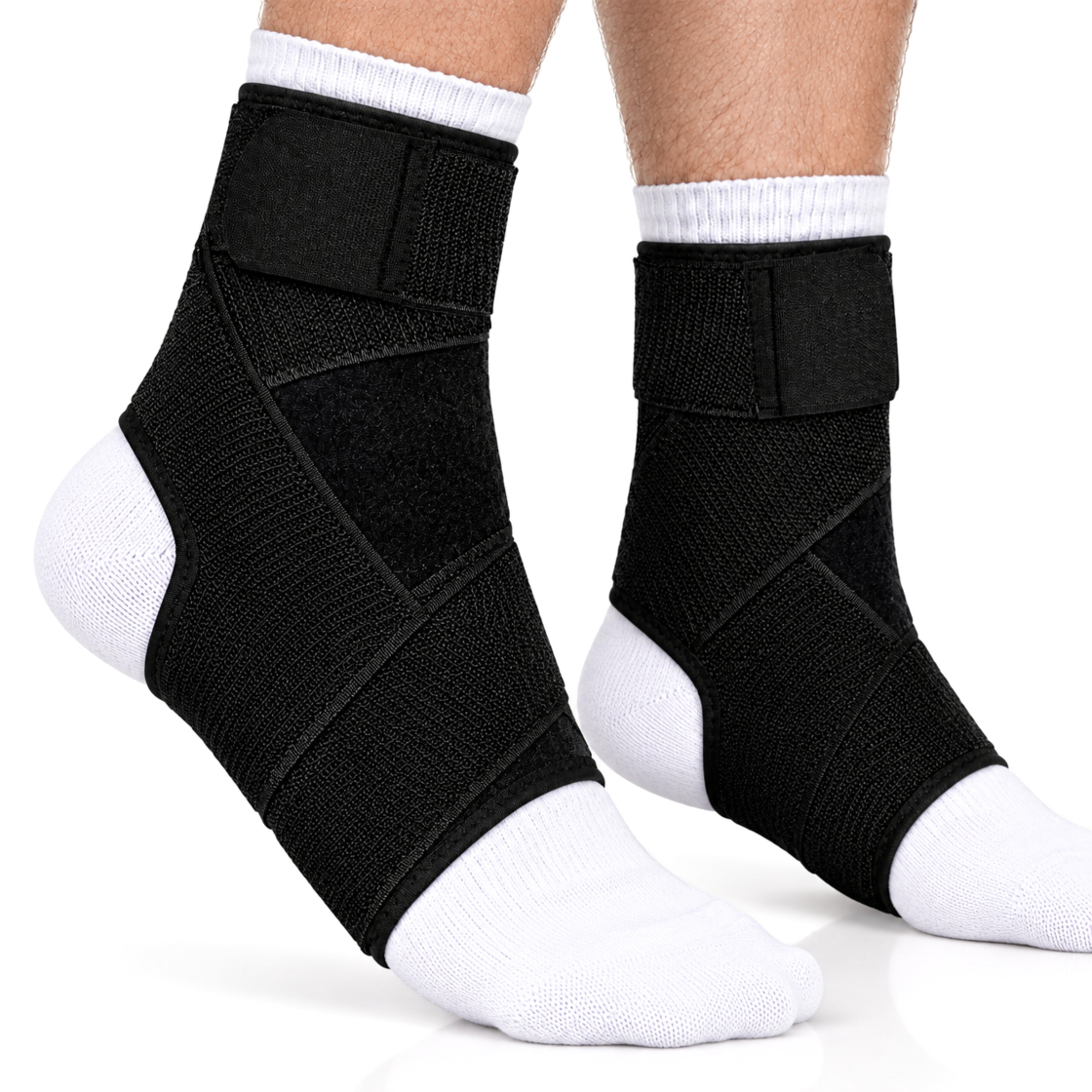
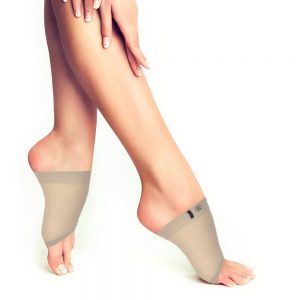
1x Pair Of Plantar Fasciitis Sleeve Braces
£16.99£19.99 (-15%)
- A pair of padded sleeve braces that wrap around the foot and support the arch.
- Intended for plantar fasciitis, where sharp pain sits under the heel or through the arch and is worst on the first steps after rest.
- Can be worn inside a shoe or on its own, during everyday walking and standing, sport or running.
- One size fits most, for men and women.
- Adjustable straps with a hook-and-loop fastening let you set the level of support and compression yourself.
- The arch support holds the arch slightly higher, so the plantar fascia is not stretched as far with each step.
- Padded neoprene under the heel absorbs some of the impact and helps reduce pressure points.
- Gentle compression can ease aches and support the natural healing process; it does not repair the tissue on its own.
- Moisture-wicking material with odour-control properties, for comfort over longer wear.
- An open toe and heel hole act as landmarks, so you can check the brace is sitting under the arch before you fasten it.
- Start with a moderate fit, supportive rather than tight, before building up to longer periods of wear.
- Loosen or remove it if it feels uncomfortable, restricts the foot, or causes numbness or tingling.
- Ask a GP, physiotherapist or podiatrist before long periods of wear if you have reduced sensation in your feet, circulation problems or a skin condition.
This pair of FootReviver™ Plantar Fasciitis Sleeve Braces supports the arches and eases foot and heel pain associated with plantar fasciitis. Each brace is a stretchy, padded wrap with adjustable straps, for men and women. They are one size fits most and can be worn inside a shoe or on their own, which makes them practical during everyday walking and standing as well as for sport and running.
The pain you notice first thing
Plantar fasciitis can sound like a minor problem until it is the reason you are limping. The pain is usually sharp and sits close to the heel, sometimes spreading through the arch, and the first few steps out of bed are often the worst of the day. You may find it eases once you have been moving for a few minutes, only to return after a stretch of sitting, a long shift on your feet, or a walk on hard pavement. That pattern is frustrating, and it is one of the reasons people look for support they can wear during an ordinary day.
Plantar fasciitis is one of the most common overuse problems affecting the sole of the foot. Overuse means it is rarely the result of one bad moment. It builds when the tissue across the arch is asked to cope with more than it can currently tolerate, repeatedly, across days and weeks. The tissue is irritated rather than weak, and it has not had enough chance to settle between demands.
Where the pain sits points to which structure is involved. For most people it is under the heel, often slightly towards the inside edge, and sometimes across the middle of the arch. The sensation is usually sharp and grabbing rather than dull. Some describe a deep bruise-like ache that is hard to pin down. Others notice a stiff, tight feeling through the sole when they first stand, or a burning ache towards the end of a day on their feet.
When it comes on is just as telling. The worst moment is usually the first step after sleep, or the first step after sitting for a while. During rest the band across the sole settles and shortens, and the foot stops being loaded through it. When you stand again, that band is asked to lengthen before it has warmed up, and the first stretch is what produces the sharp pain. Walking for a few minutes usually takes the edge off, which is why so many people assume it has cleared. Then a queue at the shop, a flight of stairs, or a longer walk than usual brings it back.
That pattern is what makes the problem easy to mismanage. You rest for a day, feel better, go back to normal, and the pain returns. Understanding what is happening under the arch explains why that cycle repeats, and why support, sensible loading and a bit of patience do more than either pushing through or shutting everything down.
What is happening in your foot
The plantar fascia is a tough band of tissue that runs across the sole of your foot, from the heel bone forwards towards the toes. You may also hear it called the plantar fascia ligament, because of the way it connects to bone and helps steady the foot. In plain terms it is a natural arch support: a broad, fibrous strap that helps the foot hold its shape and plays its part in how you absorb load and push off.
When the foot is overloaded, that band can become torn or inflamed. The damage is usually described as micro-damage — small amounts of strain that accumulate rather than one obvious tear. A little strain is normal, and the tissue adapts to it. The trouble comes when the next demand arrives before the tissue has recovered from the last one. That is when the build-up tips into inflammation and pain.
There is a mechanical reason the heel is usually the sore spot. When you walk, your toes bend back as you push off. That movement tightens the plantar fascia and raises the arch, rather like pulling a cable that runs under the sole. The effect is called the windlass mechanism. It is entirely normal and useful, because a tightened band turns the foot into a firm lever for push-off.
The pull does not spread evenly. The band attaches to the heel bone, and that attachment is where the tension concentrates with every push-off. If the tissue is already irritated, each step tugs at the same small area, and that repeated pull at one fixed point is what stops the area settling between one step and the next. The same mechanism explains the sharp pain on your first step of the day: after hours of rest the band is short, and it is asked to stretch while it is still cold.
How the way you walk changes the load
Plantar fasciitis is often linked to the way you walk. Your gait is your walking pattern: how your foot lands, how your weight rolls through the sole, how your ankle moves and how you push off. Small differences in that pattern change where load lands and how much work the arch has to do.
Two common patterns are overpronation and supination. Overpronation means the foot rolls inward more than usual during walking, so the arch drops lower with each step. Supination means the foot rolls outward, or does not absorb shock as evenly through the sole. It is easy to read either one as a sign of weak or faulty feet. They are movement patterns, and their effect is cumulative: each step adds a small amount of extra tension through the plantar fascia, and hundreds of steps a day add up.
Think about a long walk on hard pavement. If your arch drops further with every footfall, the band underneath is stretched and released again and again, and it is the same spot taking that pull each time. Stairs ask for something similar, because the front of the foot carries more load as you push up. Standing on a hard floor for a long stretch keeps the arch under steady pressure, with no movement through it to spread the work around. Put a few hundred of those steps or hours together in a day, and the tissue has had very little chance to recover in between.
The effects rarely stay in one small spot. Your foot, ankle and lower leg work as a linked system, which is what people mean by the kinetic chain: load passed through one part influences the parts above and below it. If the arch drops, the ankle rolls with it. If the ankle stiffens, the calf has to work differently. None of that is dramatic on any single step. Across a few weeks of irritated walking, though, the linked system is why the problem feels as if it is spreading or shifting rather than staying put.
The reinjury cycle
Once the tissue is irritated, the way you walk changes, and those changes are a large part of why the problem lasts as long as it does. Pain alters your gait, often without you noticing. You take shorter steps on the sore side, shift weight towards the other foot, or walk more on the outer edge to keep pressure off the heel. This is guarding, and in the short term it is sensible. It protects an irritated area.
Guarding becomes a problem when it goes on for weeks. Shorter, flatter steps mean the ankle moves through less of its range, and an ankle that is used less becomes stiffer. A stiffer ankle is harder to bring forward over the foot as you push off, so the foot rolls out or the arch drops further in order to move you forwards. Load then shifts onto parts of the foot that were not the original problem, which is one reason people sometimes notice soreness appearing in the midfoot or along the outer edge after a while spent limping. The original spot improves slightly, something new starts aching, and it becomes hard to tell what is actually going on.
Then comes the good day and the bad day. You have a good day, so you do a bit more: a longer walk, a full day of shopping, a session you would normally have skipped. The next day is worse. So you rest completely for a week, which feels better, and then return to your normal routine in one go. The tissue is asked to jump from very little load to a great deal, and the pain returns.
Pacing is the way out of that cycle. Pacing means spreading your walking and standing more evenly through the day rather than doing it all in one burst, and increasing what you do in small steps rather than large jumps. It is not the same as doing less. It is doing a similar amount, or a little more, in a steadier way, so the tissue gets a chance to adapt between demands. A brace fits into that approach rather than replacing it. By supporting the arch and cushioning the heel while you are on your feet, it may reduce the guarding that keeps the cycle going, so you can walk in a more normal pattern and tolerate activity more evenly across the day.
Why this type of brace makes sense
An arch-supporting sleeve brace works on three principles. It supports the arch from underneath, it applies gentle compression around the foot, and it cushions the heel against impact. Together those aims reduce how far the plantar fascia is stretched and how much force passes through the sore attachment point while you are wearing the brace.
Take the arch support first. By holding the arch slightly higher than it would sit unsupported, the brace reduces how far the band is lengthened with each step. During push-off, when the toes bend back and the windlass mechanism tightens the band, a supported arch means less extra pull at the heel. On its own that is a modest mechanical change. It applies to every step you take while wearing the brace, though, and steps are what add up across a day.
Compression is the second part. Gentle pressure around the foot can feel soothing on an aching sole, and it is intended to ease aches and pains, reduce swelling and inflammation, and support the natural healing process by encouraging the flow of fresh oxygenated blood to the area. What that means in practice is a foot that feels more comfortable while it settles. It does not speed up tissue repair on its own.
Cushioning is the third. When the heel is sore, hard floors and repeated impact feel far worse than they should. Padded material under the heel spreads pressure across a wider area and reduces how sharp each footfall feels. Over a full shift on your feet, that can be the difference between finishing the day upright and needing to sit down after an hour. On a walk to the shop, it can be the difference between the trip feeling routine and feeling like a chore.
The brace cannot do the recovery for you. It changes how load passes through the foot while you wear it, and that is the limit of it. It will not undo a sudden jump in activity, and it will not settle a problem that keeps being provoked. It works best alongside paced activity, sensible footwear and advice from a clinician if the problem is persistent or worsening.
How the FootReviver™ brace supports the foot
Each brace is a stretchy, padded foot wrap with an open toe and a hole for the heel. It arrives flat, which makes it easier to line up the heel hole before you fasten anything. The straps use a hook-and-loop fastening, often called Velcro, which grips onto the neoprene body of the brace. You set the level of support yourself, and you can change it in seconds rather than living with a fixed fit all day.
The straps and the wrap are what hold the brace in place. The open toe and heel hole work as landmarks, so you can check the padded panel is sitting under the arch rather than ahead of it, and they leave your toes and heel free so the foot can still move as it normally would. That is why the brace can be worn inside a shoe without making the foot feel stiff or locked. It supports the arch without taking over the movement of the foot.
The neoprene body is padded, stretchy and lightweight. The padding absorbs some of the impact that would otherwise pass straight through the heel, which helps reduce pressure points developing underneath it. The material is moisture-wicking, which helps keep the foot drier during longer wear, and it has odour-control properties for the same reason. That side of the design is about comfort over hours rather than minutes, which is what most people need if they are standing at work or walking regularly.
Being able to wear the brace inside a shoe or on its own means it fits around ordinary routines. Around the house, in socks or barefoot, it gives support during the shorter walks and standing that make up much of the day. Inside a shoe, it adds arch support and heel cushioning for longer trips, shopping, stairs and commutes. Either way, the aim is the same: reduce excessive movement under the arch, spread pressure away from the sore attachment point, and cushion the heel so walking feels less of a strain.
The main features are:
-
- A pair of sleeve braces that support the arch and ease foot and heel pain associated with plantar fasciitis.
-
- Suitable for men and women, one size fits most.
-
- Adjustable straps with hook-and-loop fastening, so you can change the level of support and compression.
-
- Padded neoprene that absorbs shock and helps reduce pressure points under the heel.
-
- Moisture-wicking material with odour-control properties, for comfort during longer wear.
-
- Worn with or without shoes, for everyday use, sport and running.
-
- Covered by a 30-day money back guarantee.
Fitting the brace comfortably
Lay the brace out flat. Place the heel hole around your heel so the brace sits centred beneath your foot, with the padded panel under the arch. The heel hole is there so you can check the position before you fasten anything. If it sits ahead of the heel, the padded panel ends up under the middle of the foot and the support lands in front of the arch, which is not where the band needs it. If it sits behind the heel, the padded panel bunches under the heel and rubs.
Next, fold the panels over the top of your foot and wrap the straps around, pressing them onto the neoprene body to secure them. Adjust the tension to something supportive rather than tight. You are aiming for the arch to feel held, not squeezed. You should still be able to wiggle your toes and feel the foot move naturally inside the brace.
If you are using it for the first time, start with a moderate setting over a short period before building up to longer periods of wear. Adjust the straps as the day goes on; many people prefer slightly firmer support when they are walking and looser when they are sitting. If it feels uncomfortable, restricts your foot, or causes any numbness or tingling, loosen it or take it off. A brace should make walking feel easier, not introduce a new problem.
If you are unsure whether compression is appropriate for you, speak to a GP, physiotherapist or podiatrist before long periods of wear. That is especially sensible if you have reduced sensation in your feet, circulation problems, or a condition that affects your skin, since you may not notice pressure building up.
What to expect
The brace supports the arch, applies soothing compression and reduces excessive movement while it is on your foot. It will not change how your foot feels on that very first step out of bed, because it is worn during the day and not overnight. What it can do is make the rest of the day more comfortable, and over time that steadier, less guarded pattern of walking is part of what helps the morning pain settle.
Judge progress by comparing like with like. A walk to the shop this week against the same walk two weeks ago tells you more than how a single bad day felt. A full shift on your feet tells you more than a quiet afternoon. If the same task is gradually becoming easier, that is a useful sign, even if the sharp pain on the first step is still there.
It helps to keep two things apart. Comfort while the brace is on is one measure. How much load your foot can tolerate across a week is another. The brace helps with the first. The second depends on how sensibly you build up what you do. If you wear the brace and then return to far more activity than your foot is used to, the pain can still flare, and that does not mean the brace is not working. It means the load has moved too quickly.
There is no fixed schedule that applies to everyone. Some people notice comfort within the first few wears. Others find the brace helps them get through the day while the underlying problem settles more slowly over weeks. If the pain is severe, getting worse, or not improving despite sensible management, that is the point to get advice rather than persevering with the brace alone. The 30-day money back guarantee gives you room to try the braces and see how they fit into your routine, rather than asking you to commit after one wearing.
Other foot and ankle problems these braces are also used for
Beyond plantar fasciitis, the braces are also used for other foot and ankle problems, including heel spurs, Achilles tendonitis, instability of the foot and ankle, sprains, strains, cuboid syndrome, bursitis, arthritis and gout. Each has its own cause, and none of them is the same problem as plantar fasciitis. The brace can act as support within a wider plan for some of them, but it is not a single answer to every kind of foot pain. What follows is a short guide to each, so you can see whether any of them fits what you are feeling.
Heel spurs
A heel spur is a bony projection that can form on the heel bone, sometimes where the plantar fascia attaches. It is often blamed for heel pain, though the spur on its own does not explain where the pain comes from. If your pain is under the heel and worse on first steps, the soft tissue pull is the more useful thing to address, and an arch-supporting brace can reduce that pull while you are on your feet.
Achilles tendonitis
You tend to know this one by its timing. The back of the heel and the tendon just above it feel stiff first thing, loosen as you move, then ache again after activity or on stairs and slopes where the ankle has to push you upwards. Because a sore Achilles changes how you load the back of the leg, the front of the foot often ends up working harder instead. Support under the arch can reduce some of that compensation while you walk.
Foot and ankle instability
The tasks that show this up are the ones asking for control rather than speed: uneven ground, stepping off a kerb, turning in a doorway. When the foot or ankle feels unsteady, the natural response is to walk more cautiously, and that caution tires the surrounding muscles quickly. A close-fitting wrap that holds the arch can make the foot feel steadier during ordinary movement.
Sprains and strains
These are best thought of by stage. A sprain is an injury to a ligament, the tissue connecting bone to bone. A strain is an injury to a muscle or tendon. In the days after either, swelling and guarding are normal, and gentle compression and support through that phase can help you move more comfortably while the tissue settles.
Cuboid syndrome
The position of the pain points to this one. It sits on the outer side of the foot, near the middle, and it is usually worse when you push off or walk across uneven ground. Support under the arch reduces some of the load passing through that outer section, which can make those steps less provoking.
Bursitis
A bursa is a small fluid-filled sac that normally cushions movement between tissues. When it becomes inflamed, it is sore to press and worse when something rubs against it repeatedly, which in the foot usually means the inside of a shoe. Padded support and gentle compression can reduce how much direct pressure the area receives, particularly during longer wear.
Arthritis and gout
Both behave differently from a soft-tissue problem, and the pattern over the day is usually the first clue. Stiffness after rest is common, and a flare can make the whole foot feel sore and swollen for a period. A padded sleeve that supports the arch and cushions the heel may make walking a little easier during a flare, though it does not treat the joint problem underneath.
Because these conditions differ in cause and in how they behave, the brace should be treated as a support option rather than a treatment for all of them. If you are not sure which fits your symptoms, have the foot examined properly before relying on any support.
When to get help
Most foot pain is not an emergency, but it is not something to accept indefinitely either. Speak to a GP, physiotherapist or podiatrist if:
-
- Your pain is severe.
-
- It is getting worse.
-
- It is not improving despite rest and sensible support.
-
- You develop new or unexplained symptoms.
These braces apply gentle compression, so it is worth being clear about the limit of that. The brace does not treat or prevent blood clots. Do not rely on it for that. If you have a history of clots, a condition that raises your risk of them, or you notice new or unexplained swelling or a change in the colour or temperature of the foot or leg, seek clinical advice rather than using the brace in place of it.
An assessment adds something you cannot easily do yourself. A clinician can look at the shape of your foot, how your ankle moves, how tight your calf is, what your footwear is doing and how you load the foot when you walk. Those are the things that decide whether the main factor is load, footwear, foot position or a combination of them. That is what makes the difference between treating the sore spot and treating the reason it keeps getting sore. It also gives you a clearer basis for deciding whether a brace, a change of footwear, or both together are worth pursuing.
A sensible next step
Plantar fasciitis is common, painful and often stubborn, but you do not have to accept it as permanent. The FootReviver™ Plantar Fasciitis Sleeve Braces support your arches, apply soothing compression and cushion the heel while you are on your feet. They adjust to your own comfort and can be used during everyday activity, sport or running.
Used sensibly, they fit into a broader plan: support the foot, keep activity fairly even, build up gradually, and get advice if things are not settling. If that sounds like your pain, worst under the heel on the first steps and after rest, a padded sleeve brace is a reasonable thing to try while you work on how much load the foot is asked to take. Check the fit and adjust the straps before you wear it for long periods, and speak to a GP, physiotherapist or podiatrist if you are unsure or your symptoms are new or more complex.
Disclaimer
The information on this page is general guidance about plantar fasciitis and about how an arch-supporting sleeve brace can help. It is not a substitute for individual medical advice, diagnosis or treatment. If you are unsure whether this type of support is right for you, or your symptoms are new, severe or not settling, speak to a GP, physiotherapist or podiatrist for advice tailored to you. Nothing here promises a specific outcome.
Additional information
| Size | Extra Large, Medium, Large, Small |
|---|




Reviews
There are no reviews yet.