Achilles Tendinitis
Achilles tendinitis: what you’re dealing with
If your Achilles has been sore, tender or stiff, you’ll know how much it interrupts ordinary things — the walk to the shops, the stairs, getting moving again after sitting down for a while. Achilles tendinitis is irritation of the Achilles tendon, the thick band that runs down the back of your lower leg and anchors your calf muscles to your heel bone.
You’ll usually feel it just above the heel, at the back of the ankle, sometimes spreading a short way up the calf. It’s often tender to press, and it tends to feel like an ache or a pulling sensation, with something sharper when you push off or stretch it out.
Most people find it’s worst first thing in the morning, or after sitting for a while — that first stretch as you stand up takes a moment to ease. It can also build towards the end of a day spent on your feet. The usual pattern is that it loosens as you warm up and then returns once you stop. A tendon that eases once warm hasn’t recovered; it is simply working more comfortably, and the soreness comes back as the warmth wears off.
The tendon’s main job in walking is to store energy as your calf stretches it, then release that energy as you push off, and a good deal of the drive in a normal step comes from that release. Every time you walk, it carries your body weight plus whatever extra push you add. All of that is what clinicians mean by load: simply the amount of work the tendon is being asked to do.
A tendon can handle a great deal, as long as the demand rises gradually rather than all at once. When it climbs faster than the tissue can keep up with — a sudden jump in how far or how often you walk, a long spell on your feet after weeks of doing less, a change of footwear that alters how your foot lands — the tendon becomes irritated and inflamed. That’s the tendinitis part. What’s happened is a mismatch between what’s being asked of it and what it’s currently conditioned for.
The awkward part is that it rarely settles if you keep loading it in exactly the same way, day after day, without giving it room to calm down in between. Cutting movement out for long stretches rarely helps either. The tendon is used to carrying your weight through the day, and a moderate amount of familiar work tends to suit it better than a sudden stop followed by a painful return.
What usually helps is pacing: spreading your walking and standing more evenly across the day rather than doing it all in one go, so the tendon gets a chance to recover between bouts of work. That might mean splitting a long walk into two shorter ones, or sitting down for a few minutes before the ache builds rather than after it has set in.
This is where a support comes in. Not as a cure, but as a way of taking some of the load off while you build back up. Alongside pacing, hands-on treatment from a physiotherapist where it’s needed, and footwear that suits you, something worn on the ankle or placed inside a shoe can make daily movement more comfortable and give the tendon a better chance to quiet down.
Why a brace, splint, insole or heel lift can help
Four different jobs are involved, and most supports do one of them well.
Support and stability
An ankle brace wraps around the ankle and gives it structure, so the joint moves in a more controlled way. On a flight of stairs, each step up asks your ankle to bend forward towards its end range — the furthest it can comfortably bend — while the tendon takes your full weight as you push off. If that end of the movement is the sore part, every step repeats the same strain. A support that limits how far the ankle goes into that range reduces how often it happens.
Rest and protection
A splint goes further. It holds the ankle and foot still — that is what immobilise means — so the tendon isn’t being repeatedly stretched and loaded. That’s useful when it needs a genuine break from movement rather than support during it. It gives the tendon a spell where nothing is being asked of it, and a good deal of the calming down happens in those hours.
Cushioning and spreading pressure
An insole sits inside your shoe and softens the impact of each step, spreading your weight more evenly across the foot instead of concentrating it in one spot. On hard pavement, each heel strike — the moment your heel meets the ground — sends a jolt up through the foot and into the leg. Cushioning under the sole distributes that jolt over a wider area, so the tendon absorbs less of it at the end of every step.
Reducing tension at the heel
A heel lift sits under the heel and raises it by a few millimetres, tipping the foot slightly toes-down. That puts the ankle into a small amount of plantarflexion — the toes-pointed position — which shortens the distance the calf and tendon have to span. Less length means less tension through the tendon, particularly at the point where it attaches to the heel bone. It also eases the compression on that attachment against the back of the shoe, which is often the difference between a shoe being wearable and not.
Which of these matters most depends on what your week asks of you. Long days on stairs and uneven ground pull one way, hours on a hard floor another, and soreness concentrated right at the back of the heel another again — with a splint reserved for when the tendon needs rest rather than support.
Ankle braces
Ankle braces give support and stability while still letting you move comfortably. They come in lace-up, slip-on and adjustable-strap styles, so you can choose how much support you want and how quickly you want to get it on and off.
A lace-up brace wraps closely around the ankle and lets you control the tightness through the lacing. Slip-on styles are quicker to put on, which matters if you’re fitting one before your shoes are on, or doing it one-handed. Adjustable-strap versions let you fine-tune the fit with straps rather than laces. Any of the three should sit snugly around the joint without rubbing at the ankle bones or bunching above the heel.
What changes is how much the ankle moves side to side. On uneven ground, or over a longer distance than usual, your calf makes dozens of small corrections with every step to keep the ankle steady, and each one pulls on the tendon. A brace wrapping around the joint limits how much of that sideways movement the ankle has to manage, which means fewer corrections and less repeated load through the sore part of the tendon. The padding inside matters too, because a firm support presses against the back of the heel and over the ankle bones, and some cushioning there eases the pressure on those bony points.
Splints
Splints are for when the tendon needs rest rather than support during movement. They hold the ankle and foot still so the Achilles isn’t being repeatedly worked. This is a period of rest while the tendon is at its sorest, not a permanent stop. The aim is to take the repeated strain off for a while, so you can then build activity back up around it.
What normally happens across a day is worth knowing here. When you sit or lie down, your foot tends to rest with the toes pointed slightly down, which leaves the tendon in a shortened position for a stretch of time. Then you stand up, and that first step stretches it out suddenly — often exactly why the morning and after-sitting pain shows up. Holding the foot in a supported position, closer to neutral, limits how much of that sudden stretch has to be absorbed when you get up. That’s the reasoning behind wearing one at rest as well as during the day.
Ours are lightweight and breathable, which makes a difference if you’re wearing one for hours at a time. They come in different sizes to give you a proper fit, are easy to adjust yourself, and can be worn both during the day and at night.
A splint is for a limited period. As the soreness eases, the usual approach is to wear it for shorter stretches and build ordinary movement back up, rather than staying in it once the tendon is comfortable again.
Insoles
Insoles work from underneath, cushioning the sole of the foot. That’s the surface in contact with the ground, and the one absorbing pressure on every step.
Stand in one place for a long while and you’ll feel where that pressure gathers: a small patch under the sole, taking the same weight with each shift. By mid-afternoon that patch has taken hundreds of them without a break, and you may find yourself moving from foot to foot or looking for somewhere to sit. Distributing the pressure over a wider surface means no single spot carries as much, and the usual difference is that you get further through the day before wanting to sit down.
Ours are soft, breathable, and come in different sizes and shapes to suit different feet, so they can be used with any type of footwear. With less force reaching the sole, less of it travels up through the foot and into the tendon. If you’re on your feet a lot, or your shoes feel hard underfoot, an insole is the one likely to make the most difference.
Heel lifts
A heel lift is a small wedge that sits inside your shoe, under the heel, raising it by a few millimetres. Soft foam versions mould to the shape of the heel; firmer ones hold their shape and give a more predictable amount of lift.
Placement is straightforward but worth getting right. The lift goes under the heel itself rather than under the whole foot, because a full-length insert changes how the whole foot loads instead. Set it directly on the insole of the shoe, or beneath the existing insole if there is one, and check it hasn’t slid forward once your foot is in. If you already wear an insole, the lift usually goes underneath it.
Getting the height right matters more than getting it on quickly. A few millimetres is often enough to take the tension off, whereas a large jump changes how you walk and can cause trouble elsewhere, so starting low and building up if needed is the safer order. Wear one in each shoe as a rule: raising a single heel changes the relative length of your legs, which tends to surface as hip or lower back discomfort over a few weeks. The exception is where a clinician has specifically advised otherwise.
It’s an offload rather than a treatment, buying comfort while the tendon settles. The usual approach is to reduce the height gradually as things improve, so the tendon returns to its full working length; left in place indefinitely, the calf and tendon simply adapt to the shortened position.
Ours are made from soft, breathable foam and come in more than one height, so you can start low and step up only if you need to. They’re shaped to sit flat under the heel, fit inside most everyday shoes, and are supplied as a pair so both shoes match.
Choosing your support
Match the product to what you actually need. If you want to keep walking and moving with more confidence, a brace is the natural fit. If the tendon needs a proper break from movement, a splint makes more sense. Where impact and hard surfaces are the main problem, start with an insole. If the soreness sits right at the back of the heel, or shoes press against it, a heel lift is the place to begin.
Your shoes belong in that decision too, because they do part of the same job. A shoe with a very flat, firm heel asks more of the tendon than one with a slight rise, so it’s worth looking at what you wear most often before adding anything else. Where your everyday shoes already have some rise, a lift is for the days they don’t quite cover; where they’re flat and hard, it can make a noticeable difference on its own.
Fitting it properly
A support should feel snug and supportive, not so tight that it pinches or digs in. The test is whether you can tell it’s supporting the ankle without the joint feeling held rigid. Adjustable straps and laces let you set the tightness yourself, and a well-fitted brace or splint sits securely at the heel and stays there rather than sliding down or bunching as you walk. If you’re between sizes, or unsure which style suits your foot shape, get advice before ordering rather than guessing.
Take a support off if it causes increasing pain, numbness, tingling or skin irritation, and have the fit checked by a clinician or someone trained in fitting supports before you carry on with it.
What to expect
These products support your recovery and make daily life more comfortable. They don’t fix the tendon overnight, and it’s worth knowing that up front.
Progress with tendons is measured in weeks and months rather than days. A sore Achilles that has been building for a while typically takes a few months to settle, with good weeks and bad ones along the way. That’s normal, and it isn’t a sign that you’re doing something wrong.
Many people notice a difference in the first week or two — going longer before the ache builds, stairs feeling less painful, standing to cook or wash up less tiring. The underlying problem tends to settle gradually as the load on the tendon comes down.
A support does its work while it’s on, lowering the load through those hours. The lasting improvement comes from what the easier hours let you do: building your activity back up in steps rather than in one jump, keeping walking and standing fairly even across the week, and checking whether your shoes suit the distance you actually cover. A brace that gets you through a long day helps, but it doesn’t replace building the week up at a sensible pace.
When to seek help
Pain that is severe, getting worse, or not settling despite rest and support is worth raising with a GP, physiotherapist or podiatrist. The same goes if you’re unsure what’s causing your symptoms, or if anything new or unexplained develops. A support can help you manage day to day, but it isn’t a substitute for an assessment when one is needed.
Next steps
Start with the job your week demands most often rather than the product with the longest list of features. If the soreness sits at the back of the heel, look at a lift before anything else. If it’s hours on a hard floor, begin with an insole. If it’s stairs and uneven ground, a brace earns its place. And if the tendon needs a genuine break, that’s what a splint is for, worn briefly and then eased away from. Where two seem equally matched, pick whichever one you’ll actually keep using on the days that trouble you most. Check the sizing before you order and set the fit when it arrives.
A note about this information
What’s written here is general guidance for adults in the UK. It’s meant to help you understand Achilles tendinitis and where a support worn on the ankle or placed inside a shoe may fit into managing it. It isn’t personal medical advice and it isn’t a diagnosis, so treat it as a starting point rather than a plan written for you.
A support can reduce the load and make daily movement more comfortable, but it doesn’t treat the underlying problem on its own. How much difference it makes varies from person to person. Follow the fitting and wear instructions supplied with the product you choose, and get the fit checked if anything about it doesn’t feel right.
If you’re unsure whether a support is suitable for you, speak to a GP, physiotherapist or podiatrist before relying on one. The same applies if your symptoms are more than you’d expect from a tendon that’s been overloaded, or if you’re already having treatment for your ankle and want to check a support fits alongside it.
-
Height Increasing Heel Lifts for Shoes
- 1 x pair of silicone gel heel lifts, designed to discreetly add extra height inside your shoes while helping to ease common heel and lower‑leg pain
- Developed so you can also use them, under guidance, to help with mild leg length differences and the strain this can cause around the hips, knees and lower back
- Medical‑grade silicone gel cushions the heel, helps absorb impact and spreads pressure so one small area under the heel is less likely to feel bruised or “jabbed” on hard floors
- Deep, contoured heel cup helps hold the heel more central in the shoe, supports the natural heel pad and limits excessive rolling in or out that can aggravate heel and ankle problems
- Stackable wedge layers let you adjust the height under your heel by up to about 1.5 inches inside the shoe, so you can start low and increase gradually to a level that feels comfortable and stable
- Often used alongside exercise and sensible activity changes to help manage issues such as under‑heel pain, soreness at the back of the heel linked with Achilles tendon‑related pain, tired heels from long standing, and discomfort related to mild leg length difference
- Slim design to suit most adult foot sizes and fit into many everyday shoes, trainers, boots and dress shoes, as long as there is enough depth and a firm heel area
- Textured, anti‑slip underside helps the lifts grip the insole so they stay in place as you walk, rather than sliding forwards or sideways inside the shoe
- Easy to clean with mild soap and water, so you can use them regularly and move them between pairs of shoes without them feeling stale or difficult to freshen up
- Includes a 30‑day money‑back guarantee, so you can see how your heels and legs respond without having to commit long‑term
£11.99£14.99 -

FootReviver™ Orthotic arch support insoles for flat feet & high arches
- Made for flat feet and high arches: Especially suited to adults with low or high arches and feet that clearly roll inwards or outwards.
- Helps with common foot and leg pains: Designed to ease everyday discomfort such as:
- heel pain (including plantar‑type “first‑steps” pain once you are in shoes),
- aching arches and mid‑foot,
- burning under the ball of the foot,
- tired Achilles tendons and shins,
- some knee and lower‑back ache linked to how your feet move.
- Firm ¾‑length carbon‑fibre shell: Sits under the heel and arch to give strong, shaped support without feeling bulky, helping reduce arch collapse in flatter feet and spreading load in higher arches.
- Integrated heel pad and supportive heel cup: Built‑in pad cushions impact where heel pain is often worst, while the medium‑depth heel cup helps keep the heel centred and limits sharp rolling in or out.
- Shaped arch support: Supports the band under your arch (plantar fascia) and nearby ligaments, reducing repeated stretching and mid‑foot joint strain with each step.
- Full‑length cushioning with breathable top cover: Softer foam from heel to toes spreads pressure and softens impact on hard floors, while the smooth, breathable cover helps keep feet more comfortable over long days.
- Everyday‑friendly fit: Full‑length design that works best in trainers, walking shoes and work or safety boots with removable liners and enough depth. Not suitable for tight dress shoes or traditional high‑heels.
- Balanced feel – not too soft, not too hard: Firmer and more supportive than basic foam or gel inserts, but easier to wear all day than very rigid plastic shells.
- Based on orthotic principles used by clinicians: Developed using mechanical principles podiatrists and physiotherapists rely on when they prescribe arch and heel supports, refined for real‑world use in flat and high‑arched feet.
- Simple to use and look after: Remove your shoe’s existing liner, place the FootReviver™ insole inside, then build up wear time gradually. Wipe clean with a damp cloth and let them dry naturally. Replace when the arch support and cushioning feel noticeably flatter.
- Adults only – check with a clinician if symptoms are worrying: If pain is severe, sudden, getting worse, or linked to swelling, colour changes, loss of feeling, or joints locking or giving way, speak to a GP, physiotherapist or podiatrist.
- 30‑day money‑back guarantee: Try them in your own shoes at home. If they are not right for you, return them in original condition within 30 days for a refund.
£9.99 -
1x Pair Of Plantar Fasciitis Sleeve Braces
- A pair of padded sleeve braces that wrap around the foot and support the arch.
- Intended for plantar fasciitis, where sharp pain sits under the heel or through the arch and is worst on the first steps after rest.
- Can be worn inside a shoe or on its own, during everyday walking and standing, sport or running.
- One size fits most, for men and women.
- Adjustable straps with a hook-and-loop fastening let you set the level of support and compression yourself.
- The arch support holds the arch slightly higher, so the plantar fascia is not stretched as far with each step.
- Padded neoprene under the heel absorbs some of the impact and helps reduce pressure points.
- Gentle compression can ease aches and support the natural healing process; it does not repair the tissue on its own.
- Moisture-wicking material with odour-control properties, for comfort over longer wear.
- An open toe and heel hole act as landmarks, so you can check the brace is sitting under the arch before you fasten it.
- Start with a moderate fit, supportive rather than tight, before building up to longer periods of wear.
- Loosen or remove it if it feels uncomfortable, restricts the foot, or causes numbness or tingling.
- Ask a GP, physiotherapist or podiatrist before long periods of wear if you have reduced sensation in your feet, circulation problems or a skin condition.
£16.99£19.99 -
FootReviver™ Foot Ankle Orthosis – Support Brace for Ankle Sprains, Strains, Achilles Tendonitis & Foot Drop
- Semi‑rigid ankle and rearfoot brace from FootReviver, offering much more control than a thin elastic support but without the weight and bulk of a rigid walking boot – designed for the stage when you can walk again, but the ankle still feels weak, wobbly or at risk of giving way.
- Multi‑splint frame with paired side bars and a rear splint up the Achilles region helps stop the ankle rolling in or out and limits sharp twisting, while still allowing enough up‑and‑down movement for walking, standing and everyday tasks.
- Detachable, shapeable front panel and three independently adjustable calf straps let you spread pressure comfortably across the front and sides of the lower leg, set how firmly the brace holds you, and adapt to mild changes in swelling through the day.
- Padded, supportive fabric and targeted cushioning around the ankle bones and back of the heel reduce rubbing and pressure in the areas physiotherapists and podiatrists most often see problems with other supports, so you can realistically wear this brace for longer spells.
- Wrap‑around design under the rearfoot and arch helps keep the heel closer to a straight‑ahead position when you load the foot, supporting stretched outer ankle ligaments after sprains and helping arthritic ankle and rearfoot joints avoid painful end positions.
- Suitable for adults in the rehabilitation stage after ankle sprains, fractures or surgery (when a clinician has cleared you to move more), and for longer‑term ankle instability, arthritis around the ankle/rearfoot, Achilles tendon problems and some milder cases of drop foot where extra stability, not active toe‑lift, is needed.
- Universal left/right fit and three sizes based on UK shoe size, with secure hook‑and‑loop straps, make it easier to achieve a firm but comfortable fit; returns and straightforward size exchanges within 30 days mean you can try it at home and change size if the first choice isn’t right.
- Designed by FootReviver using lower‑limb biomechanical experience and feedback from physiotherapists, podiatrists and orthotists about how ankles most often roll and where supports tend to rub, so the splint layout and padding zones are chosen to reflect real‑world use in clinic.
£14.99£19.99 -
Heel Support Braces
- 1x Pair of Heel Support Braces specially designed to provide extra support, stability, compression and protection to your heels
- For both Men & Women
- Available in sizes Small, Medium, Large & Extra Large
- Recommended for Plantar Fasciitis, Heel Spurs, Bursitis, Cuboid Syndrome, Achilles Tendonitis, Foot and Ankle Instabilities, Sprains, Strains, Arthritic Joint Pain, Gout and more!
- Fully adjustable Velcro strap wraps securely around your heels and ankles and allows you to quickly change the level of support and compression to suit your needs
- Targeted support helps ease strain and pressure off your heels & ankles to help prevents injury and pain
- Provides soothing compression that boosts blood flow to your feet to promote healing, reduce inflammation and swelling and ease pain
- Stabilizes and protects your heels by improving foot and ankle function to stop movement which may twist, sprain and strain your ankles and heels
- Made from moisture wicking breathable and lightweight Neoprene material to help keep your feet fresh, dry and comfortable whilst wearing the heel support braces
- Can be worn with or without shoes
- Prevents pressure points from developing underneath your heels and damaging them
- Ideal for sports, running or everyday use to help protect and support your ankles and heels from injury and wear and tear
- Includes a full 30 day money back guarantee!
£9.99£10.99 -

Gel Shock Absorbing Heel Cups
- A pair of gel heel cups that sit inside your shoes, under each heel.
- Made from medical-grade silicone gel.
- For men and women, one size fits all.
- Fit everyday shoes, trainers, high heels and boots.
- Absorb shock and spread weight more evenly to ease pressure under the heel.
- Mould to the shape of your heel so contact stays even.
- Cushion, support and steady the heel and ankle as you walk.
- For adults who spend long periods on their feet on hard surfaces.
- For tired, inflamed and painful heels.
- Recommended for a range of foot and lower limb conditions, including plantar fasciitis and Achilles tendonitis.
- Start with a few hours at a time and build up if they feel comfortable.
- Replace the pair if the gel splits, becomes misshapen or is damaged.
- Speak to a GP, physiotherapist or podiatrist if pain is severe, new, unexplained or getting worse.
- A full 30 day money back guarantee is included.
£7.99 -
FootReviver™ Ankle Foot Orthosis Support Brace
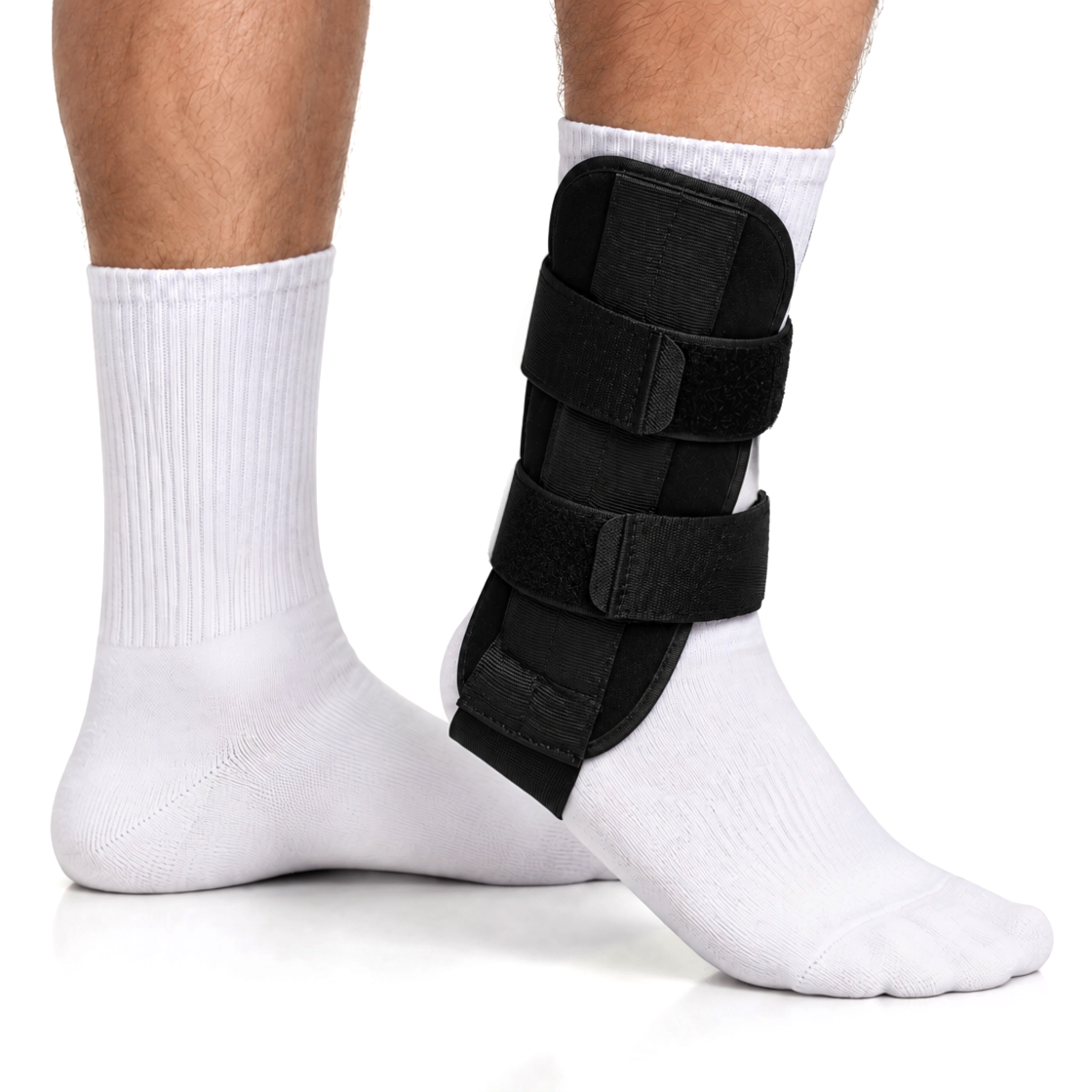
- Rigid ankle brace with two metal side splints that limit the ankle rolling inwards or outwards
- For adults recovering from sprains, strains and ankle fractures, or living with an ankle that keeps giving way
- The splints sit on the inner and outer side of the joint, holding back the roll behind most sprains
- Two adjustable straps with front buckles let you set the compression yourself
- Compression helps settle swelling and steadies your sense of where the ankle is
- Cushioned heel pad absorbs some impact at each step and steadies the heel
- Padded, breathable lining around the ankle bones reduces rubbing over long wear
- Fits either ankle, in sizes small (UK 3–5), medium (UK 5–8) and large (UK 8–11)
- Worn inside roomier lace-up shoes, trainers or boots; not tight shoes, slip-ons or stiff ankle collars
- Early on, wear it whenever you’re on your feet, and take it off to rest
- Remove it for rehabilitation exercises so your muscles and your sense of position work without help
- Not for an ankle still needing rigid immobilisation in a cast or boot
- Not for unstable fractures, complete ligament ruptures, active infection or open wounds
- Seek urgent help for pain, warmth, swelling and redness in one calf, or for sudden breathlessness or chest pain
£12.99£15.99 -
FootReviver™ Ankle Support Splint Foot Brace
- A semi-rigid ankle and foot brace that supports the joint from the sides, the front and the back while you walk.
- For adults with a sprained ankle, Achilles tendon pain, heel or arch pain, or a stiff, unsteady ankle after a fracture.
- Also used alongside treatment for ankle instability, foot drop, posterior tibial tendon problems, ankle arthritis and cuboid syndrome.
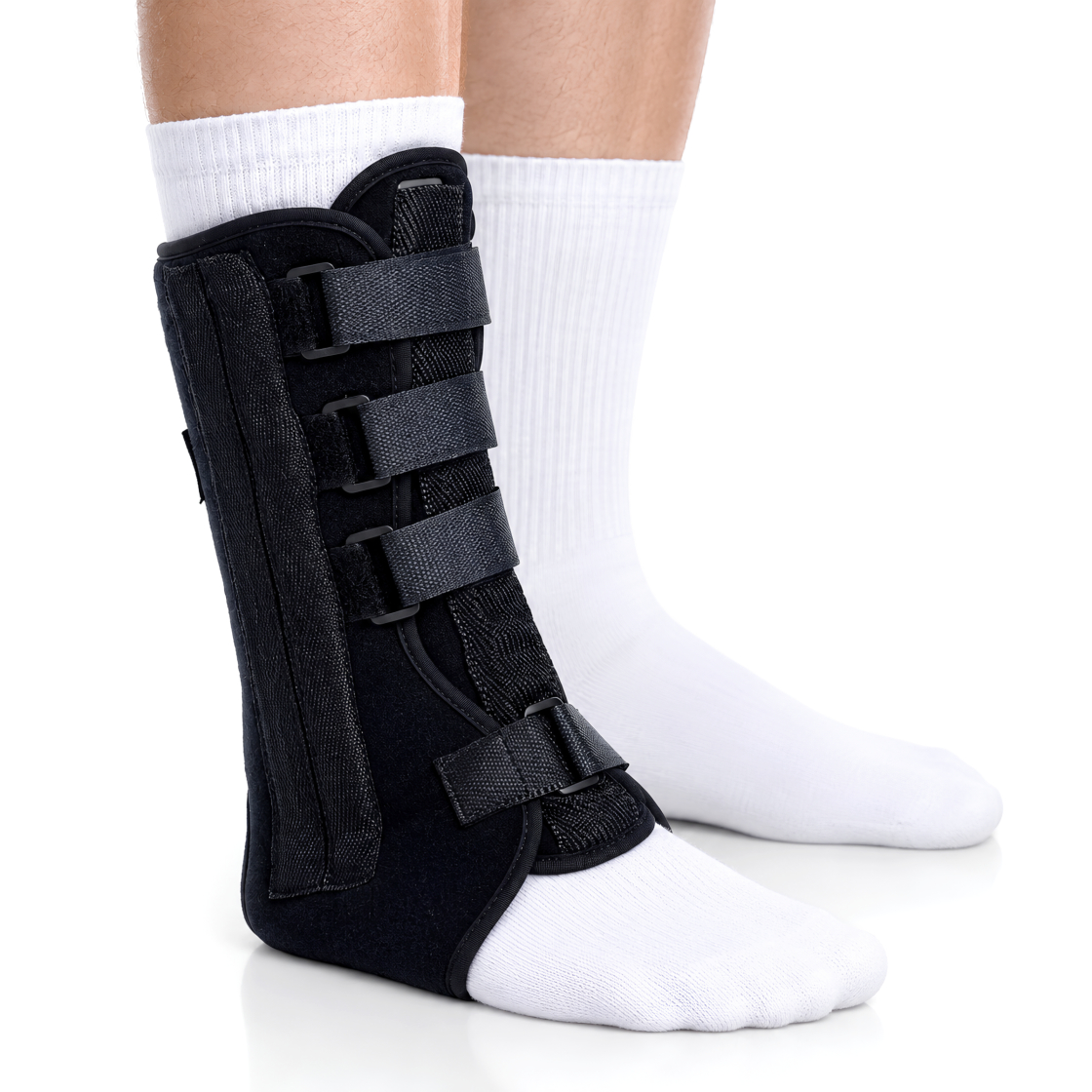
- Four metal elements: a splint down the outside of the ankle, one down the inside, a flexible insert at the front, and a splint down the back in line with the Achilles tendon.
- The side splints resist the inward and outward roll that pulls on injured ligaments.
- The rear splint limits how far the ankle bends upwards, which reduces the stretch through a sore Achilles on stairs and slopes.
- Reaches to roughly mid-calf, so the frame has a longer lever and pressure is shared across the shin and calf rather than concentrated at the joint.
- Four straps you adjust separately, so you can tighten where your leg is slimmer and ease off where the skin is sensitive.
- The same straps set the compression, so you can adjust it as swelling changes through the day.
- Open toe and heel reduce rubbing at the bony points. Nothing sits under the sole, so the brace does not cushion the bottom of the foot.
- Breathable materials with a soft inner surface that help manage moisture and odour.
- Three adult sizes: Small (UK 3–5), Medium (UK 5–8) and Large (UK 8–11). Worn on either foot.
- Can be worn over a sock, sits close under clothing, and fits inside roomy shoes. Hand wash and air dry.
- It supports and protects, but it won’t cure the problem or rebuild strength — that comes from exercise. Speak to a GP, physiotherapist or podiatrist if your symptoms are new, unexplained, or getting worse despite wearing it.
£14.99£19.99 -
FootReviver™ Arch support insoles
- A pair of trim-to-fit arch support insoles that sit inside your shoes.
- For adults dealing with heel, arch or forefoot discomfort during standing and walking.
- Contoured arch shape that lifts and steadies the midfoot.
- Deep heel cup that cradles the heel and limits side-to-side movement
- Metatarsal pad that spreads pressure across the ball of the foot.
- Heel cushioning that softens impact on hard floors.
- Flexible forefoot zone so the foot can roll through each step.
- Anti-slip underside that keeps the insole in place as you walk.
- Lightweight build that sits comfortably in trainers, work shoes and everyday footwear.
- Trim a little at a time and check the fit before cutting further.
- Build wear time up over the first week rather than wearing them all day from the start.
- Check them every few months and replace once the arch support flattens.
- Not a substitute for an assessment if pain is severe or getting worse.
£9.99