Gel Orthotic insoles for Morton’s Neuroma

£9.99£12.99 (-23%)

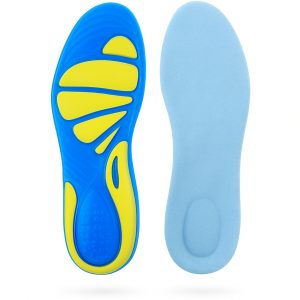
  • Pair of full‑length gel orthotic insoles designed specifically to help with Morton’s neuroma and pain in the ball of the foot.
  • Shock‑absorbing gel from heel to toe, combined with a supportive 3/4‑length plastic chassis, to soften impact and stabilise the foot with each step.
  • Extra‑resistant heel and forefoot pads under the main pressure zones to give added protection where the heel strikes and where you push off through the toes.
  • Contoured arch support and rearfoot stability to help limit excessive rolling in or out of the foot, which can overload the forefoot and aggravate neuroma.
  • Suitable for adults with Morton’s neuroma, forefoot pain, or underlying issues such as flat feet, high arches, overpronation or supination.
  • Trim‑to‑fit design in a range of UK sizes, so you can shape the insoles to sit smoothly inside everyday shoes, work shoes and casual trainers.
  • Supportive alignment and cushioning may help ease strain up through the ankles, knees, hips and lower back during standing and walking.
  • 30‑day money‑back guarantee, so you can try them in your own footwear with confidence.
Clear

Understanding Morton’s neuroma

What is happening in the foot?

Morton’s neuroma is a problem in the ball of the foot, usually between the base of the third and fourth toes. A small nerve that runs between the long bones of the forefoot (the metatarsals) becomes irritated and thickened. Over time, the soft tissue around that nerve can build up, leaving it more likely to be squeezed when you put weight through the front of your foot.

When you stand, walk, or push off through your toes, your body weight passes through the heads of the metatarsal bones. In most feet, those bones can spread and share the load. With Morton’s neuroma, the irritated nerve is caught in the narrow space between them. Each time the forefoot takes weight and the toes bend, that space can tighten around the nerve, creating the familiar burning, tingling or “pebble under the foot” feeling.

This squeezing is often most noticeable in shoes with a tighter toe box or a higher heel. A narrow front to the shoe brings the metatarsal heads closer together. A higher heel tips your weight forward, so more of your body weight is carried on the ball of the foot. Together, that increased load and reduced space can press directly on the sensitive nerve.

How Morton’s neuroma tends to feel day‑to‑day

People with Morton’s neuroma describe a range of sensations, but some patterns are very common:

  • A sharp, burning pain in the ball of the foot, often between the third and fourth toes, sometimes spreading into the toes themselves.
  • A feeling of standing on a small stone, fold in a sock, or hard lump inside the shoe, despite nothing being there.
  • Tingling or numbness in the toes after long periods on your feet.
  • Pain that eases when shoes are taken off or loosened, then gradually returns once walking resumes.

The pain often builds through the day. Many people are reasonably comfortable first thing in the morning, then notice:

  • Increasing discomfort after walking longer distances on hard surfaces.
  • A burning or stabbing sensation when pushing off to walk more briskly.
  • A flare of pain when going up stairs or walking uphill, as the toes bend more.

These patterns make sense mechanically. When you push off, your toes bend and the metatarsal heads press down and back into the ground. If there is a thickened, sensitive nerve between those bones, that extra bend and pressure can pinch it more tightly. Over a long day, repeated loading of the same spot can make the nerve more irritable, so even small movements feel sharper by the evening.

Why some feet are more prone than others

Not everyone who spends long hours on their feet develops Morton’s neuroma. The way your foot is shaped and how it moves can make a difference to how much pressure ends up on that small nerve between the metatarsals.

Several patterns are commonly seen:

  • Flatter, more inward‑rolling feet
    When the arch flattens more than usual and the foot rolls inwards, more of your body weight tends to drift towards the inside of the foot. The front of the foot can twist slightly, and the metatarsal heads may press together more on each step. That extra inward roll and twist can crowd the space where the nerve sits, increasing the chance of irritation.
  • Higher, more rigid arches
    A very high arch often means the midfoot is quite stiff. Instead of sharing load evenly along the length of the foot, pressure can jump more directly from the heel to the front of the foot. In some people the foot also rolls outwards (supination), focusing pressure on a smaller part of the forefoot. The metatarsal heads and the nerve between them then take a sharper, more concentrated load with each step.
  • Tight or pointed footwear
    Shoes with a narrow toe box physically push the toes together. Even if the sole is cushioned, the side‑to‑side squeeze can narrow the gap between the metatarsal heads where the nerve runs. If the shoe is also rigid through the forefoot, the metatarsals and nerve have very little room to move as you push off.
  • High‑heeled or very thin‑soled shoes
    Heels that lift the back of the foot up shift body weight forward. Thin, hard soles give very little cushioning under the ball of the foot. Combined, this can mean the neuroma area is taking more force, over a longer part of the step, with less protection.

Over months or years, that repeated compression and shear around the nerve can cause it to become increasingly sensitive. Once irritated, it can react more strongly to the same amount of pressure that felt normal in the past.

Why it helps to act early

In the early stages, Morton’s neuroma pain might only appear:

  • With particular shoes.
  • When walking faster or further than usual.
  • After especially long days on hard floors.

At this stage, changing how the foot is loaded often makes a significant difference. If the nerve continues to be compressed and rubbed between the metatarsal heads day after day, it can become more thickened and more sensitive. Pain can then arise:

  • With shorter walks.
  • Sooner in the day.
  • Sometimes at rest, when there is no obvious load on the foot.

Treatment without injections or surgery aims to reduce that repeated strain on the nerve and make things easier for the front of the foot. That usually means:

  • Allowing more room for the forefoot and toes.
  • Reducing sharp impact under the ball of the foot.
  • Sharing load more evenly along the length and width of the foot.
  • Improving how the heel, arch and forefoot line up during walking.

It is this mix of pressure, space and alignment around the nerve that keeps the pain going. That is why some people improve simply by changing shoes, why others need more structured support under the foot, and why focusing only on painkillers without changing the way the foot takes weight rarely gives lasting relief.


Ways to ease neuroma without surgery – and where insoles fit

Simple first steps that often help

Once Morton’s neuroma has been identified, most people start with practical, non‑surgical measures rather than jumping straight to injections or operations. The shared aim is to reduce how much compression and irritation the nerve is exposed to in daily life.

Common first steps include:

  • Footwear with more room in the toe box
    Shoes that allow your toes to spread naturally reduce side‑to‑side squeezing of the metatarsal heads. That extra space can ease the direct pinch on the nerve when you stand and walk and is often one of the quickest ways to notice a change.
  • Lower, more stable heels
    Bringing the heel closer to the level of the forefoot shifts less body weight onto the ball of the foot. This can reduce the constant load going through the neuroma area, especially when standing for longer periods.
  • More cushioning under the forefoot
    A firmer, thinner sole passes more of the impact straight through to the ball of the foot. Choosing shoes with a more cushioned sole can soften that impact, although by itself it may not change how the load is distributed across the width of the forefoot.
  • Breaking up very long spells on hard floors
    Where possible, spreading time on your feet across the day instead of doing several hours at once can give the irritated nerve short, regular breaks from sustained pressure.

These changes are often helpful, but they do not always go far enough on their own. The way the heel, arch and forefoot move and share load still needs attention. That is where orthotic insoles come in.

Why insoles are often part of the plan

Footwear changes alter the “shell” around the foot. Orthotic insoles change what is happening underneath the foot itself.

A well‑designed insole can:

  • Support the arch so the midfoot does more of the work, rather than letting the arch collapse and push more weight forwards into the forefoot.
  • Steady the heel so it does not roll too far inwards or outwards, which can twist the forefoot and narrow the space for the nerve.
  • Add cushioning and a gentle contour under the ball of the foot, so pressure is shared over a larger area instead of one sharp point under the neuroma.

Together, these changes lower the repeated strain on the irritated nerve during the everyday tasks that usually provoke symptoms: standing, walking on firm surfaces, and pushing off through the toes.

Other measures that sometimes sit alongside insoles

Depending on how severe and long‑standing the neuroma is, healthcare professionals may also consider:

  • Specific exercises to improve strength and control around the foot and ankle, or to ease tightness in the calf and plantar fascia.
  • Short courses of pain relief or anti‑inflammatory medication, discussed with a GP, to help calm pain while mechanical changes take effect.
  • Injections or surgical options in more stubborn or advanced cases, usually after non‑surgical steps have been tried and reviewed.

The details of these interventions are best discussed with a GP, podiatrist or physiotherapist who can examine your foot and review your overall health. Insoles usually sit alongside these options as one of the main ways of changing how the foot takes weight.

Why a structured gel orthotic is a sensible place to start

A full‑length, structured gel insole like FootReviver’s offers a practical balance:

  • It is non‑invasive and reversible – you simply remove it if it does not suit you.
  • It directly targets the everyday mechanical stresses that keep the nerve irritated: impact through the heel, arch collapse, and concentrated pressure under the ball of the foot.
  • It can be moved between different pairs of suitable shoes, so the support is present whenever you are on your feet.

Having looked at what is going on in the forefoot and what usually helps, the next step is to see how these insoles work with the way you walk to change the forces acting on the nerve.


How FootReviver gel insoles work for Morton’s neuroma

Working with your step rather than just adding softness

Every step you take follows a similar pattern:

  1. Heel strike – your heel contacts the ground and starts to absorb impact.
  2. Mid‑stance – your weight moves over the middle of your foot and the arch takes load.
  3. Push‑off – you roll forward onto the ball of your foot and toes to propel yourself into the next step.

Morton’s neuroma is usually most painful around push‑off, when the ball of the foot and toes are taking the full load. However, what happens at heel strike and through the arch strongly influences how much strain ends up on the neuroma during that push‑off phase.

FootReviver gel insoles are built around this idea. They combine:

  • A firm 3/4‑length plastic chassis under the heel and arch.
  • Full‑length shock‑absorbing gel over the top.
  • Denser heel and forefoot pads in the main pressure zones.

Together, these elements change how your foot meets the ground at each phase of your step.

At heel strike: softening impact and steadying the rearfoot

When your heel first contacts the ground, the initial impact travels up through the heel bone, ankle and leg. In some feet, the heel also rolls quite quickly inwards or outwards at this point, setting the forefoot up at an awkward angle before it even takes load.

The FootReviver insole addresses this by:

  • Using a denser heel pad under the main heel contact area to absorb more of that initial impact. This can reduce the jarring that travels through the foot and helps protect the plantar tissues and joints.
  • Sitting that heel pad on a firm plastic 3/4 chassis, which gives the heel a stable base. This chassis helps to limit excessive rolling in (overpronation) or out (supination) at the start of the step.

By calming down that early impact and keeping the heel steadier, the arch and forefoot are in a better position when they come into play. That, in turn, reduces how much twisting and side‑to‑side squeeze occurs around the neuroma later in the step.

Through mid‑stance: supporting the arch to share the load

As your weight moves over the middle of your foot, the arch flattens slightly to absorb force. In a very flat or very mobile foot, the arch can collapse more than is ideal, pushing extra load forwards into the forefoot and increasing pressure between the metatarsal heads. In a very high or stiff arch, the midfoot might not take much load at all, passing more of it straight on to the ball of the foot instead.

Over the plastic chassis, the FootReviver insole uses:

  • A contoured gel arch section to give your midfoot a firm but cushioned contact point.
  • Full‑length gel coverage so the arch has a consistent, shock‑absorbing surface rather than a gap or hard edge under the middle of the foot.

For a flatter, more pronated foot, this helps stop the arch from sagging right down onto the shoe, which would otherwise push more weight forwards and twist the forefoot. For a higher, more supinated foot, it fills in some of the space under the arch, encouraging a smoother transfer of load rather than a sudden jump from heel to ball of foot.

The arch then shares more of the workload. Less of your body weight is left to be caught abruptly by the neuroma area during push‑off.

At push‑off: cushioning and spreading pressure under the ball of the foot

Push‑off is where most people with Morton’s neuroma really feel their symptoms. As you roll onto the ball of the foot and bend the toes, the metatarsal heads press down and the nerve between them can be squeezed.

The front third of the FootReviver insole is designed to address this specific moment:

  • The rigid plastic chassis stops before the ball of the foot, so the forefoot remains flexible and can bend naturally. This avoids the feeling of trying to push off over a hard, unyielding plate.
  • A denser forefoot pad sits under the metatarsal area, adding an extra layer of protection exactly where the ball of the foot takes weight.
  • The full‑length gel layer continues under and around the forefoot, so the pad merges into a cushioned surface rather than creating a sudden ridge.

As you push off, the gel and forefoot pad compress and spread, which helps:

  • Disperse pressure over a larger area of the forefoot.
  • Reduce sharp “point loading” directly under the neuroma.
  • Soften the bend of the toes so the nerve is not driven as firmly between the metatarsal heads.

Because the forefoot is not sitting on a fixed, hard dome, the gel has room to mould around the exact shape of your metatarsal heads and toe bases over time. That creates a more personalised cradle for the front of the foot, which can be particularly helpful for people who find rigid metatarsal domes too abrupt or uncomfortable.

Why this is different to simple gel cushions or flat insoles

Flat gel pads or basic forefoot cushions can certainly make shoes feel softer under the ball of the foot. However, they do not usually:

  • Support the arch.
  • Steady the heel.
  • Limit how much the foot rolls in or out.
  • Influence how load passes from heel to arch to forefoot through the whole step.

If the heel is still rolling excessively and the arch is still collapsing or staying very stiff, the nerve between the metatarsals can continue to be twisted and compressed, even if the surface feels softer.

FootReviver gel insoles combine cushioning with structure. The firm 3/4 chassis and contoured arch support work alongside the full‑length gel and targeted heel and forefoot pads. That means they:

  • Help control how your foot arrives at the point of push‑off.
  • Aim to reduce the twisting and overloading that narrow the space around the nerve.
  • Cushion and spread the remaining load at the exact point where the neuroma is usually most sensitive.

What you may notice with regular use

Everyone’s feet and neuromas are different, but many people find that, once they are used to wearing a structured insole:

  • Standing for moderate periods feels less like the ball of the foot is burning or sitting on a lump.
  • Walking on firm surfaces produces less sharp, stabbing pain with each push‑off.
  • Shoes that previously felt too harsh or unforgiving become more tolerable when the insole is in place.
  • The end‑of‑day “pebble under the foot” sensation is less intense compared with wearing no support.

These insoles are not a cure for Morton’s neuroma, but they are specifically designed to reduce the everyday mechanical stresses that keep the nerve irritated.


Design features in detail

Full‑length shock‑absorbing gel base

The entire length of the FootReviver insole is formed from shock‑absorbing gel, running from the heel right through to the toes. This means every part of the sole has a cushioned interface with the inside of your shoe, rather than just an isolated pad under one area. As your foot moves through heel strike, mid‑stance and push‑off, the gel layer compresses and springs back, taking the sting out of repeated impacts on hard surfaces.

For Morton’s neuroma, that continuous gel base matters because the nerve is irritated not by a single step, but by many hundreds or thousands of loading cycles each day. By softening each of those contacts, the insole reduces the background level of stress on the metatarsal heads and surrounding soft tissues. The gel also moulds gently to the shape of your foot, helping to smooth out small irregularities in shoe insoles or foot shape that might otherwise create local hotspots under the ball of the foot.

Supportive 3/4‑length rearfoot chassis

Hidden within the insole is a firm 3/4‑length plastic chassis that runs from the heel into the midfoot and stops before the ball of the foot. This acts as a stable platform under your heel and arch, so that when your foot first meets the ground, it has a solid, controlled base rather than sinking into a soft, uneven surface.

This rearfoot chassis helps limit excessive rolling in (overpronation) or rolling out (supination) at heel strike and as you move into mid‑stance. By keeping the heel more centred and supporting the arch from beneath, it reduces the tendency for the forefoot to twist and for the metatarsal heads to press unevenly into the ground. For someone with Morton’s neuroma, that extra stability around the heel and midfoot translates into less twisting and narrowing of the space where the nerve runs, before the forefoot even takes full load.

Reinforced heel pad for cushioned heel strike

On top of the gel and chassis at the heel sits a denser, more resistant heel pad. It is positioned under the main weight‑bearing part of the heel, where most people first make contact with the ground. This pad is designed to soak up more of that initial impact at each step, protecting not only the heel itself but also the joints and soft tissues further up the leg.

For many people with neuroma, heel pain is not the main problem, but the way the heel absorbs impact still influences what happens later in the step. A harsh, unprotected heel strike can encourage the foot to roll or react in compensatory ways, pushing extra load into the forefoot. By calming that impact and giving the heel a consistent, cushioned landing, the insole helps set up a smoother, more controlled transfer of weight towards the front of the foot.

Contoured arch support over the chassis

Over the plastic chassis, the insole uses a gently contoured arch section. This is not a rigid, aggressive arch block, but a firmer, shaped support built into the gel that sits under the medial arch of the foot. It gives the arch something to rest on during mid‑stance, instead of allowing it to drop fully into the space between the foot and a flat shoe sole.

In a foot that tends to roll in and flatten (overpronation or flat feet), this contour limits how far the arch collapses with each step. That, in turn, reduces how much body weight is pushed forwards into the ball of the foot and how much the forefoot twists. In a high‑arched or more rigid foot, the contour fills in some of the gap under the arch, encouraging a more gradual sharing of load along the length of the foot instead of a sudden jump from heel to forefoot. In both situations, the neuroma area is spared some of the sharp, concentrated loading that would otherwise trigger pain.

Forefoot pad targeting the ball of the foot

Under the metatarsal area, where the ball of the foot takes weight at push‑off, the FootReviver insole incorporates a denser forefoot pad within the gel. This pad is flatter than a traditional metatarsal dome and is shaped to cover the broad region where the metatarsal heads sit, rather than poking up into one small spot. It is placed to meet the base of the toes and the pad of the forefoot, where pressure and pain are often felt in Morton’s neuroma.

As you move onto the ball of the foot, this forefoot pad compresses and spreads, absorbing some of the force that would otherwise be transmitted directly into the small area around the nerve. Because it blends into the surrounding gel, it creates a gradual, cushioned platform under the whole forefoot, rather than a firm lump. This helps distribute pressure more evenly across the metatarsal heads and can reduce the feeling of a single “hot” point under the neuroma.

Flexible forefoot with adaptive gel moulding

The firm plastic chassis deliberately stops before the ball of the foot, leaving the front third of the insole as gel and forefoot pad only. This design allows the toes and the ball of the foot to bend naturally during push‑off, instead of forcing them to bend over a stiff plate. As you walk, the gel in this region adapts to the way your forefoot loads, moulding gently around the metatarsal heads and the bases of the toes.

Over time, this creates a more personalised cradle for your forefoot. Rather than one fixed dome pressing into the same place in every foot, the gel pad and forefoot section respond to your own shape. For people who find rigid metatarsal domes too sharp or intrusive, this softer, adaptive support can be a more comfortable way to achieve pressure spreading under the ball of the foot while still giving the neuroma area extra protection.

Heel shape and rearfoot stability

At the back of the insole, the heel area is shaped to cup the heel and keep it securely positioned over the chassis and heel pad. This subtle cupping, combined with the firmer plastic under‑structure, helps prevent the heel from sliding sideways or tilting excessively in the shoe. It also keeps the centre of the heel aligned over the main cushioning zone, so you are consistently landing on the part of the insole designed to take impact.

For a neuroma‑prone foot, this rearfoot stability reduces the small, repeated twists that can travel along the length of the foot and change how the metatarsal heads press into the ground. Keeping the heel better centred makes it easier for the arch support and forefoot pad to do their jobs without being undermined by constant rolling at the back of the foot.

Trim‑to‑fit full‑length design

FootReviver insoles are supplied in a range of UK sizes and can be trimmed at the toe end so they sit flat inside your shoes without bunching or curling. The full‑length design means support and cushioning run from heel to toe without gaps. Once trimmed correctly, the insole lies smoothly against the shoe’s original insole or base, so the forefoot and toes have an even surface to sit on.

This matters for Morton’s neuroma because any folds, ridges or gaps under the ball of the foot can create small but significant pressure points. Being able to trim the insole to match the outline of your shoe helps you achieve close contact under the whole sole, which in turn allows the gel and pads to spread load as intended. It also means you can use the same pattern of support across several pairs of suitable shoes by trimming each pair of insoles to fit.

Versatile for everyday, work and casual footwear

These insoles are designed to fit into a wide range of closed‑back shoes with a removable or low‑profile insole: everyday trainers, work shoes, some leisure and walking shoes. Once trimmed to match your shoe shape, they can be transferred between pairs, so you are not limited to one specific set of footwear to obtain neuroma relief.

Being able to use the same type of support in the shoes you wear most often is important for a condition driven by repeated loading. If your neuroma is aggravated by long shifts at work or regular walks on firm ground, having a consistent combination of heel cushioning, arch support and forefoot protection in those shoes gives the nerve a more predictable, less stressful load pattern throughout the week.

Built for regular wear with money‑back reassurance

FootReviver gel insoles are made to cope with regular daily use. The combination of firm rearfoot chassis and resilient gel is designed to compress and recover step after step, rather than flatten quickly. The additional heel and forefoot pads use a denser material selected to withstand repeated load in the areas where pressure is highest.

At the same time, the 30‑day money‑back guarantee gives you a realistic window to try the insoles in your own footwear and daily routine. That trial period allows you to judge how the cushioning and support feel in practice, and how your neuroma responds to the change in loading, without committing beyond what feels right for you.


Who these insoles are ideal for (foot types)

Morton’s neuroma sits at the centre of this design, but it rarely exists in isolation. The way your foot rolls in or out, and whether your arch is very low or very high, can all change how much strain ends up on the nerve in the ball of the foot. FootReviver gel insoles are built to support a range of common foot types that often sit in the background of forefoot pain. Open the sections below that sound most like your feet to see how this support may fit your situation.

Overpronation (foot rolling inwards)

Overpronation simply means the foot rolls inwards more than usual when you stand and walk. The arch flattens, the heel tilts slightly in, and more of your body weight tends to drift towards the inside of the foot. Over time, that extra inward roll can push more load into the ball of the foot and crowd the space between the metatarsal heads where a Morton’s neuroma often sits.

If you tend to wear down the inside edge of your shoes more quickly, notice your ankles leaning inwards, or feel that your arches “collapse” when you are tired, overpronation may be part of the picture. In this position, the forefoot can twist slightly as you move through each step, and the metatarsal heads may press together more firmly. For someone with a neuroma between those bones, that extra twist and pressure can trigger pain earlier in the day and with shorter walks.

FootReviver gel insoles are designed to give an overpronated foot a more stable base. The firm 3/4‑length plastic chassis and contoured arch support work together to limit how far the arch drops with each step. At heel strike, the chassis helps keep the heel from rolling excessively inwards. As you move into mid‑stance, the shaped arch section gives the midfoot a firm, cushioned contact point instead of letting it sink fully towards the shoe.

By supporting the arch and steadying the heel in this way, the insoles reduce how much twist and forward drift occur at the front of the foot. Less twist means less squeezing of the metatarsal heads around the nerve. At push‑off, the full‑length gel and denser forefoot pad then help spread the remaining load across the ball of the foot, rather than letting it fall heavily onto one irritated area.

These changes do not completely remove overpronation, but they make it less extreme and less demanding on the forefoot. For people whose neuroma is linked to a very mobile, inward‑rolling foot, combining this type of support with wider, well‑fitting footwear is often a sensible way to reduce day‑to‑day forefoot strain.

Supination (foot rolling outwards)

Supination is the opposite pattern: the foot tends to roll outwards when you stand or walk. The arch often looks higher, and more weight may fall along the outer border of the foot. Instead of sharing load evenly across the width of the forefoot, pressure can be focused under the smaller toes and the outer metatarsal heads.

If your shoes wear down more on the outer edges, you often feel pressure under the outside of the foot, or you find your ankles feel as if they tip outwards, supination may be part of your foot mechanics. In this situation, the front of the foot can be relatively stiff. When you move through each step, the impact is not absorbed smoothly along the arch but can jump more directly from the heel to the forefoot. That can leave smaller areas of the ball of the foot taking a sharper load, which in some people contributes to general forefoot pain or aggravates a neuroma in that region.

FootReviver gel insoles help a supinated foot by adding both cushioning and a more even base of support. The firm 3/4‑length chassis and contoured arch fill in some of the space under a higher arch, encouraging the midfoot to share more of the load rather than passing it straight on to the forefoot. At the same time, the full‑length gel base and denser forefoot pad soften the impact as your weight rolls onto the ball of the foot.

For someone with a rigid, outward‑rolling foot, this combination reduces the sense of “hitting hard” on the outside of the forefoot and eases some of the concentrated pressure under specific metatarsal heads. By smoothing out that transfer of load from heel to toe and giving the forefoot a cushioned, adaptive surface to press into, the insole aims to reduce the small, sharp strains that can make a neuroma or general forefoot pain flare with each step.

Flat feet (low arches)

Flat feet are feet where the arch sits much closer to the ground, either all the time or particularly when you stand and walk. In many people, this goes hand in hand with overpronation – the heel rolling inwards and the arch flattening more than average with each step. The result is often a feeling of tired, aching feet, especially towards the end of the day, and a tendency for the ball of the foot to feel sore after longer periods on hard floors.

When the arch is very low, the midfoot has less ability to act as a spring. More of your body weight is transmitted forwards along the foot and ends up being carried by the metatarsal heads. The forefoot may also spread more than usual, which can alter how the metatarsal heads sit and how they press against the ground. For someone with an existing Morton’s neuroma, that extra spreading and forward load increases the amount of compression the nerve experiences between the metatarsal bones.

FootReviver gel insoles are designed to give a flatter foot more structured support. The firm rearfoot chassis stops the arch from dropping all the way into the bottom of the shoe. The contoured arch section provides a shaped, cushioned platform under the midfoot, so the arch has something to rest on rather than hanging unsupported. This helps the middle of the foot share more of the job of carrying your weight.

As less load is driven forwards into the ball of the foot, the neuroma area is spared some of the constant, day‑long pressure that would otherwise build. The forefoot pad and full‑length gel then add protection at push‑off, when the ball of the foot still has to take weight. For many people with flat feet and neuroma‑type pain, this combination gives a more balanced, less tiring feel through the day, with a clearer difference between supported and unsupported walking.

High arches

High arches usually mean the middle of the foot is lifted well away from the ground when you stand. This shape often goes hand in hand with a stiffer foot that does not flatten or adapt very much when you walk. While this can sometimes feel “strong”, it also means the foot may not absorb shock as effectively as a more flexible, moderate arch.

In a high‑arched foot, the midfoot can act almost like a bridge, so load moves quite quickly from the heel to the ball of the foot. Instead of a gentle, shared transfer of weight along the arch, impact at mid‑stance may be limited and the forefoot can end up taking a larger proportion of the force in a shorter time. The metatarsal heads are then asked to deal with more pressure, which can contribute to pain under the ball of the foot and can aggravate a neuroma if one is present.

FootReviver gel insoles help by providing an additional contact layer under the arch and a more cushioned landing for the forefoot. The contoured arch support sits between your high arch and the shoe, filling in some of the gap so the middle of the foot can participate more in taking load. The full‑length gel base then smooths the transition from heel to arch to forefoot, instead of allowing a sharp jump in pressure.

At the front of the foot, the denser forefoot pad and surrounding gel help soften the moment when your weight rolls onto the metatarsal heads and toes. For someone with high arches, this reduces the sense of “slapping” down on the ball of the foot and lessens the focal stress on the area where a neuroma causes pain. The aim is not to flatten a high arch, but to give it a more forgiving, better supported surface to work against so the forefoot is less exposed to repeated, concentrated strain.


Common situations and conditions where these insoles can help

Beyond Morton’s neuroma and specific foot shapes, there are everyday situations and related conditions where better shock absorption and alignment under the foot can make a real difference. The same design features that reduce strain on the nerve in the ball of the foot can also ease stress on the plantar fascia, Achilles tendon, shin, knee, hip and lower back. Open the sections below that match how you use your feet or the problems you recognise.

Runners and regular joggers

Running multiplies the demands on your feet. Each stride places several times your body weight through the heel, arch and forefoot. Over a typical run, that adds up to thousands of loading cycles. If the foot is rolling in or out too far, or if cushioning and support under the sole are limited, tissues such as the plantar fascia, Achilles tendon and the small nerves in the forefoot can be subjected to repeated stress.

Many runners with Morton’s neuroma notice that pain appears at a certain distance or pace, particularly when training on firm paths or roads. The familiar “stone under the foot” sensation may start as a mild annoyance, then sharpen with each kilometre until it changes how the foot strikes the ground. That change in strike can then transfer extra stress to the calf, shin or knee as the body adapts.

FootReviver gel insoles are not a replacement for well‑fitted running shoes, but they can add a useful layer of structure and cushioning inside them. The firm 3/4‑length chassis gives the heel a more stable base on landing, which helps reduce excessive inward or outward roll at foot strike. The contoured arch section supports the midfoot as you load through stance, helping to prevent the arch from collapsing under fatigue and driving too much weight forwards onto the forefoot.

The full‑length gel base and reinforced heel pad soften repeated heel impacts, while the denser forefoot pad and flexible gel forefoot cushion the moment you push off. For a runner with neuroma, that combination aims to reduce the intensity of the squeeze on the nerve during late stance and push‑off. For those prone to plantar fascia or Achilles discomfort, it also lowers the peak forces on those tissues by sharing load more evenly along the length of the foot.

If you run regularly, introducing these insoles is best done gradually. Start by using them on shorter, easier runs in shoes that have enough depth for an insole. Notice whether the familiar hot spot in the ball of the foot comes on later or feels less sharp, and whether calves, shins and knees feel less “pounded” after sessions on harder surfaces. For higher‑level or competitive runners, it is often sensible to discuss any change in insole or footwear with a physiotherapist or running‑aware clinician as part of an overall training plan.

Long days standing or walking on hard surfaces

Many jobs involve long hours on hard floors – retail, manufacturing, healthcare, hospitality, warehouse and security roles among them. In these settings, even when walking distances are modest, the feet are rarely fully off duty. The heel and forefoot can be under some degree of load for most of the day, with only short breaks to ease pressure.

People with Morton’s neuroma often report that these are the days when symptoms are worst. Early in a shift, the ball of the foot may feel only slightly tight. Several hours later, the burning, stabbing or “stone under the foot” feeling can be much more intrusive, especially in shoes with limited in‑built cushioning or support. At the same time, prolonged standing can also contribute to other aches: tired arches, sore heels, and a dull ache in the knees, hips or lower back as the whole posture adapts to the constant load.

FootReviver gel insoles are well suited to this pattern of use. The denser heel pad and full‑length gel base help soften the constant, low‑level impacts that come from taking many small steps on firm floors and from repeatedly shifting weight from one foot to the other while standing. The rearfoot chassis and arch support reduce how far the foot rolls and flattens as the hours pass, so the arches and forefeet are not left to sag into the bottom of the shoe.

At the front of the foot, the forefoot pad and gel cushion reduce the direct pressure under the metatarsal heads during the many small push‑offs that make up a working day. By sharing load more evenly, they aim to delay the point at which the neuroma area becomes too sore to ignore. The same changes also make it easier for the ankles, knees and hips to maintain a more comfortable alignment, which may be noticed as less end‑of‑day heaviness or aching in those joints.

For people on long shifts, using the insoles consistently in the main work shoes is important. Fitting and trimming the insoles so they sit flat, and pairing them with footwear that has a sensible toe box and reasonable depth, helps ensure the support and cushioning work as intended. Many find that while neuroma pain may not disappear entirely, the build‑up is slower and easier to manage when the foot is supported from the first step of the shift.

Metatarsalgia (general pain under the ball of the foot)

Metatarsalgia is a broad term for pain under the ball of the foot, usually centred under one or more of the metatarsal heads. It often shows up as a deep, aching or burning soreness in the area where the toes meet the rest of the foot, sometimes with a sharper, bruised feeling when you press on a particular spot or take a step on hard ground.

This pattern can develop for several reasons. Long periods on firm surfaces in shoes that offer little cushioning or support ask the forefoot to absorb a lot of the day’s load. A flatter or more inward‑rolling foot can drive more weight forwards into the metatarsal heads, particularly under the second and third toes. A high‑arched or more rigid foot may not spread load smoothly along the arch, so pressure “jumps” from the heel to a few small areas under the ball of the foot. Over time, these local pressure points can become sore and inflamed.

The discomfort may start as a nuisance only after longer walks or busy days and build towards the end of the day. Later on, even shorter outings or standing for moderate periods can bring it on. Some people find they constantly shift weight from foot to foot or avoid pushing fully through the front of the foot to keep the sore area off‑load, which can then affect ankles, knees or hips.

FootReviver gel insoles are designed to reduce this kind of concentrated pressure. The full‑length gel base softens contact from heel to toe so that each step on a firm surface feels less harsh. Under the ball of the foot, the denser forefoot pad is shaped to cover the broad region where the metatarsal heads sit. As you move through your step, this pad and the surrounding gel compress and spread, sharing load across several metatarsal heads instead of allowing one or two to take most of the force.

At the same time, the 3/4‑length rearfoot chassis and contoured arch support help the midfoot to contribute more, so less of your body weight is driven forwards into the forefoot in the first place. For a flatter foot, this means the arch is not collapsing fully onto the shoe with each step. For a higher or stiffer arch, it means there is fuller contact under the middle of the foot, smoothing the transfer of load from heel to ball.

For many people with metatarsalgia, this combination of cushioning and support changes how the front of the foot feels over the course of the day. Local hotspots can feel less “angry” after time on your feet, and it is often easier to push off in a more natural way without consciously guarding or altering your step.

Capsulitis at the base of the toes

Capsulitis refers to irritation of the soft tissue capsule that surrounds a joint. In the forefoot, it most often affects the joint at the base of the second toe, where the long metatarsal bone meets the toe bone. When this joint capsule is overloaded repeatedly, it can become inflamed and sore. The pain is usually felt as a pinpoint tenderness under or just behind the base of the affected toe, made worse by pushing off, going up stairs or wearing thinner‑soled shoes.

Several factors can increase stress on this joint. A relatively long second toe or a forefoot that spreads more than usual can place extra load under the second metatarsal head. Flat feet and overpronation can roll weight towards the inner forefoot, while a very rigid, high‑arched foot can send load abruptly from heel to a few specific metatarsal heads. Footwear with limited cushioning or a very flexible, unsupported forefoot can add to the problem by allowing the joint to bend sharply with little protection.

Over time, the capsule at the base of the toe can become so sensitive that even short walks or periods of standing bring on pain. Some people notice swelling or a feeling that the toe is sitting slightly differently. Because capsulitis and Morton’s neuroma can both involve pain under the front of the foot, they are sometimes confused, but in capsulitis the pain is more often directly under one joint rather than between the toes.

FootReviver gel insoles can help by reducing the stress that falls on this small joint capsule with each step. The forefoot pad is positioned to support the main weight‑bearing area under the metatarsal heads, including the region under the second toe. As you load the front of the foot, this pad and the gel base spread and cushion the force, so the capsule under the affected joint is not taking quite such a sharp, localised hit.

The rearfoot chassis and arch support also influence how much load reaches that joint in the first place. By limiting excessive inward roll and supporting the arch, they help prevent the forefoot from twisting and collapsing in a way that pushes extra weight under a single metatarsal head. For a rigid, high‑arched foot, the contoured arch fills in some of the gap under the midfoot so the transfer from heel to forefoot is more gradual.

While an insole cannot reverse established capsulitis on its own, cushioning and supporting the front of the foot in this way often makes walking, climbing stairs and time on your feet more manageable, especially when combined with sensible footwear and any exercises or taping suggested by a clinician.

Sesamoiditis (pain under the big toe joint)

Sesamoiditis is irritation of the small sesamoid bones that sit under the big toe joint, embedded in the tendon that helps you push off. These tiny bones act a bit like pulleys, allowing the tendon to glide smoothly as you bend the big toe. When they are repeatedly loaded on hard or thin‑soled surfaces, or when foot posture or activity patterns place extra force through the big toe, they can become sore.

People with sesamoiditis often describe a very localised pain under the big toe joint, made worse by walking or running, especially when pushing off firmly. It may feel as though there is a bruise or small stone directly under the big toe area, distinct from the more central ball‑of‑foot discomfort of a typical neuroma. Sports that involve forefoot loading, such as dancing, football, or activities done in very flexible shoes, can be particular triggers.

A high‑arched, more rigid foot can send more of the load towards the front of the foot and onto the big toe area. Footwear with limited cushioning and flexible, unsupportive soles allows the big toe joint to bend sharply with little protection for the sesamoids. At the same time, if the whole forefoot tends to roll in slightly, the big toe region can end up taking more than its share of the push‑off forces.

FootReviver gel insoles can assist by softening and redistributing the pressure that reaches the big toe joint. The denser forefoot pad is shaped to support the broad ball‑of‑foot area, including the region under the big toe joint. As you roll forwards and push off, the gel and pad compress underneath, spreading force away from a single small area under the sesamoids and into the surrounding forefoot.

The contoured arch support and rearfoot chassis also play a role. By giving the arch a firm, cushioned platform and keeping the heel better centred, they reduce the tendency for the foot to collapse inwards and dump extra weight onto the big toe side. The full‑length gel base then smooths the transfer of load from heel to arch to forefoot, so the sesamoid area is not asked to absorb such an abrupt increase in pressure.

For someone with sesamoiditis, this combination of targeted forefoot cushioning and improved overall support can make walking, running and everyday tasks less provocative for the big toe joint. Severe or persistent sesamoid pain should always be assessed by a clinician, but many people find that an insole which considers both front‑of‑foot cushioning and whole‑foot control is a helpful part of their management.

Thinning of the natural fat pad under the ball of the foot

Under the ball of the foot there is a natural layer of cushioning – a fat pad that helps spread and soften the forces that pass through the metatarsal heads. With age, and in some people simply through genetics and activity, this natural padding can become thinner. When that happens, the bones and soft tissues in the front of the foot are less protected, and everyday walking or standing on firm surfaces can start to feel more uncomfortable.

People with a thinner fat pad under the forefoot often notice a more generalised soreness or burning ache in the ball of the foot, especially towards the end of the day or after longer outings. It can feel as though the bones are closer to the ground, or that the forefoot is more sensitive to hard or uneven surfaces than it used to be. This can exist alongside other issues such as neuroma or metatarsalgia, or it can be the main driver of discomfort on its own.

Because the loss of cushioning is gradual, some people adapt without realising, by taking shorter steps, choosing softer surfaces, or avoiding longer walks. Over time, this can alter how the rest of the body moves and may contribute to aches further up the chain. The underlying issue, though, remains the reduced shock‑absorbing capacity under the metatarsal heads.

FootReviver gel insoles are well placed to help in this situation. The full‑length gel base and the denser forefoot pad together act as a replacement cushioning layer under the whole front of the foot. As you walk, the gel compresses and deforms, filling in the gaps between the metatarsal heads and the shoe and recreating some of the lost “give” that the natural fat pad once provided.

The supportive 3/4‑length chassis and contoured arch mean that the additional cushioning does not come at the expense of stability. The arch and heel remain well supported, so the foot does not simply sink into a soft layer and continue to overload the same areas. Instead, load is shared more evenly across the forefoot, and the peaks of pressure that occur when you stand, walk or push off are reduced.

For people who feel that the front of the foot has become more sensitive with age or after years of standing and walking on hard surfaces, this combination of extra cushioning and controlled support can make everyday movements more comfortable again, especially when paired with shoes that have a sensible shape and enough room for the insole to sit flat.

Bunions with forefoot pain

A bunion (hallux valgus) is a change in the shape of the big toe joint, where the big toe angles towards the smaller toes and a bony prominence develops on the inner side of the foot. This is a structural change that an insole cannot reverse, but the altered alignment can have important effects on how load is shared across the front of the foot.

When the big toe drifts inwards, the space for the other toes can become crowded. The metatarsal heads may sit at slightly different angles, and the line of push‑off through the forefoot can shift. Shoes may press on the bunion itself, but even in well‑fitting shoes, the rest of the ball of the foot can work harder, particularly under the second and third metatarsal heads. It is common for people with bunions to develop general forefoot soreness, metatarsalgia or even neuroma‑type pain in the adjacent spaces.

Bunions are often associated with a foot that rolls inwards more, which increases the angle at the big toe and can further concentrate load on the inner forefoot. At the same time, if someone adapts by leaning away from the bunion area, they may overload the central or outer metatarsal heads instead. Either way, the mechanics of the front of the foot are altered and can become less efficient and more prone to local irritation.

FootReviver gel insoles are not designed to straighten the big toe, but they can help manage some of the knock‑on effects on the rest of the forefoot. The firm rearfoot chassis and contoured arch support limit how far the foot rolls in with each step, which can reduce the degree to which the forefoot collapses towards the bunion side. This helps the metatarsal heads sit and load in a more balanced way, rather than one or two bearing most of the force.

Across the ball of the foot, the denser forefoot pad and full‑length gel spread and soften pressure under all the metatarsal heads. For someone whose bunion has led to soreness under the adjacent toes or a feeling of a “hot spot” next to the big toe, this more even distribution can ease some of the strain on the irritated areas. The cushioning also reduces the sense of the bones being pushed directly into a hard sole with each step.

Used with footwear that offers enough room around the bunion itself, these insoles can make it easier to stay mobile and on your feet without the rest of the forefoot having to absorb all the extra load created by the change in big toe alignment. In more advanced bunions, or where the joint is very stiff or painful, assessment by a podiatrist or orthopaedic specialist remains important, but supportive insoles are still a common part of keeping the rest of the foot as comfortable as possible.

Plantar fasciitis and heel pain

Plantar fasciitis is a common cause of heel pain, typically felt as a sharp or aching pain under the heel, often worse with the first steps in the morning or after sitting, and after longer periods on the feet. The plantar fascia is a strong band of tissue that runs from the heel bone to the forefoot, helping to support the arch and manage the forces of walking. When it is repeatedly strained, small areas of irritation can develop, particularly near its attachment at the heel.

The same foot mechanics that overload the plantar fascia – such as excessive flattening of the arch, prolonged standing on hard surfaces, or abrupt increases in walking or running – can also increase pressure in the forefoot. It is not unusual for someone to have both plantar fasciitis and some degree of forefoot pain, including neuroma, especially if their footwear and foot posture have not been addressed.

FootReviver gel insoles address both ends of the foot. Under the heel, the denser heel pad and full‑length gel layer work together to absorb shock at heel strike, reducing the sharp tug on the plantar fascia that can occur with each step on a firm surface. The firm 3/4‑length chassis and contoured arch support then help the arch to hold a more natural shape as you move through mid‑stance, so the plantar fascia is not being pulled and stretched excessively on every step.

By supporting the arch in this way, less of your body weight is driven forwards into the forefoot. That helps ease both heel pain and any neuroma‑related discomfort by reducing the total strain the soft tissues must cope with each day. At push‑off, the forefoot pad and gel help protect the front of the foot, adding a layer of cushioning under the metatarsal heads while the plantar fascia starts to relax again.

For plantar fasciitis, insoles are usually one part of a broader approach that can include calf and plantar fascia stretches, gradual activity changes and, in some cases, short courses of medication discussed with a GP. For someone who also has neuroma‑type pain, using an insole that considers both heel and forefoot mechanics allows both problems to be addressed in a more joined‑up way, rather than treating each in isolation.

Achilles tendon and shin discomfort

The Achilles tendon connects the calf muscles to the heel bone. It manages large forces as you push off during walking and running. The muscles and tendons along the front and inner side of the shin also work hard to control how the foot lowers to the ground and how it rolls in or out. When foot posture, footwear and surfaces place extra demand on these structures, they can become sore or irritable over time.

If the foot rolls inwards too far, the muscles that guide the arch and control the inward roll can be overworked, contributing to inner shin discomfort or a sense of dragging tiredness in the lower leg. If the foot is very rigid and impact is not well absorbed, both the Achilles tendon and the shin structures can be exposed to higher forces with each landing. At the same time, the forefoot and any neuroma present can bear more load at push‑off as the body attempts to maintain stride length.

FootReviver gel insoles support these structures by altering both impact and alignment. The firm 3/4‑length chassis keeps the heel better centred and reduces extremes of inward or outward roll. The contoured arch support gives the shin muscles and inner ankle structures a more stable base to work with, so they do not have to fight as hard against a collapsing arch. The full‑length gel base and heel pad soften the initial contact, reducing the shock that travels up into the Achilles and lower leg.

At the forefoot, the pad and gel reduce the intensity of the push‑off phase. For someone with a neuroma, this means the nerve is less irritated as the toes bend. For the Achilles and calf, a more cushioned and controlled push‑off lowers the peak forces they experience at the end of each stride. This does not replace specific exercises for tendon health or shin strength, but it can make those programmes more comfortable by improving the conditions under your feet.

Knee, hip and lower back discomfort linked to foot loading

The way your foot meets the ground influences how your knee, hip and lower back have to work above it. If the foot rolls inwards or outwards excessively, or if shock is not well absorbed at heel strike and during stance, the joints higher up the leg and into the spine can be asked to cope with extra twisting and impact. Over time, this can contribute to aches around the front of the knee, the outer hip, or a dull ache in the lower back after long days on your feet.

For example, when the foot rolls in strongly, the knee may tend to move inwards, increasing strain on structures at the front of the knee. When the foot is very rigid and impact is not well cushioned, the shock from each step can travel more directly into the knee and hip. At the same time, if the forefoot and a neuroma are painful, you may unconsciously shorten your stride or change how your foot lands to avoid pressure on the ball of the foot, which can alter the loading pattern up the leg.

FootReviver gel insoles approach this from the ground up. By stabilising the heel, supporting the arch and cushioning from heel to forefoot, they reduce extremes of foot roll and soften the jolt of each contact with the ground. A more centred heel and supported arch help the knee track in a more neutral line, while better shock absorption reduces the sudden forces that the hip and lower back need to manage.

For someone with both forefoot pain and these upstream aches, using a structured insole can therefore have a double benefit: the neuroma area encounters less direct compression at push‑off, and the joints above the foot are exposed to smoother, less jarring movement patterns. This does not replace targeted strengthening or mobility work for the knee, hip or back, but it can make standing and walking for longer periods more comfortable and manageable as part of a broader plan.


Practical guidance: getting the most from your insoles

A structured insole works best when it is used consistently and given a short period for your feet to adapt. These are general principles that many people find helpful when introducing FootReviver gel insoles for Morton’s neuroma and forefoot pain.

Start with the shoes you use most

Begin by fitting the insoles into the shoes you wear most for walking or standing, for example work shoes or everyday trainers. Remove any loose insole that came with the shoe so the FootReviver insoles can sit flat. Trim carefully at the toe end if needed, following the guideline markings or using your existing insole as a template, so the new insole lies smoothly without curling or bunching.

Build up wear time gradually

If your feet are not used to structured arch support or a firmer rearfoot base, it is normal to feel a change in how your feet are working. Start with shorter periods of wear – perhaps a few hours on the first day – and see how your feet respond. You can then increase the time gradually over several days. Mild, short‑lived awareness of the new support is common; persistent or increasing discomfort is a signal to review the fit, footwear choice, or to seek professional advice.

Pair them with sensible footwear

These insoles perform best in closed‑back shoes with enough depth to accommodate the insole and your foot comfortably. A reasonably wide, rounded toe box allows the forefoot and toes to sit without being pinched. Very tight, narrow or high‑heeled shoes work against the aim of creating space and cushioning around the neuroma area, even with a good insole in place.

Use them consistently for weight‑bearing activities

Conditions like Morton’s neuroma and plantar fasciitis are driven by repeated loading rather than a single step. Using your insoles consistently whenever you expect to be on your feet for longer periods – at work, on walks, when shopping – helps give the nerve and other tissues more predictable conditions day after day. You can move the insoles between suitable pairs of shoes as needed, maintaining the same pattern of support rather than having one supported pair and several unsupported ones.

Notice how your feet feel over time

As you settle into using the insoles, pay attention not just to the first few minutes, but to how your feet feel at the end of the day compared with days without support. Many people with neuroma find that they can tolerate longer periods on their feet before the familiar burning or “pebble” sensation appears, or that the intensity of the discomfort is lower when it does. If you notice new or worrying pain patterns, particularly sharp pain in new areas, significant numbness, or night pain, it is sensible to speak with a GP, podiatrist or physiotherapist.


Safety and when to seek advice

FootReviver gel insoles are designed as a non‑invasive aid for conditions like Morton’s neuroma and related forefoot pain. They can play an important role in reducing mechanical stress on the nerve and other tissues, but they are not a substitute for medical assessment, especially when pain is severe or unusual.

Setting realistic expectations

These insoles aim to:

  • Reduce the repeated strain on the nerve by changing how your foot loads at heel strike, through the arch and at push‑off.
  • Make standing and walking more comfortable by cushioning and supporting the areas that usually take the most pressure.

They do not:

  • Remove a neuroma or reverse structural changes in the nerve.
  • Guarantee complete relief for every person or every stage of the condition.

Many people with mild to moderate, load‑dependent neuroma notice that their pain comes on later, less often, or at a lower intensity when they use appropriate insoles and footwear consistently. More advanced or constantly painful neuromas often need closer assessment and may require additional treatments. In those cases, insoles usually remain part of the overall management plan but are not the only step.

When to use with particular care

Use these insoles with care, or check with a clinician first, if:

  • You have diabetes with reduced sensation in your feet.
  • You have known circulation problems affecting your legs or feet.
  • You have current ulcers, open wounds, or fragile skin on the soles of your feet.
  • You have had recent foot or ankle surgery and have not yet been advised about insoles by your surgeon or therapist.

In these situations, the way pressure is distributed under your feet needs closer supervision, and any new insole should be introduced under professional guidance.

When to see a GP, podiatrist or physiotherapist

Arrange an assessment if:

  • Pain in the ball of the foot is severe, constant, or wakes you at night.
  • You notice marked numbness, weakness, or a change in colour or temperature in one or more toes.
  • Pain came on suddenly after a fall, twist or direct impact, or if there is visible deformity, significant swelling or bruising.
  • Your forefoot pain is getting steadily worse despite several weeks of sensible footwear changes and insole use.
  • You are unsure whether your pain is due to Morton’s neuroma or another cause such as a stress fracture, arthritis or other conditions.

A GP, podiatrist or physiotherapist can examine your foot, confirm whether a neuroma is the likely diagnosis, and advise on whether additional treatments alongside insoles are appropriate.


Why choose FootReviver gel insoles for Morton’s neuroma?

Morton’s neuroma and related forefoot pain are driven by how your foot is loaded with every step. When the nerve between the metatarsal heads is repeatedly squeezed under the ball of the foot, especially in narrow or unsupportive shoes, even ordinary days on your feet can become uncomfortable. Changing that pattern of loading sits at the heart of managing the condition without surgery.

FootReviver gel insoles are designed to do precisely that. A firm 3/4‑length chassis steadies your heel and supports your arch, so less load is driven forwards into the forefoot. Full‑length shock‑absorbing gel cushions your sole from heel to toe, while denser heel and forefoot pads add extra protection at the two points that take the most pressure – heel strike and push‑off. The result is a more stable, more forgiving surface under your foot, and a more even spread of pressure around the area where the neuroma usually causes pain.

If you recognise the patterns described on this page and want a structured, non‑invasive way to reduce day‑to‑day strain on the ball of your foot, FootReviver gel insoles offer a practical starting point. They can be trimmed to fit your own footwear and used across the shoes you rely on most. With a 30‑day money‑back guarantee, you can try them in your normal routine and judge for yourself how the support and cushioning feel under your feet.

Additional information

Size

3-9, 9-12

Be the first to review “Gel Orthotic insoles for Morton’s Neuroma”

Your email address will not be published. Required fields are marked *

Reviews

There are no reviews yet.

Main Menu