
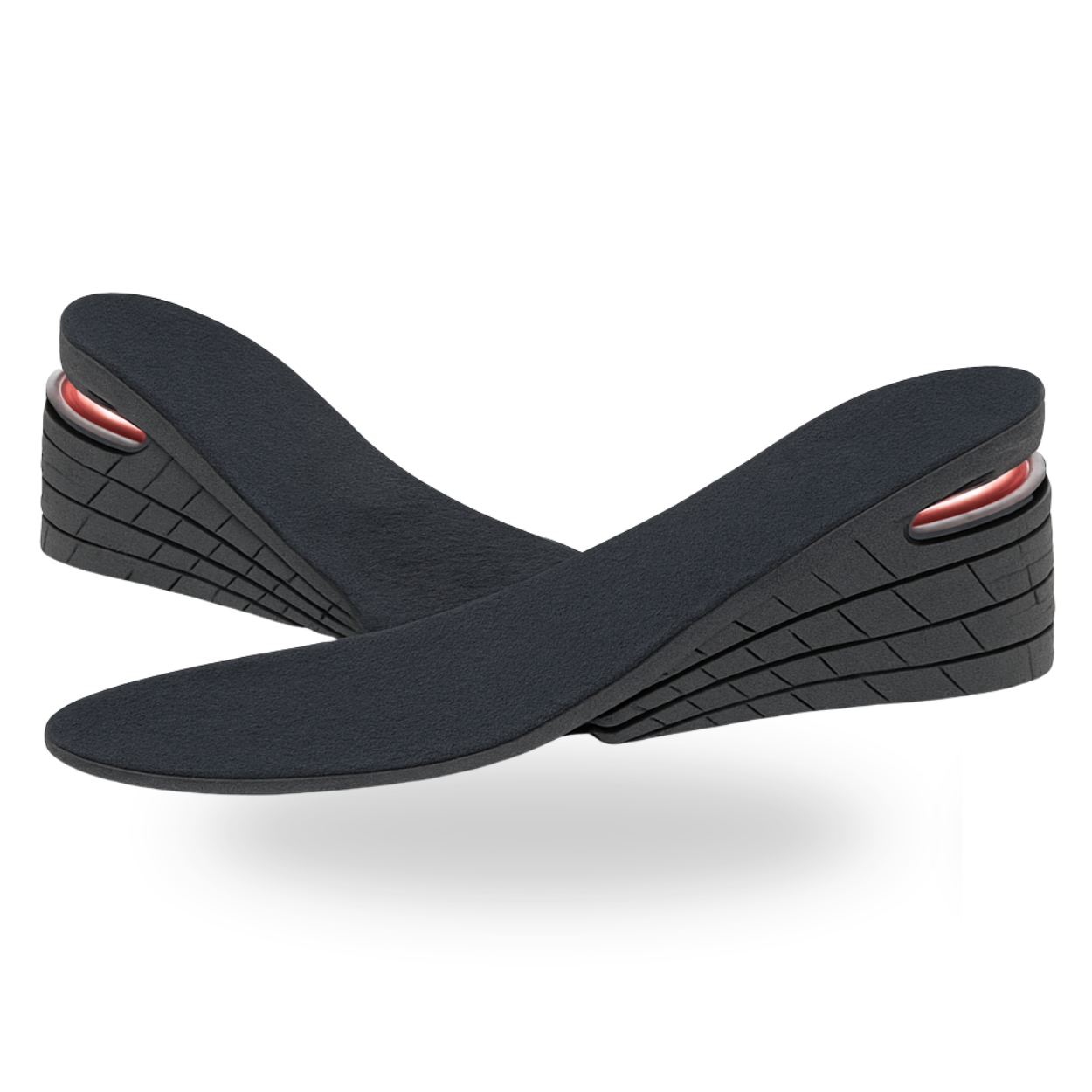


Height increasing insoles for shoes
£16.99
- Adjustable height in your shoes – Slip these insoles into your trainers or boots. With five removable layers, you can choose your boost, from a subtle lift up to about 3.5 inches, perfect for daily comfort or a confidence bump for a special event.
- Discreet fit for everyday footwear – Designed for both men and women to work inside high-top sneakers and casual boots, so you get the height without needing bulky or obviously raised shoes.
- Hidden confidence boost – The lift is completely inside your shoe, helping you stand taller and feel more assured. No one will spot a chunky sole or raised heel.
- Step-friendly comfort – A gel-cushioned heel pad softens impact, which is great if you’re often on hard floors. It helps ease strain on sensitive spots like your heel or Achilles.
- Built for stability – A cupped heel and gentle arch support help keep your foot centered and stable, reducing that “rolling in” feeling you can get when your foot sits higher up.
- Designed for comfort, not just height – A smart choice if you manage occasional heel discomfort or have a mild leg length difference. It’s an adjustable, graded lift instead of a one-size-fits-all insert.
- Try them risk-free – Give them a go for 30 days. If they’re not right for you, just send them back for a full refund.
Why People Turn to Height-Increasing Insoles
A small change inside your shoe can do more than you might expect. For some, it’s about standing a little taller and feeling more confident. For others, it’s about taking the strain off a heel that aches by the end of the day. Those are very different goals, but they both come back to the same underlying idea: adjusting the support and alignment inside your footwear.
Most people consider heel-raising insoles for one of these two reasons.
For subtle height. You may want to feel a bit taller and more assured, without obviously raised soles or a bulky heel. Perhaps you have a favourite pair of trainers or boots you’d like a little more presence in. A modest lift can change your posture and how you carry yourself, and it stays completely out of sight.
For persistent discomfort. This is for when the same niggle keeps returning — the sharp under-heel pain on first stepping out of bed, the tightness in the Achilles after walking uphill, the heavy ache in your feet by late afternoon. You might also notice:
- a sharp pain under the heel when you first get up;
- persistent tightness or aching in the Achilles tendon after walking or on stairs;
- heavy, tired feet and ankles after time on hard floors;
- a sense that one side of your body is working harder, sometimes leading to one-sided hip or lower back tension.
Some people have been told they have a slight leg length difference or a specific heel issue. Others simply feel their feet and lower legs aren’t as resilient as they used to be. It’s frustrating when the problem continues even after trying different shoes.
Whatever your reason for considering these insoles, the important thing is to understand what a raised heel actually does to your feet, legs and posture. That’s what the rest of this page covers — how the changes work, who they help, and how to use them safely.
What happens in your body when your heel is raised
Raising the heel inside a shoe, even by a few millimetres, changes how your body distributes load. The effects start at the foot and travel up through the leg and spine.
Under the heel. The fat pad and the tough band of tissue that runs from the heel to the toes — the plantar fascia — absorb impact and tension. In flat, firm shoes, the heel pad takes a sharp hit at each step, and the plantar fascia has to cope as the arch flattens. If that area is already sore, this combination can produce a sharp jab on the first few steps after rest. A cushioned lift changes that pattern. Your heel meets the ground at a slightly different angle, some weight moves towards the midfoot a little earlier, and the lift absorbs part of the impact. The result is a less abrupt force through the heel pad and plantar fascia, which can take the edge off early-step pain.
At the ankle and calf. A heel lift positions the heel bone higher than the front of the foot, which holds the ankle in a slightly more pointed position and keeps the calf muscles and Achilles tendon a little shorter. During the push-off phase of each step, the ankle doesn’t need to bend upwards as far, so the Achilles tendon and calf muscles don’t have to stretch as much. If you have soreness at the back of the heel, that usually makes each step feel easier. The trade-off is that if you wear a raised heel constantly and never stretch, those tissues can adapt to the shorter position and feel tight when you go back to flat shoes.
Under the ball of the foot. Raising the heel shifts more weight forward, especially at higher heights or when you stand for a long time. The joints and soft tissues under the metatarsal heads — the balls of the feet — receive more pressure. Many people handle this without issue, but if you already have forefoot sensitivity, it can flare up.
Higher up. A raised heel moves your centre of gravity forward. To keep your head level and your balance, your knees, hips and spine adjust automatically: you may bend your knees slightly, tilt the pelvis and increase the curve in the lower back. For someone with a typically flatter back, this can feel comfortable. For someone whose lower back already curves strongly or is sensitive, a large or sudden change in height can make things worse.
One shoe only. If a lift is used under one foot to compensate for a shorter leg, the mechanics are different. When the height is judged correctly, it can level the pelvis and reduce sideways bending in the spine. If it’s too high, it can overcorrect, tilting the pelvis the other way and moving symptoms to the opposite side.
All of that from something hidden inside a shoe. The point of understanding these changes is to know when a lift is genuinely likely to help, and when it might not.
In simple terms, a heel lift changes joint angles, muscle length and how pressure is shared between the heel, midfoot and forefoot. Used thoughtfully, it can shift load away from uncomfortable tissues or balance a mild asymmetry. Used carelessly — or at full height without allowing time to adapt — it can create new problems or make existing ones more noticeable.
When to Consider a Heel‑Raising Insole
Once you understand how a raised heel affects posture and movement, it becomes easier to see when an insole is worth trying.
For height and confidence
If you want a bit more height without shoes that look elevated, an in-shoe lift is a practical option. You may simply want to feel taller at work, at social events or as you move through your day. A small lift can alter your posture and how you carry yourself, and because it’s hidden inside your shoe, no one needs to know it’s there.
Why this is different: support, not just height
A dedicated heel-raising insole isn’t the same as a pair of high-heeled shoes or a cosmetic ‘elevator’ shoe. It’s designed to sit inside a shoe that already supports your foot well. That means you get the height while your foot remains in a stable, balanced position. You’re managing the changes that come with a raised heel — the forward lean, the calf tension — with proper support already around your foot. That combination of height plus support is what makes it work.
For managing pain and discomfort
A cushioned heel lift can also be part of a sensible approach to several common sources of foot, leg and back discomfort.
Before going further, one important note. If you have sudden severe pain, visible deformity, major swelling, a new and obvious limp, or a recent acute injury to your lower limb or back, don’t start with a heel lift. Get a professional assessment first. Once you have a diagnosis, a small, controlled change in heel height can be built into a plan agreed with your clinician.
If any of the following sound familiar, a heel lift may be worth considering. Each one has a dedicated section below explaining what causes it and how the lift can help:
- pain under the heel, especially with the first steps after rest — see Plantar heel pain;
- pain or stiffness at the back of the heel or lower Achilles tendon — see Achilles-area pain;
- general heel and ankle ache or fatigue by the end of the day — see General heel and ankle fatigue;
- a feeling that one side of your body is consistently bearing more weight — see Mild leg length difference;
- forefoot pressure or pain when wearing raised shoes — see Forefoot pressure;
- knee or hip ache that seems linked to posture or gait — see Knee and hip ache;
- lower back tightness after long periods of standing or walking — see Lower back tightness;
- a feeling of being less steady or confident on your feet — see Balance and confidence.
The detailed sections below cover each of these in full.
How Our Heel‑Raising Insole Is Built to Work
Adjustable 5-layer stack system
Under the heel, our insole has five removable layers. You can build the height up or strip it back by adding or removing layers. One or two layers give a subtle lift; all five take you up by around 3.5 inches.
Each layer changes the angle at the ankle and alters how your weight falls between heel, midfoot and forefoot. With one or two layers, the heel sits a little higher, the ankle doesn’t have to bend as far at the end of each step, and the calf and Achilles are only slightly shorter than they’d be in a flat shoe. For most people, this feels like moving from a completely flat shoe to one with a small built-in heel.
At three to five layers, the heel position becomes more like a clearly raised heel. The ankle no longer needs to bend upward as much during push-off, which means the Achilles tendon isn’t stretched as far. That can help some people with tendon irritation. The trade-off is that more weight moves onto the ball of the foot, and the postural changes higher up the leg and back become more pronounced.
The step between each layer is deliberately small. This mirrors the way clinicians usually introduce heel lifts: gradually, rather than as one large wedge. Muscles, tendons and joints adapt far better to small, incremental changes than sudden jumps. Starting low and only adding layers when you feel comfortable gives your body time to adjust. It also lets you choose different heights for different situations — a modest lift for everyday wear, and a higher setting for a short event if the shoes you’re wearing have the room to cope.
Because the layers are thin, it’s easier to find a height that suits you individually, whether you’re making that call yourself or in discussion with a clinician.
Gel air-cushion heel and shock management
Beneath the heel area is a gel air cushion that compresses slightly under load and springs back. It sits directly under the heel bone once the insole is in place.
In normal walking, the heel hits the ground first. With little cushioning, that impact is taken by a small area: the fat pad, the bone and the point where the plantar fascia attaches to the heel. On hard floors, or if that area is already sore, the sudden pressure can feel like a bruise or a sharp jab.
The gel cushion gives you a softer landing. As your heel comes down, the gel flattens slightly, spreading the force over a larger area and a slightly longer moment. That reduces the pressure peak at the most sensitive spot. For someone with a sore heel pad or a tender plantar fascia attachment, walking on hard surfaces feels less like constantly pressing on a bruise.
The amount and placement of the gel has been chosen to target the area that takes most heel strikes in many adults, based on what clinicians commonly see. The cushioning is active at every height setting, so whether you use one layer or all five, your heel is still landing on something with give — not a hard block. That’s an important detail when you’re trying to ease the first contact of each step.
Shape and support under the heel and arch
The back of the insole is shaped into a shallow cup around the heel. Instead of the heel bone sitting on a flat surface where it can roll to one side, the raised edges hold it more centrally over the lift.
This matters because a heel that tips too far inwards puts extra stretch and pressure on the inner side of the heel pad and the plantar fascia. A heel that tips too far outwards does the same on the outer side. Keeping the heel close to the middle shares pressure more evenly from side to side and stops you feeling as though you’re balancing on the edge of the lift — particularly important when you’re raising the heel higher.
Further forward, there’s a gentle rise under the arch. It’s not a rigid, corrective arch support, but it supports the inner side of the foot. If your arches tend to drop when you stand, this rise can limit how far the arch flattens and how much the plantar fascia is pulled on each step. If you have a stiffer, higher arch, the effect is more about increased contact and a sense of support than a major change in movement.
The depth and shape of the heel cup and arch were chosen with input from clinicians to suit the common inward-roll patterns seen with plantar heel and Achilles problems. They’re deep enough to steady the heel without feeling intrusive. For someone who has heel pain and tends to roll in strongly, this shaping works alongside the lift and cushioning: the lift reduces how far the fascia is stretched, the cushioning softens the impact, and the cup helps prevent the heel from dropping inward.
Discreet fit inside trainers and boots
Our insoles are designed for high-top trainers, boots and other footwear that comes up around the ankle. The way the shoe is constructed makes a big difference to how stable and comfortable a heel lift feels.
The firm piece at the back of the shoe — the heel counter — helps keep your heel sitting correctly over the insole. When your heel is higher than usual, there’s more leverage on the back of the shoe. If the heel counter is soft or flexible, the heel can slip or rub, especially with more layers in place. A firm counter holds its shape and helps the foot and insole move as one.
The shoe also needs enough depth. If the heel area is shallow or the top of the foot is cramped, adding layers pushes your foot upward and forces your toes against the upper or into the front of the shoe. That increases pressure under the ball of the foot and can irritate skin or nails. A shoe with good depth and enough toe room lets you sit on the lift without crowding the front of your foot.
A sole that doesn’t twist easily through the middle also helps. If the sole is very flexible, the lift can tilt or collapse unevenly under load, which is the last thing you want when the heel is raised.
From the outside, in a suitable trainer or boot, the shoe looks completely normal — the lift is hidden inside. If you want extra height without obviously elevated shoes, that combination of a stable shoe and a concealed lift is attractive. The design of the insole, from the stack layers to the heel cup and gel placement, follows the same principle clinicians use when adjusting heel height: change it gradually, but keep the foot secure.
How to use the height for your goals
Standing a little taller – everyday height and confidence
If your main goal is more height and you don’t have any pain, it still makes sense to start with fewer layers and build up gradually rather than going straight to the maximum.
For everyday wear, most people are happiest with a modest lift. One or two layers can change your posture and your eye line, and they’re far easier for your feet, calves and back to cope with over a full day.
For a special occasion where you want maximum height — a night out, a wedding, an important meeting — you might add all the layers. Just bear in mind that a higher lift puts more strain on your calves and pushes more weight forward. Test that height at home first. Walk around, try the stairs and stand for a few minutes in the shoes you plan to wear. If you feel unsteady, or your calves or back start complaining quickly, remove a layer and prioritise stability.
For some people, even a small increase in height makes a noticeable difference to how they carry themselves. They stand a little straighter, feel less self-conscious and find it easier to engage with others. That’s a perfectly good reason to use them, as long as you respect the mechanical side of things and introduce the height in stages.
Using the height to ease pain and discomfort
If you’re more interested in comfort than height, let your symptoms guide which layers you use.
For plantar heel pain — sharp under the heel on the first steps in shoes after rest, then easing — the problem is usually the plantar fascia and heel pad being overloaded at the moment of loading. A small to moderate lift is often the place to start. The lift reduces how far the plantar fascia is stretched on those first steps, and the gel cushion softens the direct impact on the sore spot. Try the lower layers for a few days and notice whether the getting-going pain becomes shorter-lived or less intense before adding more height.
For Achilles-area pain — stiffness and pulling at the back of the heel or lower tendon, especially on stairs, slopes or push-off — the tendon is being stretched in the last part of ankle bend more than it likes. A mid-range lift that clearly takes the strain off in that final part of the step can be more useful. Too little lift may not change the workload on the tendon; too much can protect the tendon but leave the calves very tight and shift too much pressure to the front of the foot. Watch for signs that the height is helping: does morning stiffness last less long once you’re in your shoes? How does the tendon feel during activities that used to provoke pain? Any new pain elsewhere?
For general end-of-day heel and ankle fatigue — no single sore point, just tiredness — even a small lift can be enough. The aim is to soften the impact of thousands of heel strikes and slightly vary the ankle position, not to dramatically change your posture. Chasing maximum height in this situation offers little benefit and can create new problems.
In every case, the stack is there for you to adjust based on how your body responds. Avoid changing the height every day. Pick a setting, give it long enough — days or weeks, not hours — to see how your symptoms behave, then adjust up or down from what you observe.
Using the height for mild leg length differences
If a clinician has told you that one leg is slightly shorter than the other and that this may be contributing to your symptoms, a heel lift on the shorter side can sometimes help.
When one leg is shorter, the pelvis tends to dip on that side when you stand. Your spine then bends sideways to keep your head and eyes level, which means the muscles and joints on one side of your back and hips work harder to hold you upright. Over time, that uneven effort can lead to fatigue or pain on one side.
A heel lift under the shorter leg effectively lengthens it, helping the pelvis sit more evenly. The spine then doesn’t need to bend as much just to keep you upright. That’s the basic principle: a small lift at the foot can, in the right circumstances, reduce the amount of bending and load higher up.
Because each extra layer changes pelvic tilt and spinal curve a little more, it’s safer to increase gradually than to put in a large lift on day one. Working with the clinician who identified the difference, use the stack to:
- start with a small lift and see whether symptoms on the hard-working side ease;
- adjust up or down if the pain shifts, improves, or new discomfort appears on the other side.
Guessing that you have a leg length difference and self-correcting with a large lift is easy to get wrong. If the apparent difference comes from the way your pelvis or spine sits rather than from actual bone length, lifting one side may not help and could add strain. In that scenario, the stack is still useful, but only as part of a plan agreed with someone who has assessed you.
Fitting your insoles and building the height safely
Choosing suitable footwear
The first practical step is choosing shoes that can safely take a lift. Look for footwear with:
- enough depth at the heel for your foot to sit on the lift without being pressed hard into the top of the shoe;
- enough room for your toes so the raised heel doesn’t jam them into the front or against the upper;
- a firm heel counter that doesn’t collapse when you press the back of the shoe;
- a sole that doesn’t twist easily through the middle of the foot.
High-top trainers and many boot styles tend to tick these boxes. Their higher collars support the ankle, and their heel areas are more structured than soft, low-cut shoes. Very shallow, tight or floppy footwear is a poor partner for a high lift because it allows the heel to move around and pushes the front of your foot into a cramped position.
A simple test: put the shoes on without the insoles and make sure they’re comfortable. Then add the insole at its lowest setting and try again. Does the heel stay put or slip? Is there any new rubbing at the back? Do your toes still have space? That gives you a quick sense of which shoes genuinely work.
Setting your starting height
Once you have the right shoes, the next decision is how much height to start with.
Most people do better starting low and building up than starting high. One or two layers under each heel introduces the idea of a lift without forcing your body into a very different position.
Wear that height for several days to a couple of weeks and let your body tell you how it’s coping. As you go through your day, notice:
- whether the pain you’re trying to help has changed. Is your first-step heel pain shorter or less sharp? Does Achilles stiffness ease more quickly?
- whether anything new has started to ache — the front of your foot, your knees or your lower back, for example.
- whether you feel steady on stairs, when turning quickly, or on uneven ground.
If the original pain is easing and no new aches are appearing, you’re probably on a sensible setting. If a particular height triggers new pain or clearly worsens existing pain, drop back to the last level that felt manageable rather than trying to push through it.
If you’re using a lift on one side only for a leg length issue, follow the plan agreed with your clinician. Each extra layer changes the way your pelvis and spine sit, so it’s important to involve them in those decisions.
Wearing time and adaptation
How long you wear the insoles each day matters too, especially at first.
In the early days, it’s easier to wear them for a few hours rather than from morning until night. You could, for example, wear them for part of the day and switch back to your usual shoes later. That gives your body time to learn the new position without being in it constantly.
When you first change heel height, it’s normal for your calves or the soles of your feet to feel more ‘aware’ or a little tired by the end of the day. If it feels like ordinary muscle tiredness and settles with rest and simple calf or foot stretches, that’s usually a normal part of adapting. Stretching helps stop the calves from tightening up around the new height.
The warning signs are different:
- pain that becomes sharper and builds day by day in your feet, ankles, knees, hips or back;
- ankles that feel as though they might give way;
- new numbness, tingling or burning in your feet or toes;
- swelling that appears or worsens after you start using the insoles.
If you notice any of these, reduce the height, wear them for shorter periods, or stop and ask a clinician for advice. How you feel after a few days at each height is your best guide to what works.
Who our insoles may help – and when to be cautious
Who may find this product useful
These insoles are for adult use. They may suit you if:
- you’d like to stand a bit taller inside suitable trainers or boots, and you’re prepared to increase the height in steps rather than all at once, knowing that your body needs time to adapt;
- you have heel or Achilles-area discomfort that has already been discussed with a clinician, is stable rather than deteriorating, and doesn’t stop you from walking reasonable distances. You want to see whether a modest heel lift and cushioning can make daily standing and walking more comfortable alongside your current plan;
- you’ve been told you have a small structural leg length difference that is contributing to one-sided back or hip fatigue, and a clinician has advised that a graded heel lift on the shorter side may help.
If any of these sound like you, the adjustable height and cushioned heel mean you can explore different settings and find what your body tolerates, rather than being locked into one fixed position.
Who should seek advice before using this product
Some situations need a professional opinion before you start. Talk to a GP, physiotherapist, podiatrist or other appropriate clinician if:
- you’ve recently injured your foot, ankle, knee, hip or back and you still have significant pain, bruising or a feeling that the joint is unstable;
- you’ve noticed sudden swelling, heat or redness around the heel, ankle or calf, especially if one side is much more affected than the other;
- you’ve developed a new, obvious limp, find it very hard to bear weight on one leg, or feel as though you’re dragging one foot;
- you have known problems with circulation or nerve supply to your feet, which can reduce your ability to feel pressure, rubbing or skin damage;
- you often lose your balance or have had several falls, so anything that changes your base of support needs careful thought.
If you’re in any of these situations, it’s better to bring a heel lift into your care with advice from someone who knows your medical history, rather than adding it on your own.
Common heel, leg and back problems these insoles may help with
Here is a closer look at how each problem develops, and how a heel-raising insole can play a practical part in managing it.
Safety, warning signs and important information
Any heel-raising insole changes how your feet, legs and back are loaded. Many people use them safely as part of managing pain or building confidence about height, but there are times when extra care is needed. These points are here to help you judge when to get things checked.
Speak to a GP, physiotherapist, podiatrist or other appropriate clinician before using this product if:
- you’ve recently injured your foot, ankle, knee, hip or back and still have significant pain, bruising or a feeling that the joint is unstable;
- you’ve noticed sudden swelling, heat or redness around the heel, ankle or calf, especially if one side is far more affected than the other;
- you’ve developed a new, obvious limp, find it very hard to bear weight on one leg, or feel as though you’re dragging a foot;
- you have known circulation or nerve supply problems in your feet, which may reduce your ability to feel pressure, rubbing or skin damage.
Stop using the insoles and seek assessment if, after introducing them, you notice:
- pain in your feet, ankles, knees, hips or back that is clearly getting worse rather than slowly settling;
- new numbness, tingling or burning in your feet or toes;
- a feeling that a joint is giving way, locking or becoming unpredictably unstable;
- a very hot, tender, swollen calf or foot, as this can occasionally point to a more serious problem needing urgent attention;
- any sudden deformity, or a new inability to push up onto your toes.
This product is designed for adult use and is not intended for children. It doesn’t replace individual medical assessment, diagnosis or treatment. The information here is general guidance, not a personalised plan. What works best for you will always depend on your overall health and what your days involve. If you’re unsure, talk it through with a clinician. Responses to heel lifts and cushioning vary from person to person, and no particular level of pain relief or improvement can be guaranteed.
If your symptoms are severe, changing quickly, associated with feeling unwell or feverish, or are seriously affecting your day-to-day activities, seek professional advice before or alongside using any insole or heel lift.
Bringing it together and what to do next
Raising the heel inside a shoe changes how your foot and leg take strain. It alters how much the plantar fascia, heel pad and Achilles tendon are pulled and compressed, shifts some weight between the heel and the front of the foot, and influences posture at the knees, hips and lower back. In the right person, at the right height, those changes can reduce the sting of certain pain patterns or help balance a small, known leg length difference. The same changes, if overdone or introduced too quickly, can put new demands on other areas.
These insoles combine:
- an adjustable five-layer heel stack, so you can increase height in small, manageable steps;
- a gel-cushioned heel, to soften the impact when your heel first hits the ground;
- a cupped heel shape and gentle arch support, to steady the heel and keep the foot guided while it sits higher inside the shoe.
Together, these features let you alter heel height in a controlled way, ease some of the stress under the heel and at the back of the leg, and keep your foot more stable over the lift — all from inside supportive trainers or boots, without relying on obviously raised shoes.
If your pain behaves in the ways described here, and you don’t have the warning signs in the safety section, this type of insole may be worth trying. Introduce the height gradually, in suitable footwear, and let your body’s response guide how far you go. If you’re unsure what height to use, which shoes are most appropriate, or whether this kind of product is right for you at all, talk it through with a GP, physiotherapist, podiatrist or other relevant clinician. They can help you choose a starting height, decide how quickly to build up, and fit the insole into the rest of your care.


Reviews
There are no reviews yet.