


FootReviver™ Orthotic Plantar Fasciitis Insoles
£9.99
- Designed specifically for plantar fasciitis heel and arch pain: Sharp first‑step pain in the morning, aching after time on your feet, or soreness along the arch that keeps coming back.
- Targets the real source of the problem – how your foot is loaded: Supports the band under your foot (plantar fascia), steadies the heel, and helps stop the arch dropping and rolling in more than it can comfortably cope with.
- Firm 3/4‑length support where you need it, not a hard block under your whole foot: A structured base under the heel and arch holds its shape to support you, while the front of the insole stays softer and more flexible for natural push‑off.
- Deep heel cup with cushioning to calm sore heels in shoes: Cradles the heel, holds the fat pad under the heel bone, and spreads impact away from the tender spot where the plantar fascia attaches.
- Shaped arch support with gentle control of extra inward roll: Meets the arch earlier in the step so it cannot collapse as far, and reduces extra rolling‑in that repeatedly tugs on the fascia at the heel.
- Full‑length cushioned top layer to protect the forefoot as well as the heel: Runs from heel to toes, gradually shaping to your foot to share pressure under the ball of the foot and give space for wider or splayed toes.
- Helps on hard floors, long periods of standing or walking, and higher‑impact days: Combines firm rearfoot support with cushioning under heel and forefoot to make standing, walking, and even light running or sport more manageable.
- Trim‑to‑fit design for most closed‑back shoes: Cut to size at the front, drop into your usual shoes, and the anti‑slip base helps keep them in place under your heel and arch.
- Normal to feel them at first – then expect steadier, more comfortable steps: Start with a few hours a day and build up. A mild awareness under the arch and heel is common at first; as your feet adjust, many people find standing and walking become easier and less painful.
- One practical part of managing plantar fasciitis – clear support, not a magic cure: Works best alongside sensible changes in time on your feet and any exercises or advice from your GP, physiotherapist, or podiatrist.
When heel and arch pain start to interfere with your day
Pain under the heel or along the arch can start to get in the way of more and more of your day. You might recognise some of these patterns:
- A sharp, bruised feeling under the heel when you first get out of bed.
- Pain that flares when you stand up after sitting for a while.
- An ache under the heel or along the arch that builds when you have been on your feet for a long time, especially on hard floors.
- A sense that you are starting to shorten your stride or favour one leg to avoid a sore spot.
If those examples sound familiar, it is worth knowing what is going on under the foot that makes it feel this way. In many people this is largely a mechanical problem: a strong band of tissue under the foot is taking more load than it can comfortably cope with. Once you have a clearer picture of how that band works, why it becomes sore, and how changing the way your foot is loaded can help, it is easier to see why a well‑shaped insole can be a very sensible part of your treatment.
What the plantar fascia does under your foot
Underneath all of this is a strong band of tissue that does more work than most people realise – the plantar fascia. It runs from the underside of the heel bone towards the toes, lies just under the skin and the soft fat pad of the heel, and then fans out towards the ball of the foot.
In everyday walking this band:
- Helps hold up the arch so the middle of the foot does not collapse each time you stand.
- Acts like a tensioned strap, resisting the arch dropping too far when your body weight comes on.
- Works with the small muscles inside the foot and the Achilles tendon to help you push off smoothly.
As you take a step, the plantar fascia stretches a little when you load the foot and then recoils as you move forwards. This happens with every step and normally you do not notice it. Problems usually start when that band is stretched or squashed more often, and more forcefully, than it is built to cope with, particularly where it attaches into the underside of the heel bone.
If this keeps happening, small parts of that band are repeatedly strained and irritated. The body reacts with some inflammation around those areas and the local nerves become more sensitive, so smaller loads feel more uncomfortable. Over time the tissue can thicken slightly and lose some of its natural spring, so it is less comfortable with sudden stretch or repeated loading.
How and why plantar fasciitis develops
When people talk about plantar fasciitis, they usually mean pain and irritation in this band under the foot, most often near where it joins the heel. The tissue has become sore enough that normal standing and walking are now provoking it.
Typical pain patterns and tell‑tale signs
Several features commonly point towards plantar fasciitis:
- First steps after rest
When you sleep or sit for a long time, the plantar fascia rests in a shortened position. Fluid does not move through it as freely and the fibres settle slightly closer together. When you stand and put your full body weight through the foot, that stiffened band is quickly stretched. The sensitive area at the fascia’s attachment on the underside of the heel is loaded and lengthened at the same time, so those first few steps can feel sharply painful, even before you have shoes on. - Settling, then returning
As you move, blood flow improves and the band warms. The tissue becomes a bit more flexible and pain often eases. Later in the day, especially if you have been on your feet a lot, the same sore areas are loaded again and again. This is when you may notice that tired ache or those sharp twinges returning under the heel and along the arch. - Where it is sore to touch
Pressing just in front of the heel on the sole of the foot often feels tender or bruised. Some people feel this running forwards into the inner part of the arch. - Link to weight‑bearing
The pain is mainly brought on by standing and walking. Discomfort that is just as bad lying in bed, pain deep in the ankle or further up the leg, or pain that has no clear link to being on your feet can point towards other causes and should be discussed with a clinician.
Plantar fasciitis can affect one or both feet. It often starts on one side and, if that foot is protected, the other may gradually begin to ache as it takes more of the work. It is understandable to feel fed up when something as simple as getting up from a chair or standing in a queue brings that familiar pain back.
Short‑term flare‑ups versus longer‑running heel pain
Some people can link the start of their heel pain to a clear change, such as:
- A new role with more standing or walking.
- A holiday or event involving much more walking than usual.
- Swapping to very flat or thin‑soled shoes.
In this earlier stage there is often more obvious inflammation around recently overloaded fibres. Pain tends to be sharper and more clearly linked to recent activity. With sensible changes in loading and better support, symptoms can settle over a period of weeks.
In other cases, heel pain has been present for several months or keeps coming back whenever activity increases. In these longer‑running cases:
- The plantar fascia can become thicker and less springy.
- Local nerves can become more sensitive, so smaller forces feel more uncomfortable.
- The band may feel tight and sore not only with walking but also with gentle stretching.
- Calf and small foot muscles may stiffen or overwork to protect the sore area.
In this group it often feels like a nagging background ache with sharper spikes when you do a bit more. Because the tissue and nerves have adapted over time to working in this sore, stiff condition, they tend to need repeated days of better‑controlled loading before they calm down. That can feel slow, but it is how this type of tissue usually settles – lots of small, sensible steps in the right direction rather than one big change overnight.
It is also important to say that not all heel pain is plantar fasciitis. Irritation of a nerve, a problem in the bone, or an inflammatory joint condition can also cause pain in this area. If your pain is severe, rapidly worsening, very different from the patterns described here, or associated with swelling, redness, fever, or feeling generally unwell, you should seek a medical assessment rather than assuming it is plantar fasciitis.
How the way your foot moves stresses the plantar fascia
The way your foot moves and rolls when you walk has a big effect on how much strain the plantar fascia has to cope with.
Normal gait and why some inward roll is helpful
In a typical step:
- Your heel (the calcaneus) touches down first.
- Weight moves forwards over the middle of the foot.
- Your body passes over the foot as the ankle bends and the knee moves forwards.
- You push off through the ball of the foot and toes.
As weight moves from the heel to the middle of the foot and the foot takes your full body weight, it normally rolls inwards a little. This is called pronation. A small amount of this inward roll is useful because it:
- Allows the foot to adapt to the shape of the ground.
- Helps share pressure between the inner and outer parts of the sole.
- Lets joints and soft tissues absorb some of the impact.
So pronation is not “bad” in itself. Your foot needs some inward roll to work well. Trouble usually starts when it is more than your foot can comfortably control.
When the foot rolls in too much or for too long
Difficulties often appear when the foot:
- Rolls in more than it needs to, and
- Stays rolled in for longer as you move forwards.
This is often called overpronation. It is more common if:
- Your feet are flatter.
- Your feet are very flexible and the arches collapse easily.
- Your shoes are very soft or worn on the inside edge.
In this situation, the heel bone tips inwards further, the inner arch (medial longitudinal arch) lowers more and can stay lowered through much of the time your foot is on the ground. The plantar fascia has to work harder to support the arch and limit this movement, and the point where the fascia anchors into the underside of the heel bone is pulled on firmly during mid‑stance, when your full weight is over that foot. When that happens on every step, over days and weeks, it is not surprising that the attachment at the heel becomes irritated.
So what does that mean for you? It means that if your foot rolls in too far or for too long, that small attachment under the heel is being pulled harder and more often than it is happy with.
High arches and when heel and forefoot take the hit
Some people are on the other side of this, with higher, stiffer arches. If this is your pattern, you may notice that most of your weight seems to go through the heel and the ball of the foot, there is very little contact under the middle of the foot, and firm surfaces feel particularly unforgiving. If you recognise yourself here, it does not mean anything is “wrong” with your foot shape – it just means we need to think about how that shape handles load on hard ground.
Because the foot does not roll inwards much:
- There is less soft, “built‑in” shock absorption from movement in the ankle and mid‑foot joints.
- The heel fat pad and the area where the plantar fascia attaches under the heel bone take more direct impact.
- The metatarsal heads at the front of the foot, and the plantar plates and joint capsules beneath them, are exposed to higher, more localised pressures.
In this situation, the plantar fascia is not being overstretched, but its heel attachment and the tissues under the heel and forefoot can still become sore from repeated, focused loading, especially on hard floors.
Everyday patterns that overload the plantar fascia
Foot shape and the way you walk are only part of the story. What you ask your feet to cope with each day is just as important.
Long days on hard, unforgiving surfaces
Spending many hours on hard floors such as concrete or tile means every heel strike drives the heel fat pad between the heel bone and a rigid surface. The small area where the plantar fascia joins the heel is repeatedly compressed from below, and the soft tissues under the heel and along the arch have to do more of the work of cushioning because the ground itself gives very little. Early in the day this may feel fine. As the hours pass, the fat pad can feel less protective and the tissues under the heel become more sensitive, so even normal standing and walking start to feel uncomfortable. If you finish a shift feeling that your heels have had more than enough for the day, this kind of repeated loading on a hard surface is often a big part of the reason.
Sudden jumps in walking or running distance
Becoming more active – for example, starting a regular walking routine or taking up running again – is a common time for heel pain to appear. Often, early outings feel fine, then pain starts to appear each time you go out and gradually becomes a regular feature. If you suddenly go from doing a little walking to much more, the number of times the plantar fascia is loaded goes up sharply and each loading cycle may be heavier, particularly when walking briskly or running. The muscles and tendons that support the foot may not yet have the strength and endurance to share this extra work. Between walks or runs, the fascia usually repairs small areas of strain and can gradually become stronger if there is enough easier time between harder days. If more demand is added before that repair is complete, small strained areas can build up instead of healing, and irritation develops.
Footwear that leaves the fascia doing too much work
Shoes that are very flat, very thin‑soled, or badly worn can pass more of the job of supporting the arch, cushioning impact, and limiting how far the foot rolls in or out directly to the foot. In this case, the plantar fascia becomes the main support for the arch every time you stand. The heel and forefoot have less help dealing with hard ground, and any tendency to roll inwards or outwards is less controlled. On softer ground or for short walks this may be fine. Over long days or on firm floors, this extra demand can be enough to push the fascia into becoming sore.
Tight calves and limited ankle movement
Tight calf muscles or a stiff Achilles tendon can make it harder for your ankle to bend upwards (dorsiflexion). As you move over your foot when you walk, the calf, Achilles tendon, and plantar fascia all have to lengthen. If the ankle joint itself does not move very well, more of that movement is taken up in the soft tissues. The heel bone is effectively pulled upwards by the Achilles from behind, while the plantar fascia pulls forwards under the arch from below, putting extra stress through the small area where the fascia grips the heel. Tight calves on their own do not usually cause plantar fasciitis, but in combination with long periods on your feet, hard surfaces, or feet that roll inwards they can add extra pulling forces to a band that is already sore.
How plantar fasciitis can affect the rest of your movement
Living with heel pain often changes the way you move, even if you are not aware of it. To avoid landing heavily on a sore area you may take shorter steps, spend less time on the painful foot and more on the other, or roll through your foot differently to keep pressure away from the tender spot.
Over time this can increase the load on the “better” foot, alter how the knee and hip joints bend and bear weight as you walk, and lead to new areas of muscle fatigue or joint discomfort, for example around the knees, hips, or lower back. It can be surprising how much a sore patch under the foot can change the way the rest of you moves. Not everyone with plantar fasciitis develops problems higher up, and not every knee or hip problem is related to foot pain. But ongoing heel pain can change the way you walk, and that can affect other joints. Making it easier and more comfortable to put weight through the sore heel and arch can therefore have useful knock‑on benefits for the way you move as a whole.
Where orthotic insoles fit into managing plantar fasciitis
Plantar fasciitis is usually best managed with a mix of approaches:
- Easing back, at least for a time, on how long and how intensely you are on your feet.
- Exercises to improve calf flexibility and strength of the foot muscles.
- Thoughtful choices about footwear and the support inside your shoes.
Once you understand where the strain is coming from, the idea of putting something under the foot to change those forces starts to make much more sense. This is where a supportive insole comes in. Supportive insoles are designed to change how forces move through the heel, arch, and forefoot.
Instead of simply adding a soft layer, a supportive insole for plantar fasciitis like the FootReviver model described here:
- Gives the arch and heel a firmer, better‑shaped base to work from.
- Reduces how far the arch can drop with each step.
- Cradles and cushions the heel, so impact is spread over more of the heel.
- Extends cushioning and support forwards under the ball of the foot.
The aim is not to hold the foot rigid. Some movement and a small amount of inward rolling are important for natural walking. The goal is to keep that movement within a range the plantar fascia, the heel fat pad, and the surrounding tissues can cope with more comfortably.
How Insoles Affect Forces on Your Heel and Arch
In shoes with completely flat, unsupportive bases, your arch tends to hang unsupported, relying heavily on the plantar fascia. When your heel strikes the ground, the impact is concentrated on a small area, allowing your foot to roll inward or outward more than is ideal.
A well-designed insole can make a significant difference by:
-
Providing shaped support under the arch so it engages with your foot earlier in each step. This prevents the arch from dropping too far before it reaches firm support, reducing the strain on the plantar fascia, especially during mid-stance when your body weight is directly over your foot.
-
Cradling the heel with a cushioning cup that spreads the load across more of the calcaneus and holds the heel fat pad snugly beneath the bone. This helps to minimise sudden compression where the plantar fascia attaches to the underside of the heel.
-
Gently limiting inward tilt for heels prone to rolling in, with a slightly raised, firmer area on the inner side beneath the heel and arch.
-
Providing a cushioned surface under the forefoot to distribute pressure evenly between the metatarsal heads and the soft tissues beneath them as you push off.
These features help reduce strain on the plantar fascia at its heel attachment and along the arch, making it easier for the fascia, heel fat pad, and soft tissues under the forefoot to withstand standing and walking.
What insoles can and cannot do on their own
Supportive insoles can make a clear difference to how your plantar fascia is loaded, and many people feel they can stand and walk more comfortably with the right support in place. They are, however, one part of managing this type of heel pain rather than the whole answer.
They do not:
- Remove the need to ease back, at least for a while, if pain is very severe.
- Replace the benefit of exercises that improve calf and foot function.
- Take the place of a proper assessment if symptoms are severe, changing quickly, or not improving over time.
Often it is when support, sensible changes in how long you are on your feet, and simple exercises come together that people start to feel they are turning a corner. In some longer‑running or more complex cases, more customised insoles, scans such as X‑rays or MRI if your clinician advises them, or other treatment options may still be needed.
Who might benefit most from insoles like these
These insoles are most likely to be helpful for people who recognise their own situation in some of these descriptions:
- Heel pain that is sharp on the first few steps of the morning or after sitting, eases a bit as you move, then returns if you stand or walk for long periods.
- A feeling that your arches “give way” or become tired and achy as the day goes on, especially if your feet look flatter or roll inwards.
- Discomfort under the heel and along the arch when you spend time on hard floors, particularly if your arches are higher and your feet feel quite stiff.
- Heel pain that settles when you rest or change your shoes, but comes back whenever time on your feet increases or you go back to very flat, thin‑soled footwear.
- A job or routine that keeps you on your feet for many hours most days.
If these descriptions sound like your own day – painful first steps, heels that protest after long spells on hard floors, or arches that feel as though they are giving up by evening – a structured insole is often one of the practical options to think about alongside the other things you are doing. If you recognise your own story in this, an insole that changes how weight is shared under your heel and arch is a very reasonable option to consider, alongside any other advice you have been given.
Those patterns can still look a little different from one person to another, so the next section looks at some of the most common ways this problem shows up.
Different ways this heel and arch pain can show up
The same sorts of stresses that irritate the plantar fascia can show up differently depending on your foot type, activity, and history. The overviews below look at common patterns and how a structured insole like this FootReviver plantar fasciitis insole may help in each case. They build on the main explanations above rather than repeating them.
Introducing FootReviver orthotic insoles for plantar fasciitis
So, with those patterns in mind, here is how this particular FootReviver insole has been put together to match what the plantar fascia and the rest of your foot actually need.
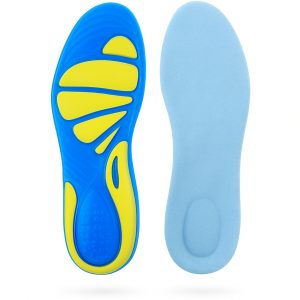
FootReviver orthotic insoles for plantar fasciitis have been shaped around the common features seen in plantar fascia–related heel and arch pain. Their design reflects the type of support clinicians such as physiotherapists and podiatrists often look for when helping people with this problem: a deep heel cup, a clear medial arch contour, and a firm rearfoot base with a softer full‑length foam layer, so the foot is guided and supported without a solid “block of plastic” feel under the whole sole.
They combine:
- A firm, three‑quarter‑length base under the heel and arch that holds its shape under body weight.
- A full‑length foam layer on top that runs from heel to toes and continues under the mid‑foot, forefoot, and toes.
- A deep heel cup with cushioning and built‑in heel pads.
- A contoured arch with a slightly raised inner edge to gently limit extra inward roll.
- A breathable, cushioned top surface, with a base designed to stay put inside the shoe.
The aim is to give the foot firm, sensible support where it needs it, without feeling like you are walking on a solid block. Together, these elements are designed to give the heel and arch a steadier base, reduce the repeated stretching and compression that aggravate the plantar fascia, and share pressure more evenly along the length of the foot as you stand and walk. This particular combination – a firm rearfoot base with a softer full‑length foam layer – is often preferred by people who find very rigid orthotics uncomfortable but still need clear support under the heel and arch, and it is a style of insole many clinicians choose when they want to support the plantar fascia without locking the foot rigidly.
How this FootReviver design supports your heel, arch, and forefoot
Structured three‑quarter‑length base to support heel and arch
Under the heel and arch, FootReviver insoles use a firmer base that runs to about three‑quarters of the foot’s length and stops behind the ball of the foot. This base holds the shape of the arch support and heel cup so they stay effective rather than flattening out under your weight. It provides a steady platform for the heel bone and mid‑foot joints, reducing how much the arch can sag when your full weight is on that foot, and it helps absorb and spread forces as they arrive through the heel and arch so pressure is shared rather than hitting one small point.
Because the firmer structure sits under the heel and arch and stops short of the toes, the insole gives targeted support where the plantar fascia is under most strain, while allowing the front of the foot and the smaller joints under the toes to move more freely on the softer foam layer.
Deep heel cup with integrated heel pads for sore heels in shoes
Around the back of the foot, the insole forms a deep heel cup with cushioning and heel pads underneath. This helps the heel bone sit squarely rather than tilting or sliding inside the shoe. It holds the soft fat pad more firmly under the heel, so it acts as a thicker cushion rather than spreading out too thinly, and it spreads impact over more of the heel, especially just in front of the heel bone where the plantar fascia attaches.
An insole cannot change what you feel on bare feet in those first steps out of bed. What this support can do is make it less likely that, once you are in your shoes and walking on firm ground, every step feels like a direct jab into the sore spot under the heel. For many people, that means that once they are up and in their shoes, the morning pain settles more quickly and does not build as intensely when they are up and about.
Contoured arch support to keep the band under your foot in a safer range
Along the inner side of the foot, the insole follows the curve of the arch instead of leaving a gap. This contour meets the arch earlier as your weight moves forwards from heel to mid‑foot, so the arch does not drop as far before finding support. It limits how much the medial arch can lower during the part of the step when the foot is taking your full weight, and it helps share tension along the plantar fascia, easing some of the strain on the fibres nearest the heel attachment.
If your arches flatten during the day or your feet roll inwards, this support helps keep the plantar fascia working within a more comfortable range. That goes straight to one of the main reasons the fascia became sore in the first place.
Gentle guidance for extra inward roll without forcing the foot
For feet that roll inwards more than is comfortable, the inner edge under the heel and arch is slightly raised and firmer. This reduces how far the heel bone can tip inwards when the foot is loaded in mid‑stance and shortens the time your foot spends in a strongly rolled‑in position. It encourages the heel and arch to sit closer to the middle of the shoe for more of the step.
The foot is still allowed to move and adapt to the ground. The support is there to take some of the extra roll out of the foot, not to hold it completely still. As described earlier about the fascia attachment, when the heel bone tilts in and the inner arch collapses, the plantar fascia is pulled more firmly at its heel attachment. This firmer inner edge under the calcaneus and arch helps reduce that tilt and pull.
Full‑length conforming foam layer to support the forefoot and splayed toes
Over the whole insole is a foam layer that runs from heel to toes. Under the heel and arch this sits on top of the firm base. Under the forefoot and toes it continues on its own. With regular wear, this foam layer gently shapes itself to your forefoot and toes, creating a more even contact surface. It helps share pressure between the metatarsal heads at the ball of the foot and gives a broad, cushioned base for wider or splayed toes that tend to spread when you stand.
If, as often happens with plantar fasciitis, you have started to push off more heavily through the front of the foot to get off a sore heel, the metatarsal heads, plantar plates, joint capsules, and the small plantar nerves between them can become irritated. By providing a more forgiving surface under the forefoot and making heel contact more comfortable, these insoles help the heel, arch, and forefoot share the load more fairly, rather than the front of the foot having to take over.
Shock‑absorbing, breathable top layer for comfort on long days
The insole combines a firm base layer that keeps the heel cup and arch contour in shape with a softer top layer that cushions the foot. The insole does not simply squash flat with use; the structure under the heel and arch stays supportive, and the softer top helps to slow and spread the impact of each step, particularly under the plantar fascia insertion, heel fat pad, and mid‑foot joints, without feeling unstable.
The top surface is designed to let some air move around the foot, with small channels or perforations to help moisture escape. Keeping the skin drier can make longer wear more comfortable and reduce rubbing. The underside of the insole is intended to grip the shoe so it stays in place, while the top allows the foot to settle without excessive friction.
Secure, anti‑slip fit and trim‑to‑size design
For the heel cup and arch support to work properly, they need to sit in the right place under your foot. These insoles are shaped to fit closely into most closed‑back shoes so they do not slide forwards or sideways and to stay flat against the base of the shoe rather than curling or bunching.
They are supplied in size ranges and can be trimmed to suit your shoe. Trimming is usually needed at the front and along the sides of the foam layer. Take off small amounts at a time from the toe end and outer edges, checking the fit in your shoe frequently. Do not cut into the sculpted heel cup or the part under the arch where you can feel the firmer base layer. Make sure that after trimming, the heel sits fully back in the cup and the arch contour lines up under your arch. This helps ensure that the parts of the insole designed to reduce strain on the plantar fascia stay directly under the heel and arch where they are needed.
How to fit and start using these insoles
Because this kind of structured support may feel different from what your feet are used to, it is worth taking a bit of care with how you introduce it.
Choosing suitable shoes
FootReviver insoles tend to work best in shoes that:
- Have a closed heel, so the heel cup of the insole can hold your heel properly.
- Have enough depth and space so that, once the insole is in, your foot does not feel cramped.
- Offer a fairly firm, flat in‑shoe base for the insole to sit on.
They are less suitable for very shallow or tight shoes, or for open‑back sandals where there is nothing to keep the insole and heel in place.
Trimming and positioning the insoles
If the insole is slightly too long or wide, take out any removable insole from your shoe and use it as a rough guide for trimming the new one at the front. Trim a little at a time from the toe end and outer edges of the foam layer, following any printed guidelines, and check each time that the insole lies flat inside the shoe with no raised edges. Avoid cutting into the sculpted heel cup or the part under the arch where you can feel the firmer base layer.
Once trimmed and placed in the shoe, push the insole right back so the heel cup sits against the back of the shoe. Check that the highest part of the arch support sits under your arch, not under the ball of the foot or the toes, and make sure there are no ridges or folds that might rub.
Building up wear time safely – normal break‑in
It is very common to notice that the arch support and heel cup feel “very present” under your foot at first. That awareness should ease as your feet get used to having proper backing under those areas. The arch, small joints in the mid‑foot, and the muscles under the arch are working in slightly different positions. The plantar fascia is being loaded in a new, more supported way, which can feel unusual at first. That does not mean something is wrong; it is often just the tissues getting used to the new support.
A mild ache, a sense of pressure under the arch or heel, or a feeling of awareness of the support during the first few days can all be part of this break‑in period. A dull ache or sense of stretch that settles as you move is usually part of this adjustment. Sharp pain that builds the longer you wear them is not, and that is the point to ease off and get advice. These sensations should ease as your feet adjust and as you build up the time you wear the insoles. You do not need to wear them all day straight away.
A gradual approach usually works best. Begin by wearing them for a couple of hours at a time in one pair of shoes you know are otherwise comfortable. If that goes well, increase the time over several days. Once you are used to them in one pair, you can start using them in other similar shoes. For most people, these mild adjustment sensations settle over several days to a week or two of gradually increasing wear time.
However, if you notice sharp new pain that gets worse the longer you wear the insoles, pain in new areas that keeps you awake at night, or marked rubbing, blisters, or pressure marks, then it is a sign to reduce wear time, check the trimming and fit, and, if needed, pause use and seek advice before continuing.
What to expect over the coming weeks
Everyone’s response is slightly different, and how quickly things change for you will depend on how long your plantar fascia has been sore and how much you are on your feet.
In the first days and weeks, many people notice:
- Less sharpness once they are up, in their shoes, and moving about in the morning.
- Less deep aching under the heel and arch at the end of a working day.
- A more stable feel when standing still for longer periods.
The first movement out of bed may still be sharp, because the fascia is being stretched again on bare feet, but once your shoes and FootReviver insoles are on, walking often becomes more manageable sooner than it used to.
If your heel pain has been present for several months, or keeps coming back as soon as you do a bit more, changes are likely to be steadier. As described earlier, the fascia and surrounding tissues may have thickened and become more sensitive over time, and they need repeated days of better‑controlled loading to settle. Many people need a few weeks of wearing the insoles regularly, alongside some adjustment to how long they are on their feet, before deeper changes in how the fascia feels and behaves are clear.
It is more realistic to expect that you will slowly be able to do a little more on your feet, with less of a “cost” afterwards, rather than expecting the pain to vanish completely in a few days. A useful way to judge progress is to compare how long you can comfortably be on your feet now, with the insoles in your usual shoes, to how long you could manage a month ago.
If, after several weeks of consistent use and reasonable care with your activity, your pain has not improved at all, or is getting steadily worse, then it is important to discuss this with a GP, physiotherapist, or podiatrist. In some situations, more customised insoles, scans such as X‑rays or MRI if your clinician advises them, or other treatment options may be needed.
Who these insoles are suitable for – important information
These FootReviver plantar fasciitis insoles are designed for adult feet. They are aimed at people whose heel and arch pain:
- Is clearly linked to standing and walking.
- Follows patterns similar to those described for plantar fascia–related pain, such as first‑step pain and end‑of‑day aching.
- Tends to flare more in certain shoes or after long periods on hard floors.
They may be particularly suitable if you have been told you have plantar fasciitis or a similar heel pain related to how the foot is loaded, or if your symptoms and day‑to‑day experience fit the explanations on this page.
You should seek personalised advice before using any supportive insoles if:
- You have diabetes with reduced feeling or poor circulation in your feet.
- You have significant numbness, colour or temperature changes in your feet from any cause.
- You have major structural deformities of the foot or ankle, or have had major surgery there.
- You are unsure whether your heel pain fits the typical plantar fasciitis pattern.
Stop using the insoles and seek prompt medical advice if you experience:
- Sudden, severe heel or foot pain after an injury or twist.
- Marked swelling, redness, or warmth around the heel or arch.
- Spreading numbness, tingling, weakness, or difficulty moving the foot or ankle.
- Heel or foot pain together with fever or feeling generally unwell.
Even if none of these signs are present, if your pain is persistent, spreading, changing quickly, or not improving despite using the insoles and adjusting your activity, you should speak with a GP, physiotherapist, podiatrist, or another relevant clinician. FootReviver insoles are intended as one part of managing this type of heel and arch pain and do not replace a full clinical assessment where it is needed.
If you are unsure whether this type of insole is right for you, it is always reasonable to ask your GP, physiotherapist, or podiatrist for their view. They see these patterns often and can weigh this option up alongside other parts of your care.
Summary – easing strain on the band under your foot with targeted support
Most of what you have been feeling comes down to how that band under your foot is being loaded, and how your heel and forefoot are having to deal with that load step after step. People with plantar fascia–related heel and arch pain often tell very similar stories: sharp pain with the first few steps, aching after time on firm floors, and a gradual tendency to change the way they walk to avoid a sore spot. Under all of this is a strong band of tissue on the sole of the foot that has been asked to cope with more stretch and more impact than it finds comfortable.
On this page you have seen how the plantar fascia works and why it becomes sore, how foot shape, the way you walk, surfaces, footwear, and activity levels all add to its workload, and how orthotic insoles can change the way forces move through the heel, arch, and forefoot.
FootReviver orthotic insoles for plantar fasciitis are designed with those mechanics in mind. The firm three‑quarter‑length base, deep heel cup with heel pads, shaped arch with gentle inward‑roll guidance, and full‑length conforming foam layer work together to:
- Support the arch so it does not flatten as far or as often.
- Cradle and cushion the heel to protect the fat pad and spread impact away from the plantar fascia insertion.
- Reduce extra inward or outward roll that repeatedly tugs on the fascia’s heel attachment and alters how the knee and hip are loaded.
- Provide a cushioned surface under the forefoot so load can be shared more evenly between the metatarsal heads, plantar plates, and toe joints.
The aim of this design is to change what the plantar fascia, heel fat pad, mid‑foot joints, and forefoot feel on every step you take in your shoes. FootReviver insoles are designed for adults and work best alongside sensible changes in how much time you spend on your feet and, where needed, exercises or other treatments advised by a clinician.
You do not have to simply put up with the pain and hope it will pass by itself. A well‑chosen insole, used in the right way and alongside the other steps you are taking, can be one of the practical tools that helps you move more comfortably again.
Important information and disclaimer
The information on this page is general guidance only about heel and arch pain and possible support options. It is not a substitute for individual medical advice, diagnosis, or treatment.
Supportive insoles of this type may help some people by changing how the foot is loaded, but no specific results can be promised – these insoles are not a cure. Heel and arch pain can have several causes, and products like these are not suitable for everyone.
If you have severe, persistent, unusual, or rapidly changing symptoms, or if you have underlying health conditions that affect your feet such as diabetes with poor sensation or circulation, you should seek advice from a GP, physiotherapist, podiatrist, or another relevant clinician before relying on any insole.
These insoles are intended for adult use.
Additional information
| Size | 3-7, 7-11 |
|---|




by Betty
I have tried lots of different insoles to help my flat feet but for me only these seem to do the trick. They support my feet really well, ease almost all pressure and make my shoes so much more comfortable.. what more could you ask for!
by Ian
I thought I would just post a quick review of what I liked and didn’t like about these insoles. Overall I really liked insoles just had problems with trimming them down to the right size and the fact that they didn’t have any metatarsal support bugged me. the most!
Pro’s
-Rigid arch support ideal for my high arches. Eases tension and pressure off my feet. Since wearing them I have had literally no foot pain or problems with my feet.
-Heel cup keeps my foot planted and correctly aligned in my shoes.. stopping my foot from moving around. I found that these insoles have stopped me from straining my ankle and have not had any blisters since wearing them as my foot no longer rubs against the sides of my shoes.
-Really well made and last quite a long time. I have had mine for a couple weeks and they don’t have any signs of wear on them and still look as good as new even though I wear them everyday.
-Really lightweight and really breathable makes them perfect for when I play sports and running in.
Cons
-I had to trim mine to the right size to fit inside my shoes which proved quite tricky.
-No metatarsal support means these insoles aren’t very good for people who suffer from ball of foot pain or toe pain.
by Gary
Couldn’t be happier with these insoles as they totally got rid of my plantar fasciitis!
by Damon
FINALLY a pair of insoles that actually work! After trying loads of different insoles and almost giving up on the idea of ever getting rid my plantar fasciitis I gave these ago… and they have really helped ease my foot pain and get me back on my feet. Unlike other insoles these ones actually support your arches in the way that they should be supported. I have worn countless other pairs of insoles that have pushed my feet into all sorts of uncomfortable and awkward positions causing me more problems. But these insoles get the support just right, getting rid of pressure and strain off them allowing your feet to recover but also making sure not to over support your feet and making your feet too reliant on support but strengthen on their own. One of the main reason why I got plantar fasciitis was because according to my doctor I overpronate when I walk leading to extra tension and strain on my arches. These insoles are really good because they help prevent your feet from doing this. Even though my plantar fasciitis is all but gone I will carry on wearing these insoles because they are just so good and make my shoes feel so much better no matter how long im walking or stood up for! These are a must buy for sure if you got plantar fasciitis!
by John Mills
THESE INSOLES ARE AWESOME! GOT ‘EM FOR MY PLANTAR FASCIITIS. TOOK A BIT TO BREAK IN BUT WORTH THE WAIT. MY FEET FEEL BETTER, AND THEY FIT GREAT IN MY RUNNING SHOES. GOOD FOR MY KNEE PAIN TOO. SHOCK ABSORBING IS TOP NOTCH. WOULD DEFINITELY RECOMMEND!
by Norman
They work well!
by Patricia Davis
I’ve got overpronation and was recently diagnosed with Achilles tendonitis. It’s been a struggle, but these insoles have helped in more ways than I can imagine. They are slim and lightweight, fitting snug in my shoes and providing immense stability. My unstable ankles seem more aligned now. What impressed me the most is how they absorb shock, cushioning my feet well and protecting them from jolts. They’ve made standing for long periods more bearable. Highly recommended!