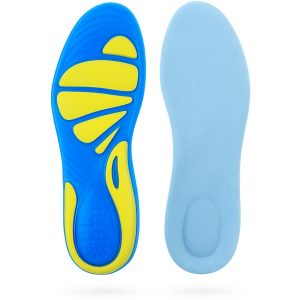
Comfort insoles
FootReviver Insole Range: Support, Cushioning and Choice
If you spend a lot of time on your feet, foot and heel pain rarely arrives all at once. It builds. Soreness under the heel when you first get up, pressure across the ball of the foot after a long shift, and a dull ache that sets in by mid-afternoon are the usual signs that the inside of your shoe has worn thin.
Our FootReviver comfort insole range is wide. The products differ by the part of the foot they support, how much of the foot they cover, the material they use, and whether they add height instead of cushioning. Arch, heel and metatarsal supports sit under different parts of the foot. Full length and three-quarter length insoles, heel cups and heel pads cover different amounts of it. Foam, gel and EVA insoles use different materials, and shock absorbing insoles work in a way of their own. Shoe lifts and heel lifts add height rather than cushioning.
Some of our insoles support the foot. Others cushion. Others change how the shoe fits or add height. A few combine support with cushioning. Which one suits you depends on whether you want support, cushioning, a different fit or extra height.
Why foot and heel pain can keep coming back
Every step puts force through the foot, and your body shares that force across a few key areas. Under the heel bone sits a pad of fatty tissue that is a natural shock absorber. Running from the heel to the ball of the foot, beneath the arch, is a strong band of tissue called the plantar fascia. It tightens as the arch flattens and releases as you push off. Further forward are the metatarsals, the long bones that end at the ball of the foot, with small pads beneath them that take your weight at the point you push away from the ground. When those areas share the force evenly, you don’t notice it. Put the same small spot under that force repeatedly, though, and it becomes sore.
Thin, flat or worn soles make that more likely. With less between your foot and the ground, the pad under the heel is compressed harder with every step, the band under the arch is stretched further each time the foot flattens, and the ball of the foot carries more of your weight.
Where you feel the pain tells you which structure is taking the strain. Irritation of the band under the arch is usually sharpest on the first few steps in the morning, or after you’ve been sitting for a while, and eases as you get moving. Pressure across the ball of the foot builds later in the day, often after a long spell on hard floors. At the back of the heel, where the Achilles tendon — the strong cord you use to push off — meets the heel bone, stiffness is worst at the start of activity and loosens as you warm up.
Tissue that keeps being irritated without time to recover between shifts or walks tends to stay sore for longer, and it starts to hurt at lower levels of activity than it did at first. Where one spot takes the same force step after step, the tissue beneath it stays tender, and by evening it can feel raw. Daily tasks take more effort than they should, and the difference between a good day and a bad one gets smaller. Better to check your shoes than to wait for the soreness to fade on its own.
How support insoles help
An orthotic insole is one made to a shape that holds the foot, rather than lying flat beneath it. It sits under the arch, under the heel or under the ball of the foot, and it holds that part of the foot in place as your weight comes down. These are ready-made insoles. Ones moulded to an individual foot are different: a podiatrist makes those after assessing how you stand and walk. Holding the foot in place is what plain cushioning does not do. Cushioning softens the surface you stand on but leaves the force arriving where it arrived before.
Supporting the foot from underneath spreads the force of each step across a wider area, so less of it collects under the one spot that is sore. We make orthotic support insoles for people who spend long spells on their feet, and for people whose shoes feel fine but leave very little between the foot and the ground. They can be a practical part of managing everyday strain.
The types of insole in the range
The insoles sort first by the part of the foot they support and second by how much of it they cover. A support that sits under the heel is a different product from one that runs the full length of the shoe.
Start with the area they support. Arch support insoles lie beneath the arch and hold it as you put your weight down, which stretches the band of tissue there less with each step. Heel support insoles carry their material at the back of the foot, under the heel bone. Metatarsal support insoles are for the ball of the foot: they carry a pad just behind it, under the metatarsals.
Full length insoles run from heel to toe and rest on top of the shoe’s own insole. Three-quarter length insoles stop just before the toes, which leaves room at the front and suits shoes where a full insole would crowd your toes.
Heel cups and heel pads work at the back of the foot. A heel cup wraps around the sides and back of the heel bone and holds the fat pad beneath it in place, so the pad stays under the bone as you walk instead of spreading sideways. A heel pad lies flat under the heel bone and adds cushioning without holding anything in place.
What an insole is made from changes how it feels. Foam insoles are the lightest option and give gentle cushioning. Gel insoles feel softer and are often chosen where more cushioning under the foot is wanted. EVA insoles are cut from a firm, lightweight foam called ethylene-vinyl acetate, which keeps its own thickness when you stand on it rather than flattening out.
Shock absorbing insoles work in a way of their own, whatever they are made from. The material compresses as the foot lands and returns to its shape as you push off, so the force of the step is spread over a moment longer instead of landing all at once. Hard pavements and concrete floors feel less harsh through your foot as a result.
A few products in the range add height instead of cushioning. Shoe lifts raise the whole foot inside the shoe. Heel lifts raise the heel alone. Both change the height of the foot in the shoe rather than the surface under it.
What our insoles add inside a shoe
Most shoes come with a thin, flat insole that covers the base of the shoe and little else. It compresses with regular wear, and it gives the sole of your foot nothing to rest against.
Our support insoles add a layer that holds the foot rather than lying flat. That layer changes where the force lands, which is what you notice when the arch, the heel or the ball of the foot has been taking too much of your weight for weeks. Our cushioning insoles add a softer layer between your foot and the ground, so what you stand on gives a little instead of staying flat. Our lifts change height and nothing else.
Foot problems people commonly ask about
Plantar fasciitis is the most familiar name here: irritation of the band running under the arch from heel to ball of foot, and one of the commonest reasons for pain directly under the heel. Heel spurs are small bony points that can form on the heel bone. They often show up alongside that same irritation rather than as a separate problem of their own. Plenty of people have one and feel no pain from it at all.
Metatarsalgia is the term for pain across the ball of the foot, where the metatarsals take your weight as you push off. A bunion is where the joint at the base of the big toe becomes a bony bump and the toe drifts across towards the others. The bump sits on the inner edge of the foot, where the shoe presses against it. An insole works underneath the foot rather than over the bump, so it can make walking easier without changing the bump itself.
Higher up, the Achilles tendon can become irritated, which is Achilles tendonitis. Shin splints describe pain along the shin that comes on when the lower leg takes repeated force — walking or running on hard ground, for instance — faster than the bone and muscles alongside it can adapt between sessions. Ankle sprains and strains are overstretched ligaments or muscles around the ankle, usually after a twist or a roll.
Gout causes sudden, severe pain and swelling in a joint, most often at the base of the big toe. It arrives quickly rather than building over weeks, so it is one to have looked at by a clinician rather than managed by changing your insole. Arthritis is the more gradual stiffness, soreness and swelling that can develop in the joints of the foot; cushioning and support underneath can make standing and walking easier day to day. Drop foot is not a cushioning problem: it is weakness in the muscles that lift the front of the foot as you step, so the foot can catch or slap. An insole supports the foot as it lands, but it cannot restore that muscle control, so this is one to take to a clinician before choosing anything.
Who the insoles may help
The range suits adults who are on their feet a lot — standing for long spells at work, walking on hard pavements, or moving around a busy day at home. It is also a sensible place to look if your shoes have started to feel thin and hard, or if you’re managing a foot problem such as plantar fasciitis, metatarsalgia, heel pain or arthritis, and want to reduce the strain going through the foot while you’re up and about.
An insole isn’t a substitute for a diagnosis, though. If you’re unsure which type is right for you, or if you have a medical condition that affects your feet, speak to a GP, physiotherapist or podiatrist before using one.
How to wear them
Put the insoles into the shoes you wear most often, and check that they lie even under your foot and don’t bunch at the heel or under the toes. If they feel unfamiliar at first, wear them for shorter periods and build up over a few days as your feet adjust. Avoid forcing a thick insole into a tight shoe — if the shoe becomes cramped, the insoles are more likely to cause discomfort than relieve it. If they cause pain that doesn’t ease, stop using them and seek advice.
What to expect
Some people notice a more comfortable, supported feeling in their shoes within the first day or two. Relief from pain usually takes longer. If soreness has built up over weeks, the tissues underneath need time to calm before they stop hurting, and insoles help most when you wear them consistently in the shoes you use for standing and walking. Many people find the difference shows up in small ways first: standing for longer before the ache starts, fewer sharp twinges on hard ground, a less tender foot by evening.
Insoles help because they spread the force of each step more widely. Once soreness has eased, spreading the force in the same way makes a return of that soreness less likely. Insoles support the foot rather than cure it, and they work best alongside shoes that hold the foot steady and have some cushioning of their own.
When to seek help
If your foot or heel pain is severe, getting worse, or not easing after a few weeks of wearing an insole, speak to a GP, physiotherapist or podiatrist. The same applies if you develop new or unexplained symptoms, or if you’re unsure whether a particular insole is suitable for you.
Choosing the right insole for you
Where it hurts, how much room your shoe leaves, and whether you want support or cushioning will narrow most choices.
Pain directly under the heel points towards a heel support, a heel cup or a heel pad. Pain along the arch points towards an arch support. Pain across the ball of the foot points towards a metatarsal support. If a full length insole would crowd your toes, a three-quarter length one gives the same support without taking up the front of the shoe. If cushioning is what you’re after rather than support, a foam or gel insole is the more direct choice. If it’s height you need, a shoe lift or heel lift raises the foot and does nothing else.
Give whatever you choose a few days of consistent wear in the shoes you actually use before you judge it. If the choice still isn’t clear, or your symptoms are severe or getting worse, a clinician can tell you how an insole would fit with the rest of your care.
-

Orthopaedic Diabetic Insoles
- 1x Pair of Orthopaedic Diabetic Insoles designed to help support, ease and protect your feet when suffering from conditions such as Diabetes, Neuropathy, Sensitive Feet and poor circulation
- For both Men & Women
- Available in sizes 7-10 & 10-13 (Trim to fit)
- Features strategically placed magnets that provide soothing magnetic therapy to help ease aches and pains deep with your feet
- Specially developed reflexology nodes massage and stimulate blood flow to your feet to improve circulation in your feet helping to restore feeling in your feet, ease aches and pains, reduce inflammation and swelling and promote healing
- Can be worn to help support your feet in the correct potion and prevent abnormal load and pressure from damaging and injuring your feet
- Recommended for treating and easing a wide range of foot conditions including Neuropathy and nerve damage, Poor blood circulation, Plantar Fasciitis, Heel Spurs, Metatarsalgia, Bunions, Achilles Tendonitis, Blisters, Bursitis, Strains, Sprains, Fatigue, Arthritis, Swollen feet & Ankles, Gout and more!
- Corrects the way your feet function and prevents biomechanical imbalances during the gait cycle such as Supination and Overpronation from occurring
- Can be fitted inside a range of different footwear quickly and easily
- Made from shock absorbing materials that will help prevent shock from damaging your feet and helps stop pressure points from developing by redistributing weight and pressure evenly across your the surface of your feet
- Includes a full 30 day money back guarantee!
£12.99 -
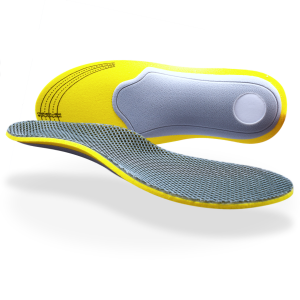
FootReviver™ Orthotic Plantar Fasciitis Insoles
- Designed specifically for plantar fasciitis heel and arch pain: Sharp first‑step pain in the morning, aching after time on your feet, or soreness along the arch that keeps coming back.
- Targets the real source of the problem – how your foot is loaded: Supports the band under your foot (plantar fascia), steadies the heel, and helps stop the arch dropping and rolling in more than it can comfortably cope with.
- Firm 3/4‑length support where you need it, not a hard block under your whole foot: A structured base under the heel and arch holds its shape to support you, while the front of the insole stays softer and more flexible for natural push‑off.
- Deep heel cup with cushioning to calm sore heels in shoes: Cradles the heel, holds the fat pad under the heel bone, and spreads impact away from the tender spot where the plantar fascia attaches.
- Shaped arch support with gentle control of extra inward roll: Meets the arch earlier in the step so it cannot collapse as far, and reduces extra rolling‑in that repeatedly tugs on the fascia at the heel.
- Full‑length cushioned top layer to protect the forefoot as well as the heel: Runs from heel to toes, gradually shaping to your foot to share pressure under the ball of the foot and give space for wider or splayed toes.
- Helps on hard floors, long periods of standing or walking, and higher‑impact days: Combines firm rearfoot support with cushioning under heel and forefoot to make standing, walking, and even light running or sport more manageable.
- Trim‑to‑fit design for most closed‑back shoes: Cut to size at the front, drop into your usual shoes, and the anti‑slip base helps keep them in place under your heel and arch.
- Normal to feel them at first – then expect steadier, more comfortable steps: Start with a few hours a day and build up. A mild awareness under the arch and heel is common at first; as your feet adjust, many people find standing and walking become easier and less painful.
- One practical part of managing plantar fasciitis – clear support, not a magic cure: Works best alongside sensible changes in time on your feet and any exercises or advice from your GP, physiotherapist, or podiatrist.
£9.99 -
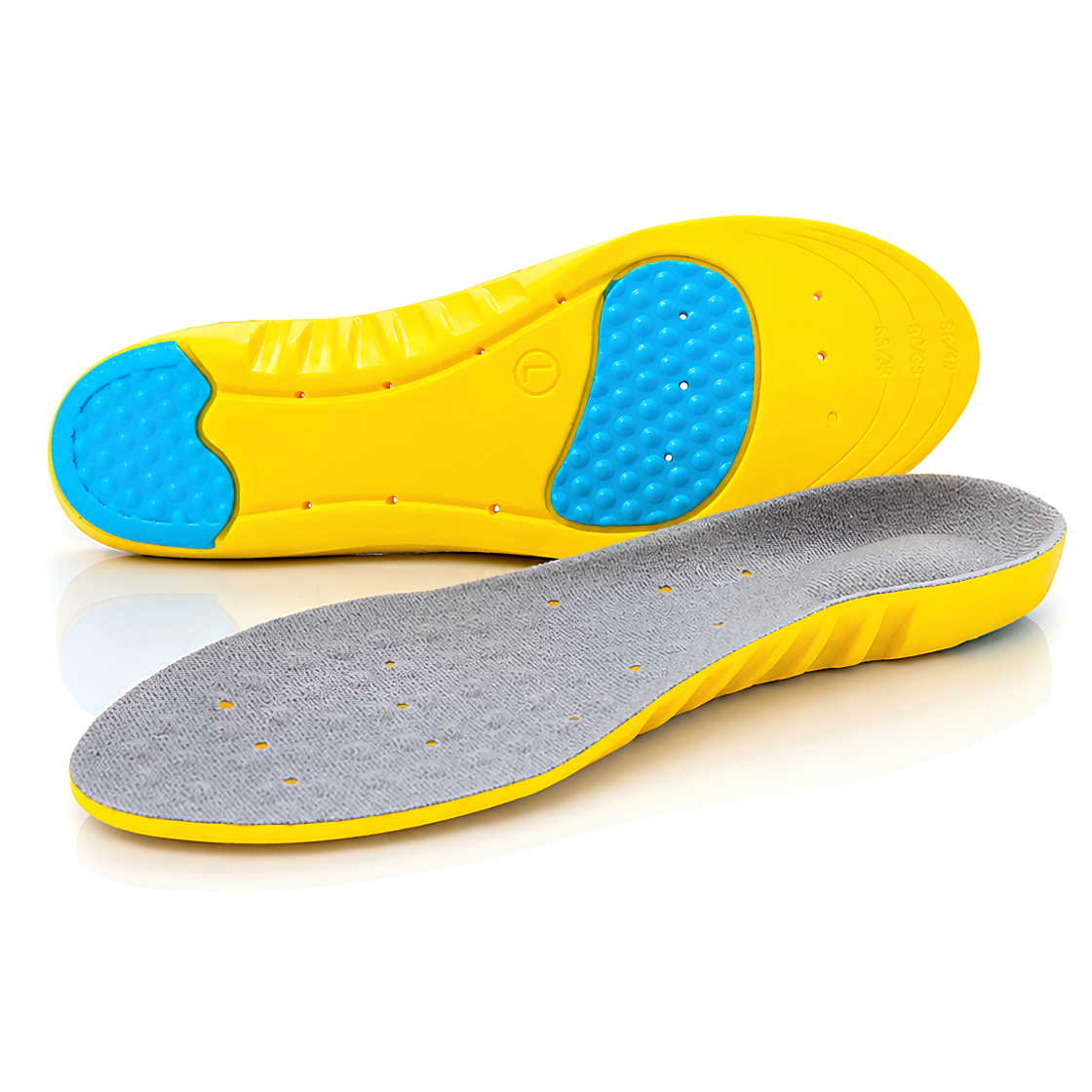
FootReviver™ Work boot insoles
- One pair of shaped insoles for work boots, for men and women, in UK sizes 5–7 and 8–10
- Supportive arch cradle beneath the midfoot
- Deep heel cup with raised edges at the sides and back
- Firmer base shell made from EVA, with cushioning zones at the heel and the ball of the foot
- Memory foam top layer that moulds to the shape of your foot
- Ventilation holes and a moisture-wicking top surface
- Made for adults who spend long shifts standing or walking on hard floors
- The arch support reduces strain on the band under the arch during push-off
- The heel cup takes pressure off one spot and limits side-to-side movement at the heel
- The cushioning zones absorb some of the impact before it reaches the heel and forefoot
- Worn inside the boot against the existing footbed
- Allow a few days of wear for the foam to adapt to your foot
- Support and cushioning only, not a treatment for a diagnosed condition
- 30-day money-back guarantee
£12.99 -
FootReviver™ Gel heel pain insoles
- One pair of shaped gel insoles for foot and heel pain.
- Supplied in three sizes to fit men and women.
- Made from a medical-grade silicone gel that absorbs shock and impact and softens to the shape of your foot as you wear it.
- Gives a gentle massaging feel under the sole as you move.
- Shaped arch support sits under the arch and holds it up, so it flattens less when you put weight through it.
- Load is spread more evenly across the sole instead of piling up under the heel or the ball of the foot.
- Made to sit inside the shoes you already use for sport or everyday activity.
- Used for pain patterns that include plantar fasciitis, heel spurs, Achilles tendonitis, Morton’s neuroma, metatarsalgia, pain near the base of the big toe from the two sesamoid bones, cuboid syndrome, ankle sprains and strains, and joint pain from arthritis or gout.
- The snug fit grips the foot all round and is intended to support blood flow around the foot during recovery. Get advice before use if you have a history of blood clots or a current concern about your circulation.
- These insoles do not treat or prevent blood clots and must not be relied on for that.
- These insoles support the foot while you recover rather than treating the cause of the pain.
- Start with the activity that usually brings your pain on, and take them out of any shoe where they feel tight or unstable.
- Intended for adults.
- Speak to a GP, physiotherapist or podiatrist if your pain is severe, persistent or getting worse, or if you notice new or unexplained symptoms that do not settle.
£9.99£10.99