No products in the cart.

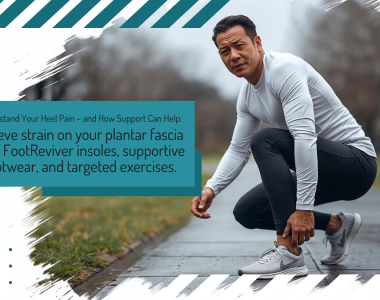
Living with nagging heel or arch pain can wear you down, especially if you enjoy running, play impact sports, or spend long days on hard floors. Many people describe feeling as if they are “walking on a bruise” under the heel, or as though there is a stone under the ball of the foot. Others notice that their arches feel as if they are “giving up” towards the end of a run or a long shift. If every run or long day at work is now dominated by that same heel ache, it is understandable. It can feel as though it is wearing you down.
A very common cause of this sort of pain is plantar fasciitis, where the thick band under the arch (the plantar fascia) and its attachment into the heel become irritated by repeated strain and impact. If you are searching for the best running insoles for plantar fasciitis, it helps to understand what is actually going on under the heel and arch before choosing a design.
In the sections below, we’ll look at:
- what plantar fasciitis is and why it behaves the way it does,
- how running, sport and hard floors can keep irritating the tissues under your foot,
- and how this pair of FootReviver Gel Shock Absorbing Insoles for Trainers & Running Shoes are designed to soften impact, support the arch and make everyday activity easier to manage.
By the end, you should feel clearer about what your heel pain is doing, whether this kind of insole is worth trying, and when it is sensible to ask a clinician for guidance.
What is plantar fasciitis, and why does it crop up so often in runners and active adults?
Plantar fasciitis is a common cause of pain under the heel and along the arch. The plantar fascia is a thick band of tissue that runs from the heel bone to the base of the toes and helps to support the arch of the foot. As you move, the band stretches slightly and then tightens again, helping the foot act more like a spring than a solid block.
When that band is repeatedly strained, particularly where it attaches into the heel, small areas near this attachment can be put under more stress than they can comfortably manage. Over time, the tissue becomes more sensitive, and forces that were once tolerated start to feel sharp or bruised.
Common things people describe include:
- sharp or bruised pain directly under the heel,
- aching or tightness along the arch,
- discomfort that is worse when getting going after rest or after heavier impact days.
Runners and people who are on their feet a lot are especially prone to this because every step sends force through the heel and arch. On hard floors or firm roads, the plantar fascia and the heel bone take a sharper, more abrupt hit, and that repeated strain can gradually push the tissue from coping well into being sore much of the time.
How does the plantar fascia under the heel and arch normally work when you walk and run?
In a healthy foot, the plantar fascia acts like a supportive strap under the arch. As you walk or run, it helps the arch to spring slightly and share some of the effort with the muscles and joints around it.
When your heel first makes contact with the ground, the fascia helps to steady the foot. As you roll forwards, the arch flattens a little, the band stretches, and then it tightens again as you push off through the toes. This gentle stretch‑and‑recoil cycle repeats thousands of times across a normal day and many more times in a run.
On softer ground or with good cushioning under the heel, that repeated stretch is usually well tolerated because the force is spread over a slightly longer time and a broader area. On hard surfaces or in very thin shoes, the heel can meet the ground with a much sharper hit, and the fascia has to manage a more sudden pull. For most people this is fine in small amounts, but as training or standing time builds up, the repeated impact and stretch can eventually irritate the tissue.
What actually goes wrong in plantar fasciitis when you keep running or standing on hard floors?
The main trouble spot is where the plantar fascia anchors into the heel bone and the tight band under the arch. That area on the underside of the front of the heel takes the first hit when your foot lands, so it carries a large share of the load every time you put weight through it.
When you keep running or standing on firm floors with limited cushioning or support, a few things tend to happen together:
- The repeated impact under the heel starts to feel like landing on a bruise, because the sensitive attachment area is hit suddenly each time.
- If your arch flattens easily, the fascia is pulled a little more with every step, so the band is repeatedly stretched further than it is happy with.
- Over time, the tissue becomes more sensitive, so even normal loads start to trigger discomfort. What used to feel like “nothing” can start to feel sharp or bruised.
Instead of the area under the heel taking load smoothly, it starts to feel sore with each step. This is why simple things like getting up from a chair or walking across a hard floor can become surprisingly uncomfortable once plantar fasciitis has been there for a while. For most people it is not one single event that causes the problem, but the build‑up of strain over weeks or months.
How does plantar fasciitis usually feel day to day and during runs?
Although every case is a little different, certain patterns are very common:
- Pain is often sharp or stabbing under the heel when you first stand in the morning or after sitting for a while. Overnight or during rest, the plantar fascia can tighten slightly. When you first put weight through it again, that first stretch across the heel attachment can feel like a sudden pull on a sore area. If that sharp first‑step feeling sounds familiar, it is a very typical sign that the band under the heel is irritated.
- Once you have taken a few steps, the pain often eases a bit as the tissue warms and glides more easily, then returns as an ache if you stay on your feet for a long time.
- When you start running, the first few minutes can feel particularly uncomfortable in the heel or arch before it settles into a more manageable level.
- After longer runs or impact‑heavy days on hard floors, pain under the heel and arch can build and linger later in the day as the plantar fascia and surrounding tissues tire.
People sometimes describe feeling as though there is a stone under the heel, or that the arch feels as if it is about to cramp or give way. Put simply, it tends to feel sharp when you start, easier once it has warmed up, then aching again later in the day. If that sounds like your mornings and your longer runs or busier days, you are well within the typical plantar fasciitis picture.
To tell this apart from simple post‑exercise soreness, it helps to look at how local the pain is and how long it sticks around, which we come to next.
How can you tell the difference between normal post‑run soreness and early plantar fasciitis?
Tired feet after a harder run are completely normal now and again. With simple training soreness:
- the whole foot may feel generally tired or achy,
- there is no single, very sharp spot that shouts when you put your weight down,
- and the discomfort usually settles within a day or two as your body recovers.
With plantar fasciitis‑type pain, several features are more typical:
- the discomfort is often focused mainly under the heel or along the arch rather than spread evenly,
- the first steps after rest are noticeably sharp or bruised, and you may find yourself limping or favouring that foot at first,
- the same point under the heel or along the arch feels clearly tender if you press with a thumb,
- the way your pain comes and goes is similar over many days or weeks rather than being a one‑off after a hard run.
If this is how your pain behaves, and it has been going on for some time, it is a sign to think about your load and support, rather than just writing it off as usual training ache. If pain is severe at rest, wakes you at night, or is associated with big swelling or a change in shape, that is a different pattern and a reason to seek assessment rather than trying to manage it alone.
Who tends to be most at risk of plantar fasciitis, and why?
You may recognise yourself in one or more of these groups. Plantar fasciitis often shows up in people who:
- Regularly run or play impact sports, especially if mileage or intensity has gone up quickly. More steps and harder sessions mean more repeated strain through the fascia and its attachment.
- Stand or walk for work on hard floors, such as in retail, warehousing or healthcare. Hours of load on a firm surface give the plantar fascia little chance to recover between days.
- Have very flat or very high arches. Flat feet can put the fascia on a more constant stretch, while high arches often offer less natural shock absorption, so forces travel more sharply through the heel and arch.
- Have tight calves or limited ankle bend. If the ankle cannot bend easily, the foot may flatten or twist more to achieve the movement, increasing strain on the fascia.
- Carry more body weight. Every step produces greater force through the heel and arch, so the fascia works harder.
- Are returning to running after a break and try to resume old mileage quickly, or have had a recent lifestyle change that suddenly increases time on their feet.
It is rarely one factor on its own. It is usually when several of these happen together that the fascia starts to feel sore. Runners often sit in several of these groups at once: they move a lot, often on firm ground, and may push changes in mileage or speed. That is one reason plantar fasciitis shows up so often in this group.
What tends to cause plantar fasciitis to build up over time?
For most people, plantar fasciitis is the result of too much strain, too often, rather than a single wrong step. The soreness under the heel and arch usually builds up when:
- Mileage slowly creeps up – you add a bit of distance or time week after week without easier phases, so the fascia never quite catches up.
- Changes are made too suddenly – a quick jump in training volume, speed work, or hill sessions asks much more of the tissue than it is used to.
- Surfaces change – you move from softer routes to mainly firm ground, or you spend more time on very hard floors at work, so the heel takes a sharper hit each step.
- Footwear changes sharply – for example, switching quickly from a cushioned, structured shoe to a very thin or very soft, unsupportive one changes how forces travel under the heel and arch almost overnight.
Each of these in its own way adds more impact or stretch to the plantar fascia than it can comfortably handle, especially near its attachment into the heel. Often, people only realise in hindsight that several of these shifts had crept in at once.
Which parts of running and sport tend to make plantar fasciitis worse?
Certain types of run or session bring those factors together and tend to make plantar fasciitis flare:
- frequent running on very hard surfaces with minimal cushioning under the heel,
- long continuous runs without regular easier blocks in your training plan,
- blocks of hill running or sprint work that add both impact and demand on the calf–plantar fascia band,
- using very worn‑out trainers where the midsole has thinned and lost its spring, so the heel effectively lands straight on a hard base.
These are all variations on the same theme: either more force each step, more steps at the same force, or both. If you recognise your own running in that list, it is a strong clue that repeated strain is driving the problem.
How does your walking and running style affect plantar fasciitis?
When you walk or run, your foot is meant to roll inwards a little as it takes weight. This controlled inward roll is often called pronation, and it helps to absorb shock and spread pressure across the foot.
Trouble tends to appear when you are at one extreme or the other:
- If the foot rolls in too much or too quickly, the arch may flatten more, and the heel may tilt inwards. This increases the pulling force on the plantar fascia and can twist the tissues at the heel.
- If the foot hardly rolls in at all and feels quite rigid, there is less natural “give” to soak up impact, so forces are passed more directly through the heel and arch into the leg.
Signs that the way you walk or run may be adding to plantar fascia stress include:
- shoes that are much more worn on the inside edge of the heel and forefoot,
- ankles that appear to collapse inwards when you stand and look down,
- or feeling that you land mainly on the outer edge of your foot and then roll in quickly.
Have a quick look at an old pair of running shoes: are the inner edges of the heels much more worn than the outer? That is often a sign the heel is rolling in more than it needs to. You do not need to be an expert to spot these things; a simple look at shoes and ankles can already give clues.
A structured insole with a shaped heel cup and arch contour, such as these FootReviver gel insoles, is designed to gently guide the heel towards a more central position and support the arch within a comfortable range of movement. That can mean the band under the foot is not pulled or jolted as much with each step.
How can plantar fasciitis affect the rest of your leg and why shouldn’t it be ignored?
When heel or arch pain persists, most people naturally change the way they walk or run to avoid the sore spot. Common unconscious changes include:
- taking shorter steps on the painful side,
- spending less time on that foot and more on the other leg,
- rolling the foot differently to avoid putting pressure on the tender area under the heel.
These adaptations shift load up the leg. Over time they can contribute to:
- shin pain, as the muscles along the front and inside of the lower leg work harder to control the altered foot position,
- knee discomfort, if the knee has to twist slightly more with each step,
- hip or lower back ache, as the pelvis moves differently to keep you going forwards when you walk or run.
If your heel has been sore for a while and you have now started to notice shin or knee pain on the same side, this chain effect may be part of the reason. That “why does my knee hurt now as well?” moment often makes more sense once you see how everything links up from the heel upwards. This is one reason it is worth treating heel pain as more than just a minor nuisance, even if you can still run on it for now. If plantar fasciitis goes on for many months, the tissues under the heel can become more sensitive, and these movement habits can be hard to change. Taking reasonable steps early on to reduce strain and improve support can help limit how far these knock‑on effects travel up the chain.
If your heel is sore, when should you cut back on running instead of trying to push through it?
Mild heel discomfort that settles quickly after a slightly harder‑than‑usual run may not require big changes. Plantar fascia and other tissues can adapt over time if they are given enough recovery. However, it is usually wise to reduce or adjust your training if:
- the pain is sharp enough to make you change how you walk or run,
- it is clearly getting worse rather than gradually easing,
- it lingers into the next day and makes simple walking uncomfortable.
Those patterns suggest that the strain you are putting through the fascia is outstripping its ability to recover between sessions. Cutting back does not always mean stopping completely. It might mean trimming mileage for a while, choosing some softer routes, or favouring lower‑impact sessions while you give the plantar fascia some breathing space. Many runners find that trimming distance and intensity for a few weeks is enough to calm things down while they work on support and strength. Insoles can sit alongside these changes, but they are not a licence to ignore more severe or steadily worsening pain.
What are shock absorbing gel insoles, and how do they sit inside your trainers?
Shock absorbing gel insoles are removable inserts that sit inside your trainers or running shoes, directly under your feet. They replace, or sit on top of, the flat insole that came with the shoe. You trim them to size, drop them into your shoes, and they become the surface your foot stands and runs on.
The gel is a soft but springy material that gives a little under pressure and then returns to shape. A well‑designed gel insole does more than simply feel soft. Many also include:
- a shaped area under the arch,
- a cup around the heel to help it sit centrally,
- and slightly different levels of softness in the heel and forefoot.
Taken together, this means impact is spread away from one sore point and the heel and forefoot get a more cushioned but steady landing. This pair of FootReviver gel insoles uses this combination of cushioning and shape to change the way force passes through the heel and arch, step after step.
What does “shock absorption” actually mean for your heel and arch with every step?
“Shock absorption” is simply about how the insole helps manage the sudden forces when your heel meets the ground. Instead of your heel bone taking a very abrupt hit, the gel layer compresses slightly and spreads that force over a fractionally longer time and across a wider area.
For the plantar fascia and other soft tissues under the foot, this can mean:
- less of a jab under one small point of the heel,
- a smoother rise in pressure under the arch as you roll forwards,
- less of a jolt travelling up into the shins and knees.
On hard surfaces in particular, the difference between landing directly on a thin, firm insole and landing on a gel layer that can soak up some of the impact is often noticeable. That is one reason a sore heel can feel less sharp under each step when you use an insole like this.
How can a shock absorbing gel insole reduce that bruised, sharp feeling under the heel?
When you have plantar fasciitis, the area where the fascia attaches into the heel can feel as though you are pressing on a bruise every time you stand. A gel insole changes this in a few straightforward ways:
- It puts a cushioning layer between the heel bone and the shoe, so part of the impact is taken up by the gel compressing slightly rather than going straight into the sore tissue.
- It spreads that pressure over a slightly larger area of the heel, so one tiny part of the attachment does not take the full force.
- By softening the initial contact, it reduces the sudden pull on the plantar fascia fibres right at the heel.
Overall, each heel strike tends to feel less abrupt. For many people, this is most obvious once they are in their trainers or running shoes, particularly on hard floors or pavements.
Can gel insoles also help the arch and the plantar fascia band itself, and if so how?
A good gel insole does more than pad the heel. If it includes a contour under the arch and a firmer base under the rearfoot, it can:
- give the arch a gentle lift so it does not flatten quite as much with each step,
- reduce the amount of stretch the plantar fascia has to manage, especially near the heel attachment,
- help the heel sit more centrally, which can limit twisting forces on the band.
Instead of the arch dropping fully with every stride, the insole offers a comfortable amount of support so that the fascia does not need to lengthen and tighten as dramatically. Over the course of a longer run or a long day on hard floors, that can mean less sense of the arch about to cramp or “give way”, and fewer sharp pulls on the already sore area at the heel. These FootReviver gel insoles use this sort of arch contour and rearfoot support for that reason.
What is the difference between simple soft cushioning and a more structured gel insole for plantar fasciitis?
Not all soft inserts behave the same way. A very flat, squashy insole can feel pleasant when you first step on it, but if it offers no shape under the arch and no guidance for the heel, it may let the foot sink and twist more than is helpful.
When the heel sinks deeply and the arch collapses, the plantar fascia has to stretch further and take more of the task of supporting your body weight. Over thousands of steps, that extra movement can mean more pulling where it attaches to the heel.
A more structured gel insole:
- combines softer gel zones under the heel and forefoot with a firmer base under the heel and arch,
- uses a shaped heel cup to help keep the heel more central in the shoe,
- includes a moderate arch contour so the band under the foot is supported within a comfortable range of movement.
For plantar fasciitis, a mix of softness and support like this tends to work better than softness alone, because it reduces both the sharp impact and the excess stretch through the plantar fascia.
Who are FootReviver Gel Shock Absorbing Insoles for, and when do they make particular sense?
This pair of FootReviver Gel Shock Absorbing Insoles for Trainers & Running Shoes is aimed at adults who run, play sport or spend long hours on hard floors and are starting to notice familiar problems such as:
- sharp or bruised pain under the heel, often consistent with plantar fasciitis,
- burning or “stone under the foot” pain under the ball of the foot, often linked to forefoot overload,
- arches that feel tired or as if they are “giving up” towards the end of a run or long day,
- shins, knees, hips or lower back that feel more sore or jarred after impact‑heavy days than you would expect.
Many runners looking for the best running insoles for plantar fasciitis want something that fits into their existing trainers, softens heel impact and still feels steady under the arch. This FootReviver gel insole has been designed with those needs in mind.
Within our wider FootReviver range of insoles, this gel model is aimed at people whose main problems are impact and general foot fatigue, including plantar fasciitis‑type heel pain and forefoot “hot spots”. Other FootReviver models focus more on strong arch correction; this one is about shock absorption and moderate support.
Why do these FootReviver gel insoles make sense if plantar fasciitis is part of the problem?
When plantar fasciitis is driving heel and arch pain, the main mechanical issues are:
- a sore area under the heel that dislikes sharp impact,
- a plantar fascia band that is being repeatedly tugged as the arch flattens,
- a heel that may roll in or out more than is comfortable, twisting the tissues and adding strain up the shin and into the knee.
Earlier sections described how running on hard surfaces, sudden mileage increases and long days standing can overload this band and its attachment. These FootReviver Gel Shock Absorbing Insoles were designed with these exact issues in mind. They aim to:
- soften heel landings with a full‑length gel layer and extra padding under the heel, so each step feels less like landing on a bruise,
- support the arch with a firmer base and moderate contour so the fascia does not have to work as hard to hold the arch up,
- help the heel sit more centrally to limit extreme inward or outward tipping that can strain the band and twist the shin.
By changing both impact and movement under the foot in ways that mirror the problems described earlier, they offer a practical way to reduce some of the stress on a sore plantar fascia.
How are these FootReviver gel insoles built to change the forces under your foot?
This FootReviver design uses several elements that work together to deal with the mix of impact and foot movement seen in runners and people on their feet all day.
A full‑length gel layer cushions the whole sole from heel to toe, rather than just small gel pods under the heel. As you move through your stride, both the heel strike and the push‑off from the forefoot are cushioned, helping to reduce sharp impact under the heel bone and the ball of the foot. This is exactly why a sore heel can feel less like landing on a bruise with each step, and why that “stone under the foot” sensation at the front may build more slowly.
Separate pads sit under the heel and ball of the foot, positioned under the areas that most often become sore. These focused zones help to spread pressure away from sore spots so one very sore point under the plantar fascia attachment or one forefoot joint is not taking most of the load with every step.
Under the heel and arch, a three‑quarter length firm base helps to steady the rearfoot without making the front of the foot feel stiff. This firmer platform gives the plantar fascia a steadier base, so it is not being dragged around with every step and the arch does not collapse as far.
A moderate arch contour supports low, neutral and higher arches within a comfortable amount of movement. Rather than forcing the foot into a rigid position, which many runners dislike, it offers a gentle lift that eases the constant pull on the band under the foot while still allowing natural motion during walking and running.
At the back, the shaped heel cup in this FootReviver insole helps the heel sit more centrally in the shoe. By gently nudging the heel away from rolling too far in or out, it can reduce twisting strain on the plantar fascia, on the shin, and on the knee, especially during longer runs or long days on firm floors.
On top, a breathable, slim layer means the insoles fit into most trainers and running shoes, and many roomier work or casual shoes, without feeling bulky. This makes it realistic to use them in the shoes you already rely on for running, sport and long days on firm surfaces.
Clinicians who see runners and people on their feet all day often point to the same trouble areas under the heel and forefoot, and to excess rolling at the heel. This FootReviver gel insole uses extra cushioning under those sore areas and a shaped heel cup to address those issues.
What might you actually notice when you start using these FootReviver insoles in your trainers or running shoes?
Once you have them in your trainers and have built up wear time gradually, you may notice a few practical differences that reflect the mechanisms above:
- Under the heel:
Heel landings in shoes may feel less like landing on a bruise and more like a cushioned contact, because the gel layer and heel pad are absorbing some of the impact that previously went straight into the sore heel attachment. - Under the ball of the foot:
The “hot spot” under one or two forefoot joints can feel less intense and slower to build, as the forefoot pad helps spread pressure across a broader area during push‑off. - Along the arch:
Arches may feel better supported through runs and long days, with less tired pulling under the foot, because the firm rearfoot base and arch contour are sharing some of the workload with the plantar fascia. - Through the heel and shin:
The heel may roll in or out less extremely, so there is less twisting strain on the shin and knee, reflecting the guiding effect of the shaped heel cup. - Up the chain:
Similar runs and long days on hard floors can leave your knees, hips and lower back feeling less jarred than they used to, as each step is cushioned slightly more and the forces transmitted up the leg are a little smoother.
These changes are often most noticeable on days when, in the past, your heel or arch would have started to feel sore quite early on. In everyday terms, these FootReviver gel insoles are there to soften landings and help the heel and arch feel steadier inside your trainers, addressing the mix of impact and movement that often leads to heel, forefoot, arch, shin and knee aches.
Can an insole ever be too soft for plantar fasciitis, and how do FootReviver insoles avoid that?
An insole that is extremely soft and flat can feel pleasant at first, but if it allows the heel to sink deeply and the arch to collapse, it may actually increase strain on the plantar fascia. Too much give can mean:
- the arch drops further with each step,
- the fascia has to stretch more to hold the foot up,
- and the pulling force at the heel attachment rises.
Over thousands of steps, that extra movement can be enough to keep a sensitive plantar fascia irritated.
These FootReviver Gel Shock Absorbing Insoles aim to avoid this by combining:
- a cushioning gel layer and pads where impact is highest under the heel and forefoot,
- with a firmer rearfoot base and moderate arch contour to keep movement within a more comfortable range.
This helps reduce both the sharp jab of impact and the amount of excess stretch the plantar fascia has to cope with.
Do runners with flat feet or high arches get different benefits from these FootReviver gel insoles?
People with flatter feet often have arches that tend to drop more easily under load, while people with very high arches may have feet that feel rigid and pass impact through more directly. Both patterns can contribute to plantar fascia strain, but in different ways.
With flatter feet, the plantar fascia is held on a more constant stretch and may be asked to control more rolling‑in movement at the heel. A moderate arch contour and firmer rearfoot base, as used in this FootReviver design, can:
- offer extra support to lower arches,
- limit how far the arch drops,
- and reduce the repeated pulling at the heel attachment.
With high arches, there may be less natural rolling‑in to absorb impact, so forces are passed more directly from the heel and forefoot into the leg. A structured gel insole can:
- provide contact and cushioning under a high arch that otherwise feels as if it is “bridging” across the shoe,
- soften heel and forefoot impacts,
- and help spread pressure more evenly.
If a clinician has told you that you need strong correction for very flat or very high arches, one of the firmer FootReviver orthotic models may suit you better. For many runners and people on their feet all day with mild to moderate arch issues, this more moderate level of arch support is often enough to feel more supported without feeling forced.
How do body weight and weekly mileage affect what these FootReviver insoles can do for plantar fasciitis?
Each step you take sends a certain amount of force through the heel and arch. Higher body weight and greater weekly mileage both increase the total number and size of these impacts. In short:
- insoles can change how each individual step feels by softening and spreading the force,
- but the total work your plantar fascia has to do over a week still depends on how many steps you take and how demanding your training plan and daily standing time are.
These FootReviver Gel Shock Absorbing Insoles can:
- soften each individual impact through the gel layer and pads,
- spread pressure more evenly across the heel and forefoot,
- support the arch so the plantar fascia is not doing all the work.
They cannot, on their own, make up for very high distances or very long days on hard floors. If your mileage or standing time stays high while pain is still strong, adjusting those demands as well as using insoles is usually more effective than relying on the insoles alone. Insoles are not a free pass to do unlimited mileage.
What else can you do alongside insoles to help plantar fasciitis?
Insoles are one helpful part of managing plantar fasciitis, but they work best alongside other sensible steps. These often include:
- Adjusting training and time on your feet:
Reducing distance for a period, spreading harder sessions across the week, and mixing firmer and softer surfaces can all reduce the day‑to‑day strain on the plantar fascia. Avoid large jumps in mileage or speed in one go. - Checking footwear:
Replacing very worn trainers where the midsole has become thin or compressed, and avoiding abrupt switches between very different shoe types, helps keep how your foot is loaded more consistent. - Gentle stretching:
Stretching the calves and the sole of the foot can make it easier for the ankle and arch to move without the fascia having to take all the strain. Short, comfortable stretches done often are usually easier to keep up with than the occasional very long stretch. - Strengthening:
Building strength in the small muscles of the foot and the muscles around the hip can improve the way the foot lands and rolls, which can reduce excessive flattening or twisting that stresses the plantar fascia.
The insole’s job is mainly to change what each step feels like under your foot, particularly on hard surfaces and during runs. Exercise, load management and any advice from a clinician work on the other side of the problem: improving how the tissues cope with that load and giving them time to recover. Small, steady changes usually take you further than one big sudden change.
How should you fit these FootReviver Gel Shock Absorbing Insoles and build up wear time safely?
These insoles are available in two size ranges (UK 3–9 and 9–12) that you can trim to match your existing insole. The slim profile means they fit into most trainers and running shoes, and many roomier work or casual shoes.
It is usually best to introduce them gradually so your feet and lower legs can adjust to the new way force is spread under the heel and arch. This might mean:
- starting with shorter wear periods in everyday walking,
- then adding them into shorter runs or sports sessions,
- before using them for longer runs or full days on hard floors.
It often makes sense to start with them in the shoes you use most on hard floors or for steady runs, rather than immediately on your longest or hardest days. Building up step by step allows the plantar fascia and leg muscles to adapt to the slightly different pressure pattern and support. As you wear them for longer, it helps to notice how your heel and arch feel when you first stand up after sitting, and once you are in your shoes on your normal runs or shifts, rather than basing your view on a single brief test. If you are unsure, err on the side of building up more slowly.
What should you expect in the first few days and weeks of using these FootReviver insoles?
When you first change the way your foot meets the ground, it is normal to feel some difference in how the heel, arch and calf work, even if the overall effect is more comfortable. In the early days, you may notice:
- a different sense of pressure under the heel and arch as the gel and contour take your weight,
- your foot sitting slightly differently within the shoe because of the shaped heel cup,
- muscles in the foot and lower leg working in a slightly new way.
Some people notice that the sharpness of heel impact eases quite quickly, particularly on hard floors or at the start of walking or gentle jogging, even though a background ache under the arch may take longer and still depends on training and daily loads. It is natural to be more aware of your feet for a while when you change anything under them. What you are mainly looking for is whether everyday walking and steady runs feel a little less sharp under the heel, not an overnight cure.
If pain becomes sharper, spreads, or you feel distinctly worse, it is sensible to pause, reduce wear time and consider speaking to a clinician, especially if you have other medical conditions affecting your feet. If the changes are more about things feeling different rather than more painful, they often settle as your body gets used to the new support. If changing insoles makes you feel unsteady or sore in new places, pause and ask a clinician rather than pushing on.
When might these FootReviver insoles not be enough on their own for heel pain?
There are situations where insoles, even well‑designed ones, are unlikely to be the full answer. These include:
- heel pain that started suddenly after a clear injury and has not improved, which may point to problems such as a significant soft‑tissue strain or a bone injury,
- pain that is severe enough to stop you putting weight through the foot or makes you avoid bearing weight on it,
- longstanding pain that has not changed at all despite sensible changes to training, footwear and self‑care,
- complex medical conditions affecting the nerves, circulation or structure of the foot.
It is also worth remembering that not all heel pain is due to plantar fasciitis. Other causes, such as stress fractures in the heel bone, nerve entrapment, or inflammatory conditions, can produce similar ways that pain comes and goes but often need different approaches. In these cases, FootReviver insoles may still offer some comfort, but they should be seen as part of a wider plan guided by a clinician rather than a stand‑alone solution.
When should you speak to a GP, physiotherapist, or podiatrist about heel and arch pain?
It is important to get things checked if you notice warning signs such as:
- sudden severe pain after a fall, twist or hard landing,
- obvious deformity or a large, quickly increasing swelling around the heel or foot,
- new or worsening numbness, tingling or weakness in the foot or leg,
- heat, redness or pain suggesting possible infection,
- ulcers or wounds on the foot, especially if you have diabetes,
- pain that wakes you at night or is steadily getting worse despite sensible self‑care.
Night or rest pain can sometimes indicate problems beyond straightforward overuse of the plantar fascia and is a sensible reason to arrange a review. If your pain has lasted for several weeks, is interfering with walking or running, or you are simply unsure what is driving it, speaking to a GP, physiotherapist or podiatrist is a good next step. Insoles can still play a role, but they do not replace an appropriate assessment. If you are in doubt about what is causing your pain – or it is simply not improving – it is safer to get it checked.
Next steps, guarantee and important information
If you recognise the typical pattern of plantar fasciitis – sharp heel pain on first steps, aching under the arch with longer runs or long days on hard floors – it is understandable to look for ways to change how each step feels. We have explored how repeated impact under the heel and repeated flattening of the arch can overload the plantar fascia and its attachment into the heel bone, and how that can affect the way the rest of your leg moves.
This pair of FootReviver Gel Shock Absorbing Insoles has been shaped with runners and people on their feet all day in mind. A full‑length gel layer softens heel and forefoot impact, a firmer rearfoot base and arch contour share the load with the plantar fascia, and a shaped heel cup steadies the heel. Together, these features are designed to tackle the main mechanical stresses that drive plantar fasciitis‑type pain.
If you are trying to decide which insoles will work best for your running and plantar fasciitis, the key question is whether an insole like this makes your longer runs, harder sessions and busy days feel more manageable. A sensible next step is to try these FootReviver gel insoles in your usual trainers or work shoes, build up wear time gradually over a few weeks, and see how your heel and arch feel on the runs, walks and shifts that normally set things off.
FootReviver offers a 30‑day money‑back guarantee on this insole so you can fit it properly in your trainers or sports shoes, build up wear time gradually, and judge how it feels during your usual runs, walks and long days on your feet. Because plantar fasciitis‑type pain can vary from day to day, it often makes more sense to look at how your heel and arch feel across several typical runs or work days rather than basing your view on a single outing. Most people can tell fairly quickly whether an insole feels completely wrong; what takes a little longer is seeing how it feels over your typical days on your feet.
If the insoles do not feel right for you and they are still in similar, untrimmed condition, you can return them within this period. No insole can guarantee a quick fix, but the guarantee gives you time to try this level of cushioning and support properly. If you are not sure how they fit with your situation, it is reasonable to ask a clinician who knows your history for their view.
For most people, the goal is not perfection; it is being able to run, walk or stand for longer without the heel dominating the day. If running or staying active matters to you, it makes sense to look for changes that reduce strain rather than giving up the things you enjoy.
The information on this page is general guidance only. It is not a diagnosis and it is not a substitute for advice from a GP, physiotherapist, podiatrist or other healthcare professional who knows your full medical history. Plantar fasciitis and heel pain can have several different causes, and people respond differently to products and self‑care steps. These FootReviver insoles may help some people feel more comfortable, but no particular result can be guaranteed. If you have severe, changing or long‑lasting pain, or any of the warning signs described above, arrange an assessment with an appropriate clinician. This information and these products are intended for adult users in the UK.