



Plantar Fasciitis Night Splint
£11.99
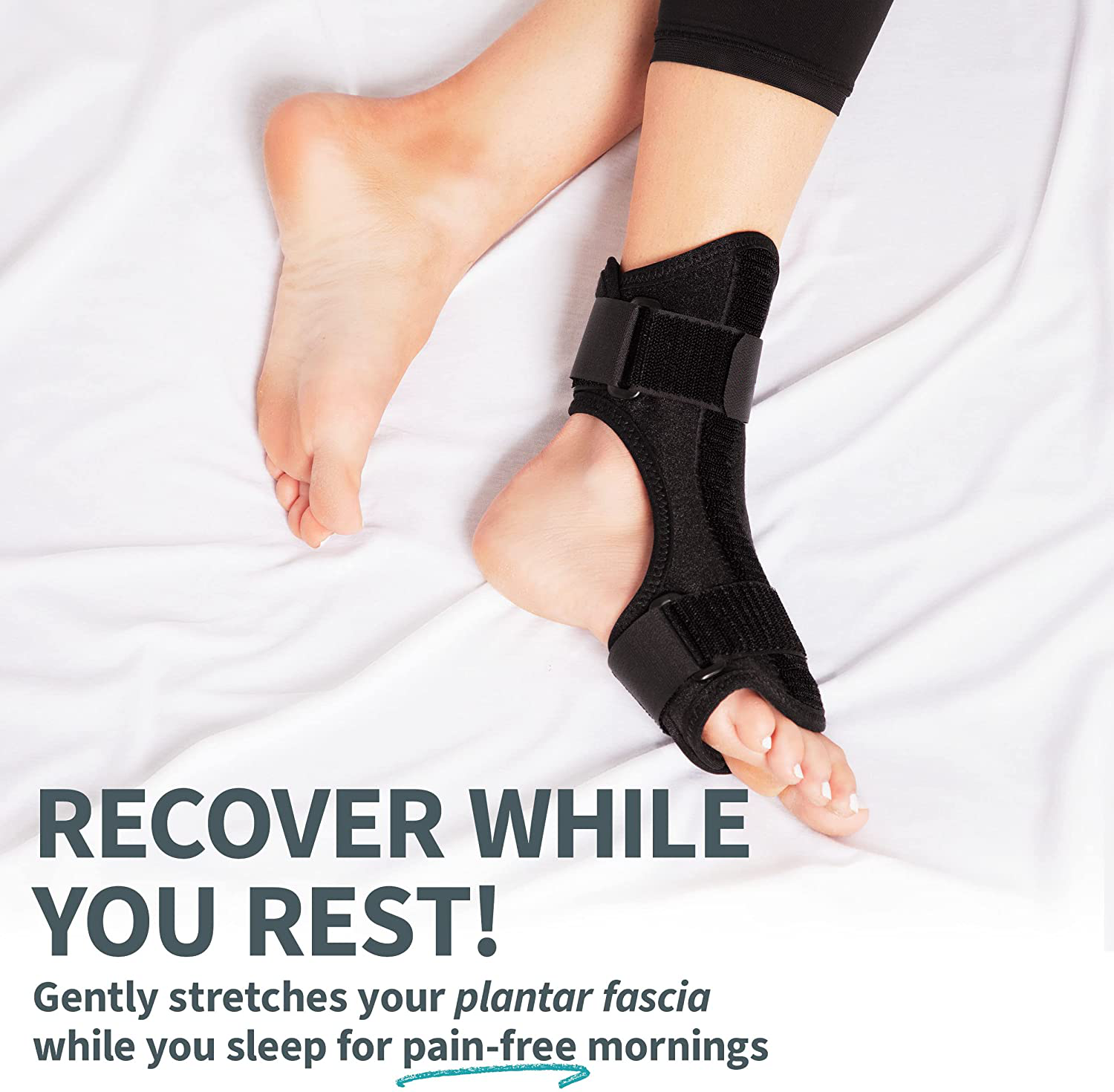
- Night‑time splint designed around plantar‑fasciitis‑type heel and arch pain, to make those first steps after rest feel more manageable.
- Holds your ankle close to a right angle and keeps the sole gently stretched while you sleep, so the plantar fascia and calf do not fully tighten overnight.
- Adjustable metal bar built into the front panel can be gently bent by hand to set the ankle angle; wide, strong hook‑and‑loop straps then hold your foot and lower leg securely in that position.
- Soft‑lined, breathable, slightly stretchy body with wide straps over padding, not bare skin, to reduce digging‑in and rubbing; open heel and open toes to avoid pressure under the heel and let air circulate.
- Universal adult sizing for men and women, with a shaped heel cradle designed to hold the heel steady without pressing hard into the sides.
- Provides gentle, even compression around the arch and ankle, helping to limit overnight swelling and give the foot a supported, “held” feeling while tissues recover.
- Primarily for plantar fasciitis and similar heel pain, and sometimes used on clinician advice alongside treatment for problems such as Achilles tendon pain, long‑standing heel spurs, forefoot overload, or mild ankle instability.
- Intended to be used together with sensible daytime steps – such as stretching, strengthening, supportive footwear, and, where appropriate, orthotic insoles from FootReviver™ – rather than as a stand‑alone cure.
FootReviver™ Plantar Fasciitis Night Splint
Wake up with less sharp heel pain and less stiffness under the foot. This night‑time splint from the FootReviver™ range is designed for adults whose heel and arch pain is worst on the first few steps after rest – a pattern often described by clinicians as being consistent with plantar fasciitis. Only a clinician can confirm a diagnosis, but this page explains how that kind of pain behaves and how this splint is intended to help with the mechanics behind it.
Why a night splint can help with this type of heel pain
Earlier, we looked at how resting with the ankle dropped and the toes pointed lets the plantar fascia and calf tighten, so that standing up forces a quick, painful stretch. A night splint is designed to change that one factor.
Instead of allowing the ankle to drop fully into plantar flexion, the splint holds the foot closer to a right angle at the ankle. The front of the foot is gently drawn up towards the shin, while the heel stays down.
In that more neutral position:
- The band under the arch stays on a mild stretch, rather than going completely slack.
- The calf and Achilles tendon also stay slightly lengthened.
- The amount of extra stretch needed when you first stand is smaller.
That means the sudden strain on the sore fascia attachment at the heel is reduced. For many people, those first steps after sleep feel less like stepping on a sharp stone, even if some pain remains until the fascia fully settles.
The splint also holds the foot more steadily. It can reduce how often the toes are pushed hard into pointing against the bed or how far the foot rolls in or out as you turn over. That cuts down on quick spikes in tension through the sole that would otherwise jolt the irritated area overnight.
This type of support normally helps most when it is combined with the daytime steps described earlier – such as stretching, strengthening, footwear changes, and orthotic insoles – rather than instead of them. The splint addresses what happens when you are resting; daytime steps address what happens when you are on your feet.
How this FootReviver™ night splint works
This splint runs up the front of the lower leg and over the top of the foot. Built into the front is a metal bar that can be gently bent by hand to set the ankle angle. A system of wide straps then holds the foot and lower leg against this front section so the angle is maintained while you sleep. The padded body wraps around the leg and foot to keep everything in place.
The main things it does are:
- Hold the ankle close to a right angle instead of letting it drop into a pointed position.
- Allow you to set a gentle, steady stretch along the sole and calf, rather than a sudden pull.
- Provide a snug, supportive feel around the heel and arch, with mild, even pressure.
The angles and strap positions are set around a gentle right‑angle ankle position that many physiotherapists aim for when stretching the sole and calf. This FootReviver™ design has been developed specifically around how plantar fasciitis tends to affect the heel and arch, and the front panel is padded and contoured to avoid pressing directly on the bony ridge at the front of the ankle – a common complaint with more basic, flat‑fronted splints.
The aim is to reduce the sharp stretch on the plantar fascia and related tissues when you first stand and walk after resting.
Holding the foot near a 90‑degree angle overnight
The adjustable metal bar sits along the front of the ankle and foot inside the padded panel. When the straps are done up, that panel sits in front of the shin and over the top of the foot and stops the ankle from pointing down too far.
The shin and the top of the foot end up at roughly a right angle, similar to how they line up when you stand with your foot flat. Keeping the ankle nearer to that position overnight means:
- The plantar fascia stays more lengthened along the sole and does not sag into its very shortest state.
- The Achilles tendon and calf muscles are also a little more stretched, which can help with morning tightness at the back of the heel.
- The ankle does not have to move from fully pointed to fully weight‑bearing in one go, so the change in length in the tissues is smaller.
For someone with plantar‑fasciitis‑type heel pain, this often means that when the heel first takes weight in the morning, the pull on the sore attachment at the heel bone builds up more gently. That can make those first few steps feel less like a sudden shock.
Because the bar can be gently bent by hand, a clinician – or, if advised, the wearer – can fine‑tune how much the ankle is brought up, within the limits of comfort. Once set, the padded front keeps the ankle in that chosen angle through the night.
Gentle, adjustable stretch rather than a sudden pull
The wide straps allow you to decide how firmly the front of the foot is held towards the shin. This controls how much stretch you feel along the sole and calf.
The aim is a mild, steady pull, not a strong forced stretch. Starting with a smaller angle:
- Gives the sore fascia and Achilles tendon a chance to get used to the new position.
- Helps reduce the risk of cramp or increased pain from over‑stretching.
- Lets you build up the stretch slowly over several nights if needed.
When the straps are set sensibly, you should feel a gentle, constant tug under the arch and possibly in the calf. It should not feel like a strong pulling or tearing. Signs that the stretch is too strong include:
- Pain that carries on for a long time after you remove the splint.
- Cramp that wakes you or stops you sleeping.
- Numbness, tingling, or pins and needles in the foot.
If any of these happen, it is better to ease the straps, reduce how long you wear the splint, or both, and speak to a clinician if you are unsure. It is normal to feel a little extra stiffness under the foot or in the calf for a short while when you first start using a splint like this, but that should ease quite quickly with gentle movement.
Support and compression around the heel and arch
The body of the splint is made from a slightly stretchy, breathable material that is soft‑lined on the inside. The padded sections and wide straps wrap around the top of the foot, the arch area and the leg just above the ankle to give a close, even hold. The heel is left open so there is no direct pressure under the heel bone itself, and the toes are also open to allow movement and air flow.
Because the straps sit over the padded body of the splint rather than directly against bare skin, pressure is spread over a wider area. This gentle pressure can:
- Help limit fluid build‑up in the soft tissues around the heel and arch as you sleep.
- Reduce small, unwanted movements between the bones in the middle and back of the foot when you change position in bed.
- Give the foot a supported feeling, which many people find reassuring when they are trying to rest an area that has been sore for a long time.
The fabric is designed to be breathable and to wick moisture away from the skin, which can help reduce rubbing. The inner surface is soft to reduce irritation, but if your skin is particularly sensitive it may still be more comfortable to wear a thin sock under the splint.
Mild compression can help keep blood and lymph fluid moving, which supports normal tissue health. The key is light to moderate pressure. If compression feels tight enough to cause cold toes, colour changes, or tingling, it is too strong and should be eased.
Key features of this design and what they change in the foot
Adjustable front support to guide ankle position
The metal bar built into the front of the splint acts as a guide for the ankle. It runs up along the front of the shin and over the top of the foot, inside a padded panel. Once the bar has been gently bent to the desired angle and the straps are done up, it stops the foot from dropping into a full pointed position.
In practice, that means:
- The toes and front of the foot cannot point strongly down, so the angle at the ankle stays close to the right‑angle position used in standing.
- The plantar fascia is kept slightly stretched overnight rather than being allowed to slacken completely.
- The front of the ankle joint does not spend long periods at one extreme of its movement range.
Because the splint resists the ankle moving into a pointed posture, the plantar fascia and Achilles tendon are not repeatedly cycling between very short and very long positions. They sit at a more constant mild stretch. Over time, that can help the tissues feel less tight on first moving in the morning and reduce the contrast between how they behave at night and how they behave when you walk.
Wide strap system for a secure, custom fit
The splint has a strap over the forefoot and midfoot and wide straps around the leg just above the ankle. All of these sit over the padded body of the splint rather than directly on bare skin.
This allows you to:
- Pull the heel fully back into the heel cradle so the ankle joint sits near the bend in the splint where it is designed to.
- Spread pressure across the top of the foot and around the leg, rather than having a narrow strap cutting in over a bony area.
- Adjust how much the front of the foot is lifted, by changing tension on the strap that links the forefoot section to the shin.
A firm but comfortable fit reduces the chance of the splint twisting as you turn over in bed. That in turn limits how far the ankle rolls inwards or outwards, which may be helpful if you have stretched outer ankle ligaments from previous sprains or if rolling in tends to add strain to the plantar fascia.
Wider straps have been chosen specifically to reduce the “strap digging in” problem that many people report with narrower‑strapped designs. Being able to set each strap separately also helps if one part of the foot or leg is more sensitive. You can ease that strap a little while keeping the others firm enough to hold the position you need.
Universal sizing for adult men and women
This splint is designed to fit a wide range of adult feet and ankles. Rather than choosing a precise size, you place your heel in the back of the splint and then use the straps to secure the rest.
The important part is that the bend in the splint lines up with the ankle joint. If the splint were too short or too long and that bend sat in the wrong place, the forces would not be applied where they are intended. By allowing you to seat the heel properly and then adjust around your foot and leg, this design helps keep the hinge point broadly in the right area for many different adult shapes.
The heel area is open so there is no direct pressure under the heel bone, but the sides of the splint are padded where they contact the upper part of the heel and ankle to reduce rubbing.
Soft‑lined, breathable materials
The main body of the splint is made from a slightly stretchy, supportive material that is soft‑lined on the inside and designed to be breathable. When the straps are done up, it wraps around the foot, arch, and leg just above the ankle to give a snug, even hold rather than hard pressure points.
This kind of hold:
- Helps limit swelling in the small veins and soft tissues around the heel and arch overnight.
- Reduces small unwanted movements between the bones in the middle and back of the foot when you change position in bed.
- Gives the foot a supported feeling, which many people find reassuring when they are trying to rest an area that has been sore for a long time.
The material is designed to help wick moisture away from the skin, which can reduce friction. The inner surface is soft to reduce irritation, but if you find any rubbing you may be more comfortable with a thin sock underneath.
Who this night splint may suit – and when to be cautious
This type of splint is often considered if you recognise:
- Pain under or around the heel, worst with the first few steps after getting up or after a longer sit.
- An ache or pulling along the arch that clearly links to how much time you spend on your feet.
- Pain that eases a bit with gentle walking but comes back after resting again.
Some people using this type of splint have been told they have plantar fasciitis or heel spurs; others simply recognise this description.
It may be particularly relevant if:
- Your work or daily routine involves long periods of standing or walking on hard surfaces.
- You have recently increased walking or running and heel pain has started or flared.
- You are already trying footwear changes, stretches, strengthening, or orthotic insoles and want to address what happens at night as well.
Extra care and personalised advice are important if you:
- Have diabetes, especially with reduced feeling in your feet.
- Have known circulation problems in your legs or feet.
- Have nerve problems causing numbness, tingling, or weakness in the foot or leg.
- Have had operations on your foot or ankle.
- Are pregnant and experiencing swelling or circulation changes.
These are all situations where even mild pressure or position changes can matter, which is why advice from someone who knows your health history is important. In any of those situations, speaking to a GP, physiotherapist, podiatrist or another appropriate professional before using a splint is sensible.
Other heel and foot problems this design is sometimes used for
The FootReviver™ night splint has been designed first and foremost around plantar‑fasciitis‑type heel pain. Some clinicians also use similar ankle positions at night for a small number of other foot and ankle problems where night‑time ankle angle and soft‑tissue tension matter. The overviews below outline a few of those situations, how the problem usually behaves, and how a splint like this may fit in as a supporting option. In all of them, the splint is an addition to a wider approach, not the main treatment.
These overviews are included for people who recognise themselves in some of these descriptions alongside heel and arch pain. The FootReviver™ night splint is still centred on plantar fasciitis and similar heel problems. Any use for other conditions should be agreed with a clinician who knows your medical history. If you are unsure which of these, if any, fits your situation, it usually makes sense to start by talking through your symptoms with a GP, physiotherapist, or podiatrist before deciding how a night splint might fit into your care.
How to fit and use the FootReviver™ night splint
Step‑by‑step fitting
- Sit on a stable chair or the edge of the bed with your knee slightly bent and your foot relaxed.
- Place the splint in front of your leg so the padded front section runs up the front of your shin and over the top of your foot.
- Slide your foot into the splint, making sure your heel is all the way back in the heel cradle. If the heel sits too far forwards, the ankle angle will not be as intended.
- Fasten the strap nearest the toes first so the front of your foot sits against the splint. Check it does not dig into the top of your foot over any bony spots.
- Fasten the straps over the midfoot and around the ankle, snug enough to hold the splint in place but not so tight that they are painful.
- Wrap and secure the wider straps around the leg just above the ankle. They should be firm enough that the splint does not slide down but not so tight that they cause deep marks.
- If you or your clinician adjust the metal bar to change the ankle angle, do so gently and in small steps. Any change should still allow only a gentle, steady stretch under the arch or in the calf, not a strong pull.
Once fitted, check your toes. They should be warm and a normal colour. A simple way to check blood flow is to press on a toenail until it goes pale, then let go. The colour should return promptly. If your toes look pale or blue, or feel very cold or numb, loosen the straps or remove the splint. If that does not improve things quickly, pause use and seek advice.
Building up wear time safely
Most people find it easier to get used to a night splint in stages. For example:
- Start by wearing it for an hour or two in the evening while you are sitting and resting, so you get used to the feel and can adjust the straps.
- If that is comfortable, try wearing it for part of the night. You might put it on before sleep and remove it if you wake in the night, or put it on later once you are already asleep, depending on what suits you.
- Over several nights, aim to build up to wearing it for most of your usual sleep time, as long as it stays comfortable and your circulation checks are normal.
It is normal to notice some extra stiffness under the foot or in the calf for a short while when you first start using the splint and then remove it in the morning. That usually eases with gentle movement. That early stiffness does not mean you have done damage; it is usually a sign the tissues are adjusting to being held in a new position. If pain builds during the night, does not settle after taking the splint off, or seems to get worse each day, it may mean the stretch is too strong or the wearing time is increasing too quickly. In that case, it may be worth easing things back and discussing it with a clinician.
What to expect over the first few weeks
The first few nights are mainly about getting used to the splint. You are likely to be more aware of the device on your leg and foot, especially when turning over. You may need a few tries to find strap settings that are firm enough to hold the position without causing discomfort.
Changes in pain tend to be slower. Some people notice that the first steps in the morning feel a bit less sharp after a couple of weeks of regular use. For others, it takes longer. The time it takes often depends on:
- How long the heel pain has been there. Longer‑standing problems tend to take longer to change.
- How much walking and standing you still need to do in the day.
- Footwear choices and body weight.
- Other health factors that affect how tissues recover.
The splint mainly works on what happens when the foot rests in a pointed position and is then suddenly loaded. It does not, on its own, change how many hours you spend on your feet on hard floors, what shoes you wear, or how strong and flexible your calf and foot muscles are. Using it consistently at night, alongside sensible changes in those daytime factors, often gives the best chance of improvement.
If, after using the splint in a consistent, comfortable way for a few weeks, you find that pain is clearly worsening, spreading, or preventing you from doing basic daily tasks, it is wise to seek a review with a clinician for a fuller look at what is going on.
Care, skin checks, and product maintenance
Looking after the splint and your skin helps it do its job and reduces the chance of irritation.
- Wipe the fabric and straps regularly with a damp cloth and mild soap. Let everything dry fully before using it again. Damp material can soften and may not hold fastenings securely.
- Avoid very hot water or harsh cleaning products, which can damage the fabric or reduce the grip of the hook‑and‑loop straps.
- Every so often, check the front bar and padded panel to make sure they have not been bent out of shape. If they do change shape, the ankle angle may change and the forces on the foot may not be as intended.
- Clear any fluff or debris from the hook‑and‑loop sections so the straps continue to fasten properly.
After taking the splint off, look at the skin over the heel, the arch, the front of the ankle, and under the straps. Light marks that fade within a short time are common. Areas that stay very red, become dark, blister, or break down are not expected and suggest the fit is too tight or the splint moved and rubbed. In that case, ease the fit, adjust strap positions, or pause use and get advice.
The straps and fabric will naturally wear over time. If the straps no longer stay done up or the materials become very worn or misshapen, the splint will not hold the ankle and foot as intended and may start to rub. That is a sign that repair or replacement may be needed.
Frequently asked questions
How quickly might morning heel pain change?
Some people notice that their first‑step pain is starting to ease after a couple of weeks of wearing the splint regularly. Others find the change is slower. The plantar fascia and nearby tissues often need repeated nights of better positioning to change how they behave. The splint helps with overnight shortening and the sudden morning stretch; daytime load from standing, walking, and footwear still needs attention as well. The section on “What to expect” above goes into this in more detail.
Can this be worn on either foot?
Yes. The design can usually be fitted to either the left or the right foot. If both heels are affected, some people choose to use a splint on each side. Because that can affect balance if you need to get up at night, it is sensible to discuss this with a clinician, especially if you have other health issues or are unsteady on your feet.
Is it comfortable enough to sleep in?
At first, most people are very aware of having something on the foot and leg. That is to be expected. The aim is not to make the splint invisible, but to find a set‑up where it is a mild presence rather than a constant distraction. Building up wearing time, keeping the stretch gentle, and adjusting straps can all help. If, despite adjustments, the splint continues to disturb your sleep or cause significant discomfort, it is worth seeking advice about whether it is right for you.
Can I walk around with the splint on?
The splint is designed for use when you are resting or sleeping. Standing briefly, for example to go to the toilet at night, may be possible, but you need to be cautious because the way the ankle and foot move is altered and balance is affected. It is not intended for longer walks or for use as a daytime walking boot.
Can this replace other treatments for plantar fasciitis?
This splint is usually part of a broader approach rather than the only measure. It mainly changes what happens to the fascia and calf overnight and after rest. Daytime steps – such as stretching, strengthening, footwear choices, and orthotic insoles – address how much stress the fascia and heel are under when you are on your feet. A clinician can help you decide which combination is likely to suit you best.
Is it suitable if I have diabetes or circulation problems?
If you have diabetes, especially with reduced feeling in your feet, or known circulation problems in your legs or feet, it is important to speak to a GP, podiatrist, or other clinician before using a splint like this. Reduced sensation makes it harder to feel if straps are too tight or if there is rubbing, and circulation problems can slow healing if the skin is damaged. Extra care with skin checks and fitting is needed in these situations.
How tight should the straps be?
The splint should feel secure, not loose, but the straps should not be pulled so tight that they cause pain, strong indentations that last, or changes in the toes such as coldness, paleness, or a blue colour. If you notice pins and needles, numbness, or a change in toe colour, loosen the straps or remove the splint. It is better to have a slightly looser fit you can tolerate than an over‑tight one you cannot keep on.
How long will the splint last?
How long the splint lasts depends on how often it is used, how firmly it is tightened, and how it is cared for. With sensible use and cleaning, it should last for a good period. For someone wearing it most nights, that may eventually mean noticing straps that no longer stay done up as well, padding that is very flattened, or a shape that no longer holds the ankle where it should. Those are signs it may be time to replace it.
Safety, red flags, and when to seek advice
This splint is intended for adults who recognise a heel or arch pain pattern that may match plantar fasciitis or related mechanical problems. It is not a substitute for a full assessment.
Stop using the splint and seek urgent medical advice if:
- You develop sudden, severe pain in the foot or ankle, especially after a fall or injury.
- Your foot or toes become very cold, pale, blue, or markedly swollen while you are wearing the splint.
- You notice new or rapidly worsening numbness, tingling, or weakness in your foot or lower leg.
Speak to a GP, physiotherapist, podiatrist, or other appropriate clinician if:
- Heel or arch pain is not improving after several weeks of using the splint and making sensible changes to activity and footwear.
- Pain is getting steadily worse, changing in nature, or starting to spread into new areas, such as the calf or the rest of the foot.
- Day‑to‑day tasks like walking, standing, or using stairs are becoming more difficult.
The information here is general guidance. It does not replace individual medical advice or a diagnosis. No particular outcome can be guaranteed from using this or any single product. The splint is designed for adult use. It is not designed for use in pregnancy without personalised advice, as circulation and swelling can change and may affect how safe it is to use positioning and compression devices.
If you are unsure whether this splint is suitable for you, especially if you have other health conditions, it is usually best to check with a clinician before using it regularly.
Is the FootReviver™ night splint right for you?
Heel pain that is sharp on the first few steps after rest and eases a little with gentle walking is often linked to how the band of tissue under the foot and the tissues at the back of the lower leg behave. During the day, the plantar fascia can be irritated by the way the foot moves, the surfaces you stand on, your footwear, and your activity levels. At night and during longer rests, the ankle and toes tend to point down, letting the fascia and calf shorten. Standing again then forces them to lengthen quickly under load, which can be very painful at the heel.
The FootReviver™ night splint is designed to tackle that resting‑position part of the problem. By holding the ankle nearer to a neutral angle and keeping the sole slightly stretched, it aims to reduce how much the fascia shortens and how sudden the stretch is when you first stand up. The angles and strap layout in this design reflect positions often used in plantar fasciitis rehabilitation, and have been shaped around the patterns FootReviver™ sees most often in people with this type of heel pain. Features such as the padded, contoured front panel and shaped heel cradle are specifically chosen to hold the foot where it needs to be without digging into sensitive bony points.
Used together with the daytime steps described earlier – such as stretching, strengthening, supportive footwear, and, where appropriate, orthotic insoles for plantar fasciitis from FootReviver™ – this night splint can be one part of how you manage this type of heel pain.
If your heel pain behaves in the way described here and you are considering a night splint, it is worth discussing this option with a GP, physiotherapist, podiatrist, or other appropriate clinician. They can help you decide whether this FootReviver™ night splint, alongside other products available here for plantar fasciitis, could be a sensible addition for you and how best to use it with other treatments.



Reviews
There are no reviews yet.