Flat feet
Flat Feet and Fallen Arches: What’s Going On and How Support Helps
Sore heels first thing in the morning. Feet that feel heavy by mid-afternoon. A dull ache along the inner edge of the foot after a longer walk than usual. Each of these is easy to shrug off on its own. Taken together, they can all point at the same place: an arch that isn’t holding up under your weight.
Most people with low arches never have a problem with them. For others the trouble builds quietly over years, without any single moment when it started.
When it does cause trouble, it doesn’t stay in the foot. An arch that keeps dropping changes how the whole leg above it moves, and the knee, hip and lower back end up taking weight they weren’t built to take.
The shape of your arch matters less than whether the tissues holding it can manage the weight going through it. That’s good news, because you can’t change your foot’s shape, but you can change how much it has to carry. So the question worth answering before you look at support isn’t what the arch looks like sitting down. It’s how far it drops when you stand, and whether that drop causes symptoms. You can check part of that yourself, further down.
What a flat foot actually is
Your arch isn’t a single bone with a bend in it. It’s the shape formed by the bones of the midfoot, the small bones sitting between your heel and the longer bones that run out towards your toes, arranged in a curve rather than lying flat against the ground. That curve is held by two things: ligaments, which are tough bands joining one bone to the next, and the muscles and tendons running through the foot and ankle. One tendon does much of the daily work of holding the arch up. The posterior tibial tendon comes down the inside of your ankle, attaches into the midfoot, and is the same tendon that lets you rise onto your toes.
When that arrangement holds, the arch dips slightly under your weight and springs back as you push off. That movement is normal and useful. As you walk, your weight lands on the outside of the heel, rolls forward and inward across the sole, and leaves the ground through the ball of the foot and the big toe. The arch rises and falls through that sequence, and the movement absorbs part of the force of each step, so less of it travels up into your leg.
There’s more going on at the end of each step. As your toes bend back to push you forward, the thick band running from your heel to the ball of your foot, the plantar fascia, winds around the ball and tightens. Tightening that band raises the arch, which turns the foot into a firm lever rather than a slack one. Bend the toes, the arch lifts. Straighten them, it drops. That happens with every stride, all day long.
A flat foot, sometimes called a fallen arch, is one where the arch sits lower than usual, or where it disappears entirely once your weight is on it.
Flexible and rigid flat feet
Which kind you have changes what support can do for you. In the more common kind, the arch is visible when you’re sitting or when you lift your foot off the floor, then flattens out completely once you stand on it. This is a flexible flat foot. The structures holding the arch can still do their work; they’re carrying more weight than they can hold.
In the other kind, the arch stays flat whether you’re standing, sitting or lying down, and the joints and ligaments of the midfoot tend to be stiffer. This is a rigid flat foot. If yours is rigid, painful, or has appeared recently, have it examined rather than managed at home, because rigid flat feet are more often linked to joint conditions in the foot.
If your arch only flattens when you put weight on it, something firm placed underneath can hold it closer to the position it takes when you’re off your feet. That’s what an insole does. If the arch is flat all the time, there’s less movement to limit, so support becomes more about spreading pressure across the sole and keeping the heel upright.
Why a flat shape becomes a problem
A flat foot is a shape. What turns the shape into a problem is the tissues holding the arch being asked to do more than they can keep up with. How much a foot can take varies from person to person, which is why people with the same arch shape can end up with very different symptoms.
When the arch does start dropping, what changes is easy to describe. Instead of the weight of each step passing through the middle of the foot, it shifts towards the inner edge, and the foot rolls inward further than it should as you walk. That extra roll sets off more than one problem. The plantar fascia, which should be tightening as the arch lifts, gets stretched instead. And the tendon on the inside of the ankle works harder all day to limit how far the arch falls, because the weight above it is trying to push the arch down with every step. Tissue that’s stretched and loaded again and again gets tired first, then irritated, then painful.
How flat feet show up day to day
For many people, symptoms follow a daily pattern. Overnight, the plantar fascia sits at its shortest, with the foot relaxed and the toes pointing down. The first steps of the morning stretch that shortened band quickly, which is why the heel is at its sorest getting out of bed and eases over the following minutes as the tissue lengthens and warms. The pain comes back after a long sit or a long drive, because the band shortens again while you’re still.
After a few hours on your feet, the arch sits lower than it did when you got up. Partly it’s the muscles and ligaments holding the arch getting tired, and partly it’s hours of weight building up. By evening there’s often an ache along the inner edge of the foot and some swelling around the inside of the ankle that settles overnight once you’re off your feet. The next day starts the same way.
You can check a few of these yourself. Your feet ache by the end of a day that wouldn’t have bothered them before. You can’t push up onto your toes easily, or it feels weak when you try, which is a sign that the tendon on the inside of the ankle isn’t lifting the heel as it should. The inner edge of your shoe sole wears down before the outer, because that’s where your weight has been landing. If you stand barefoot on a hard floor, your foot looks wider and flatter than it does sitting down. If any of these are familiar and your feet are getting in the way of what you normally do, that’s the point to raise it with someone rather than keep watching it.
Pain in the arch or the heel is the most typical complaint, and because it often comes on later rather than during the activity itself, people tend to blame the walk, the shoes or the ground. But the pain isn’t always in the foot. An ache in the knee, discomfort around the hip and low back pain can turn up alongside flat feet, because the leg above the foot is adjusting to what’s happening below it.
What makes an arch drop
There isn’t one cause, and it helps to separate what changes the shape of the foot from what simply adds strain to it.
Genetics plays a large part in shape. How loose your ligaments are tends to run in families. Some people are built with softer connective tissue, and an arch held by softer tissue sits lower under the same weight. If a parent or a sibling has flat feet, you’re more likely to have them too, and there may be no obvious moment when it started.
Age brings changes of its own. Adults can develop flat feet later in life with no obvious trigger, as the tissues in the foot change over the years. Arthritis works the same way, only faster and with more inflammation: when the joints of the foot are inflamed and the tissues around them lose some strength and flexibility, the arch can gradually give way.
Injury is another route to a change in shape. A sprained ankle, a fracture, or damage to the ligaments on the inside of the foot can leave the arch less well supported than it was. The injury heals, the foot carries on, and the change shows up over the following months without anyone connecting the two. Damaged ligaments no longer resist the arch dropping as firmly, so the foot rolls inward a little further than before, and the tendon on the inside of the ankle has to work harder to keep the arch up.
Children get flat feet too. Most grow out of them as their arches develop, though some don’t, and it’s only worth looking at if the feet are painful or clearly affecting how a child walks.
Then there are causes that leave the foot alone and simply add strain. Carrying extra body weight increases the force going through the arch with every step, which over time can overwhelm tissue that would otherwise cope fine. Pregnancy adds weight the same way, and it also softens the ligaments, leaving the arch less firmly held.
Long days standing or walking on hard surfaces work differently again. On concrete or tile there’s nothing underfoot to absorb anything, so the whole force of each step goes through the foot. The muscles supporting the arch are working continuously rather than in bursts, and muscles that work all day tire and stop holding the arch as firmly as they did in the morning. That’s why the foot sits flatter and feels more uncomfortable by the end of a long shift than it did at the start.
None of that changes the advice much. Support can’t undo a cause, but it can change what the tissues have to carry while you’re on your feet, and that applies whether the arch was soft from the start or has dropped since.
What happens if it’s left alone
Where flat feet are causing symptoms, what goes wrong first depends on which tissue is taking the extra work, and that changes how the pain feels and when it shows up.
Start at the sole. The plantar fascia sits under the arch, running from the heel bone to the ball of the foot, and tightens as your toes bend to lift you onto the front of your foot. When the arch drops, that band is stretched under weight with every step instead of tightening. Stretch a band like that repeatedly under your weight and it gets irritated rather than staying supple. That’s the pattern behind plantar fasciitis: a sharp, grabbing pain under the heel towards the inside, or along the inner edge of the arch, rather than a dull ache. People with flat feet are considerably more likely to develop it, because the band is being stretched further and more often than it’s built for.
Move to the back of the ankle. The Achilles tendon is the thick cord you can feel above your heel bone, and it works with the calf muscle to push you forward off each step. When the foot rolls inward, the push-off happens at an angle the tendon isn’t lined up for. The calf has to work harder to produce the same movement. That’s how Achilles tendinitis starts: stiffness and pain at the back of the ankle just above the heel, often worst first thing in the morning or after exercise, sometimes with visible thickening of the tendon. Stairs and slopes tend to bring it on, because that’s when the calf is working hardest to lift you.
Along the shin, the same problem shows up in different tissue. Shin splints are the aches that spread along the shin bone, and pain along the inner border and pain along the front come from different groups of muscles, so they’re treated as separate problems. What they share is the cause. Those muscles work harder than they should on every step to pull back a foot that’s rolling inward too far. The repeated effort shows up as pain along the bone where they attach. They’re common in feet that aren’t absorbing weight well, and they tend to appear afterwards rather than while you’re walking.
Above the foot, the effects travel. When the foot rolls inward, the lower leg rotates inward with it, which changes the angle at which weight passes through the knee. The hip follows that rotation and the lower back adjusts to keep you upright. This is how knee pain, hip discomfort and low back ache can turn up alongside flat feet without any obvious cause of their own. Each step repeats the same pattern, thousands of times a day, so a small change in how the foot lands adds up.
For most people it doesn’t settle on its own once symptoms have started.
What support actually does under the arch
An insole won’t change the shape of your foot. What it can do is take some of the load off the tissues while you’re on your feet.
The mechanism is simple. Put something firm and shaped under your arch, and the arch sits closer to where it holds itself when you’re not standing on it. The tendon on the inside of the ankle isn’t pulling alone against a falling arch; it has something underneath holding the arch up. Take that support away, or stand on something soft that compresses under your weight, and the arch drops further with every step, which is more stretch than the tissues can recover from before the next day.
A couple of things follow from that. The pressure spreads across the whole sole instead of concentrating at the heel and the inner edge. And the heel stays lined up with the leg rather than rolling inward, so the muscles along the shin aren’t being asked to correct a larger roll than they can handle.
Cushioning and support are often sold as if they were the same thing. They aren’t. A flat, soft insole can feel pleasant for an hour, but it adds padding rather than holding anything up, and padding under a collapsing arch compresses away once your weight is on it. Supporting a fallen arch needs a raised, shaped section that sits under the foot and resists the drop. Cushioning is the useful extra on top, not a substitute for structure.
How the FootReviver range is built to help
FootReviver’s range covers orthotic insoles, orthopaedic footwear, and braces and supports, so there’s a level of support to suit most feet and most shoes. The materials are medical grade, chosen so they hold their shape through daily wear instead of compressing flat within weeks. That means the arch support sits at the same height at the end of a long day, and after a few months, rather than flattening in the first week.
The range is broad because feet differ, and it’s designed for adults rather than children. No single shape of insole suits every foot, and no single level of support suits every situation, so you match the support to your foot rather than asking one product to do every job. A satisfaction guarantee sits behind it all as well, which helps, because getting foot support right often takes a try or two.
Orthotic insoles
FootReviver’s insoles follow the contours of the foot rather than sitting flat under it, and a raised section under the midfoot takes some of the weight off the arch so it doesn’t fall as far with each step. Less drop means the plantar fascia is being stretched less far and less often, and the tendon on the inside of the ankle has less of a falling arch to resist.
The same shape does something else too. Because the whole foot shares the weight rather than tipping onto its inner edge, pressure moves away from the spots that take the most strain: the heel and the inner border of the sole. There’s cushioning in the heel and forefoot to absorb shock on top of the support, and that’s what you notice most after a long spell on your feet. With the heel sitting in line with the leg, the knee and hip sit more naturally above it too.
Because the arch stays held up through the day, the plantar fascia stays closer to the length it’s meant to sit at. That shows up most clearly the next morning, when the first steps out of bed tend to hurt less.
If your symptoms are mostly in the foot and lower leg, these are the ones to start with, and they let you keep wearing shoes you already like. They need room to work, though. A shoe with a removable inner sole gives you that room most easily, since taking the inner sole out frees up space. Laced shoes and trainers generally work better than slip-ons with a shallow fit. If a shoe is already tight across the top of your foot, an insole will make it tighter, and no amount of adjusting will fully solve that. Don’t move a single insole between shoes all day, either. Bending and forcing it repeatedly shortens its life.
Orthopaedic footwear
Sometimes the shoe is the weak point. A thin, flat shoe with a flexible sole gives the foot nothing to work against, and no insert can fully make up for a shoe that’s collapsing underneath it. FootReviver’s orthopaedic footwear builds the arch support and cushioning into the footbed, the inner sole the foot rests on, so the support is there from the moment you put the shoe on, with nothing to fit or adjust. The range comes in a variety of styles.
Built-in support comes down to a few structural details, and each one acts on a different part of the foot. A firm heel counter, the stiffened section at the back of the shoe, holds the heel upright and limits how far the ankle rolls inward with each step. That takes pressure off the tendon on the inside of the ankle, and off the muscles along the shin that would otherwise be correcting the roll. A sole with some substance under it, and not too much flex through the middle, reduces the shock travelling up through the leg on concrete or stairs. The footbed is shaped rather than flat, so the arch has something beneath it through the whole stride rather than only halfway through. And the front needs to be wide enough for your toes to lie flat, because toes squeezed together can’t bend back properly at push-off, which stops the arch-raising mechanism from working as well as it should.
Footwear tends to be the better choice when your current shoes are soft, flat or worn, when the back of the shoe has started to lean inward, or when you’re replacing shoes anyway and would rather the support came built in.
Braces and supports
Where an insole isn’t enough, a brace adds stability from the outside. The difference is where the support comes from. An insole works from underneath, inside the shoe, and depends on there being room for it. A brace wraps around the foot and ankle and limits how far the heel can roll on each step, which is the same roll the arch and the tendon on the inside of the ankle are fighting against. It works around your shoes rather than inside them, so it can help even when your shoes have no room to spare.
On uneven ground or when turning, an ankle that rolls heavily has to be caught by the muscles along the shin, and a brace takes some of that job off them. The foot feels steadier, and the shin isn’t doing as much corrective work through the day.
FootReviver’s braces are made from breathable, durable materials with adjustable fastenings, so you can loosen or tighten them to suit you. Some people wear one for particular activities and not others. Others wear one through a working day. It comes down to how much support your foot needs and when it needs it.
What matters most in a brace is comfort through a full day, because one you take off after an hour isn’t doing anything for you. If it still feels right at the end of a long shift, you’ve got the fit where it should be.
Choosing the right level of support
The simplest rule is to begin with the least support that eases your symptoms.
If your shoes are comfortable, in good condition and there’s room inside them, an insole is the sensible first step. It changes what sits under the arch without changing anything else, and it’s the simplest of the options to fit.
If your shoes are thin, soft, worn at the heel or too flexible to hold an insert, footwear with the support built in solves the shoe problem and the arch problem together.
If your ankle rolls heavily, if you’ve had an injury, or if an insole on its own hasn’t reduced your symptoms, add a brace. It can be worn alongside an insole where both are needed, and each does a different job: the insole holds the arch up from underneath, the brace limits the roll from outside.
One honest caveat: don’t buy everything at once. Pick the level of support that matches your situation, use it consistently for several weeks, and only add to it if you still need more. Changing several things together means you never find out which one helped.
Getting the fit right
Support only helps if it sits against the foot in the right place, so fit is the part to get right from the first day.
With an insole, take out the shoe’s existing inner sole if it lifts out. Most shoes have one, and removing it frees up space. The insole should lie flat with no ridges or curling at the edges. Your heel should sit inside the heel cup, not on the back edge of it. Stand up and check that the raised section is genuinely under your arch. If it’s pressing into the wrong spot, that’s a size or shape mismatch, and walking on it won’t fix it. If the shoe feels tight across the top, loosen the laces or try a thinner sock before deciding the insole is wrong.
With footwear, try shoes later in the day, when your feet are at their largest. Check there’s room at the front for your toes to lie flat. Check the heel doesn’t lift as you walk. If you plan to wear an insole in them as well, allow for that when judging the fit.
With a brace, aim for firm rather than tight. The straps should sit so the ankle bone falls between them rather than under one of them, and the heel should sit fully back in the brace rather than perching on the edge. Check the skin after the first few wears and adjust before a small rub turns into a sore point.
What to expect when you start wearing support
A shaped insole usually feels odd for the first few days. That isn’t a sign it’s wrong. Your foot is being held in a position it isn’t used to, and the tissues around the arch and ankle are adjusting to a different amount of stretch.
Build up gradually. An hour or two on the first day, then longer as it becomes comfortable. Going from no support at all to a long walk in the first week is the most common way people conclude that support doesn’t work for them, when the real problem was doing too much too soon.
Give it weeks rather than days. The first thing most people notice is a reduction in the foot ache itself, particularly where the pain has been in the arch or the heel, and particularly in those first steps out of bed. Changes to the way you walk, and the knee or back ache that came with it, take longer, because they come from a pattern of movement you’ve had for years and the tissues above the foot have adapted to it.
One rule overrides everything else here. If something is genuinely painful rather than simply unfamiliar, stop and have it looked at. Sharp pain, numbness, or a rub that gets worse instead of settling is not something to push through.
Where strengthening fits in
Support takes some of the strain off. It doesn’t build strength, and it isn’t a substitute for the muscles that hold the arch up.
The small muscles inside the foot and the calf muscles above it both help hold the arch, and the tendon that does most of the work is a living structure: it gets stronger when it’s worked sensibly and weaker when it isn’t. Support reduces what the foot has to put up with enough that it isn’t being hammered all day, which gives you room to build strength rather than just getting through it. Too much strain with no support leaves the tissues irritated and unable to recover between days. Support with no strength work leaves the foot relying on the insole, with nothing changing underneath.
A physiotherapist or podiatrist can put together a programme matched to your foot, which will always suit your foot better than a general one. Nothing in it is complicated. Rising onto your toes, sometimes on one leg at a time, works the calf and the arch together. Standing on one foot for short periods trains the small stabilising muscles. Controlled movements that draw the arch up without curling the toes work the muscles inside the foot. Alongside those, gentle calf stretching helps where the back of the ankle feels tight, which is common when the foot has been rolling inward for a long time. Stretch to the point of tension rather than pain, hold briefly, and repeat a few times through the day.
A short set twice a day does more than one long session a week. The aim isn’t to work hard; it’s to give the tissue enough repetition to strengthen.
When to get your feet looked at
Support and strengthening are sensible for most people with flat feet, and they’re often enough on their own. They aren’t the right answer for everything.
See a doctor, physiotherapist or podiatrist if the pain is severe, if it’s getting worse rather than settling, or if it’s stopping you walking the way you normally would. The same applies if there’s swelling along the inside of the ankle that doesn’t settle with rest, or if a fair trial of support and exercises hasn’t changed anything. At that point you want someone to examine the foot properly rather than keep guessing at it. A podiatrist, in particular, can look at how your foot carries weight and moves rather than only at where it hurts.
Where to start
Flat feet are common and, for most people, manageable with the right support under the foot. What they aren’t is something to keep putting off, because the strain they create builds quietly in the sole, the ankle, the shin and further up the leg.
Pick the level of support that matches your symptoms and your shoes, wear it consistently, and give it time before judging whether it has helped. If your symptoms are new, appearing in only one foot when that wasn’t the case before, or not settling after a fair trial, have them looked at rather than keep changing the product.
FootReviver’s orthotic insoles, orthopaedic footwear and braces and supports are made for that approach, with shaped support and medical-grade materials chosen to hold their shape under daily use.
Disclaimer
This page is general information about flat feet and fallen arches. It isn’t medical advice and it doesn’t replace being examined by someone who can look at your feet, ask about your history and watch you walk.
It can’t tell you what’s causing your symptoms, so the checks here are a prompt to get things looked at rather than a diagnosis. If what you read doesn’t match what you’re feeling, trust the examination over the page.
How much support helps varies. Give it a few weeks before deciding whether it has, and if your symptoms need looking at properly rather than managed at home, book that appointment rather than keep trying products.
FootReviver’s insoles, footwear and braces are designed for adults rather than children. A child with flat or painful feet should be assessed by a professional before anything is fitted.
Speak to a doctor or podiatrist before using arch support if you have diabetes, poor circulation, peripheral neuropathy or reduced sensation in your feet, a foot ulcer or a wound that’s slow to heal, or if you’ve had recent foot or ankle surgery or a fracture. Reduced sensation matters most, because you may not feel a support pressing or rubbing.
Stop using it and get advice if pain gets worse rather than easing, if you get numbness or tingling, or if a sore point hasn’t settled within a few days.
-

Orthotic Arch Support Sandals for Flat Feet & Plantar Fasciitis
- If you dread those first few steps on hard floors in the mornings because your heels and arches flare up, FootReviver sandals offer relief by calming that strain and supporting your feet properly all day.
- This pain often happens because the plantar fascia—a ligament along the bottom of your foot—can tighten overnight. Stepping down stretches it abruptly, causing that sharp morning sting. Hard floors can then jar the same sensitive areas with each step.
- The sandals address this directly by cradling your arch and heel from the moment you stand, easing that initial stretch. Their cushioning then absorbs shock throughout the day, taking the pressure off your feet on hard surfaces.
- Ideal for flat feet, fallen arches, plantar fasciitis, or overpronation—whether you wake with heel pain, feel arch fatigue on hard floors, or notice your feet rolling inward.
- The contoured footbed acts more like a clinical orthotic than a simple sandal, with built-in arch support and a deep heel cup to lift flat arches, stabilize your heel, and lessen tension on the plantar fascia.
- The seamless, soft moulded EVA sole provides a cushioned foundation to soften every step on hard floors, reducing jarring impact through your heel, arch, and forefoot during long periods of standing or walking.
- Lightweight and breathable, with an open-toe shape, they give your toes room to move while keeping your foot comfortably in place on the supportive footbed—so you can wear them all day without feeling heavy or constrained.
- The toe-post and secure strap placement help keep your foot correctly positioned over the arch and within the heel cup, especially when you follow the sizing guide to choose your fit.
- The outsole is designed for reliable grip, but as with any footwear, it’s wise to be careful on wet, greasy, or polished surfaces and on stairs.
- Available in a range of men’s and women’s sizes, backed by a 30-day guarantee so you can try them at home and feel the difference in your daily routine.
£34.99 -
Gel Shock Absorbing Insoles for Trainers & Running shoes
- Who these insoles are for
FootReviver Gel Shock Absorbing Insoles for Trainers & Running shoes are aimed at adults who run, play sport or spend long hours on hard floors and are starting to notice familiar problems – for example:- sharp or bruised pain under the heel,
- burning or “stone under the foot” pain under the ball of the foot,
- arches that feel tired or as if they are “giving up” towards the end of a run or long day,
- shins, knees, hips or lower back that feel more sore or jarred after impact‑heavy days than you would expect.
- How this FootReviver insole is built
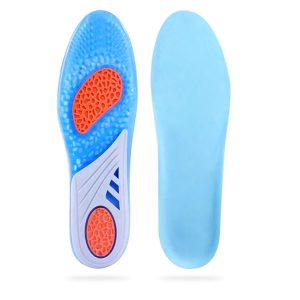
This FootReviver design uses a specific combination of parts to deal with that mix of impact and foot movement:- a full‑length gel layer to cushion the whole sole from heel to toe, rather than just small gel pods under the heel,
- separate pads under the heel and ball of the foot, positioned under the areas that most often become sore in runners and in people on their feet a lot,
- a three‑quarter length firm base under the heel and arch to steady the rearfoot without making the front of the foot feel stiff,
- a moderate arch contour that supports low, neutral and higher arches within a comfortable amount of movement,
- a shaped heel cup to help the heel sit more centrally in the shoe, reducing extreme inward or outward tipping,
- a breathable, slim top layer so they fit into most trainers and many roomier work or casual shoes without feeling bulky.
Clinicians who work with runners and people on their feet all day helped shape this design. Within the FootReviver range, it is a commonly used model when impact and general foot fatigue are the main concerns.
- What you may notice when you use them
Once you have fitted them into your trainers or sports shoes and built up wear time gradually, you may notice several changes:- heel landings in shoes feel less like landing on a bruise and more like a cushioned contact,
- the “hot spot” under one or two forefoot joints feels less intense and slower to build,
- arches feel better supported through runs and long days, with less tired pulling under the foot,
- the heel rolls in or out less extremely, so there is less twisting strain on the shin and knee,
- similar runs and long days on hard floors leave your knees, hips and lower back feeling less jarred than they used to.
Put simply, this FootReviver insole is built to soften landings and steady the heel and arch inside your trainers, tackling the mix of impact and movement that often leads to common heel, forefoot, arch, shin and knee aches.
- When this FootReviver insole is especially useful
This design is particularly relevant if:- you have heel pain that is sharp when you first put weight through it and still flares when you start walking in shoes or after runs,
- you feel burning or “pebble‑like” pain under one or two forefoot joints (often described as metatarsalgia or Morton‑type problems),
- your arches ache or feel tired towards the end of training blocks or long shifts on firm floors,
- you struggle with shin splints, impact‑linked knee pain, or a sense that your hips and lower back are being jarred by firm surfaces.
If you recognise several of these problems and feel your current insoles are very thin and offer little support, this FootReviver model is a more substantial option to consider.
- Practical fit and safety points
- Available in two size ranges (UK 3–9 and 9–12) that you can trim to match your existing insole; slim enough for most trainers and many roomier work or casual shoes.
- Best introduced gradually so your feet and lower legs can adjust – start with shorter wear periods and build up step by step.
- If you have been advised that you need strong correction for very flat or very high arches, one of the firmer FootReviver orthotic models may suit you better.
- If you have diabetes with a history of ulcers, a lot of numbness in your feet, recent major surgery or fractures, or significant foot deformity, speak to a GP, physiotherapist or podiatrist before relying on any new insoles.
- Seek prompt medical assessment if you notice warning signs such as sudden severe pain after an injury, obvious deformity, large or quickly increasing swelling, new numbness or weakness, or new ulcers.
The aim here is not to alarm you, but to make sure you know when to get things checked rather than trying to manage everything with insoles alone.
- 30‑day FootReviver guarantee
These insoles come with a 30‑day money‑back guarantee from the time you receive them. The guarantee is there so you can:- fit them properly in your trainers or sports shoes,
- build up wear time gradually,
- and judge whether this FootReviver design makes your usual runs, walks and long days on your feet feel easier to manage.
If they do not feel right for you and they are still in similar, untrimmed condition, you can return them within this period. Most people would like a quick fix; while no insole can promise that, this guarantee gives you time to see whether this level of cushioning and support suits you. If you are unsure what to expect, it is perfectly reasonable to ask a clinician who knows your history for their view.
£9.99£12.99 - Who these insoles are for
-

FootReviver™ Orthotic arch support insoles for flat feet & high arches
- Made for flat feet and high arches: Especially suited to adults with low or high arches and feet that clearly roll inwards or outwards.
- Helps with common foot and leg pains: Designed to ease everyday discomfort such as:
- heel pain (including plantar‑type “first‑steps” pain once you are in shoes),
- aching arches and mid‑foot,
- burning under the ball of the foot,
- tired Achilles tendons and shins,
- some knee and lower‑back ache linked to how your feet move.
- Firm ¾‑length carbon‑fibre shell: Sits under the heel and arch to give strong, shaped support without feeling bulky, helping reduce arch collapse in flatter feet and spreading load in higher arches.
- Integrated heel pad and supportive heel cup: Built‑in pad cushions impact where heel pain is often worst, while the medium‑depth heel cup helps keep the heel centred and limits sharp rolling in or out.
- Shaped arch support: Supports the band under your arch (plantar fascia) and nearby ligaments, reducing repeated stretching and mid‑foot joint strain with each step.
- Full‑length cushioning with breathable top cover: Softer foam from heel to toes spreads pressure and softens impact on hard floors, while the smooth, breathable cover helps keep feet more comfortable over long days.
- Everyday‑friendly fit: Full‑length design that works best in trainers, walking shoes and work or safety boots with removable liners and enough depth. Not suitable for tight dress shoes or traditional high‑heels.
- Balanced feel – not too soft, not too hard: Firmer and more supportive than basic foam or gel inserts, but easier to wear all day than very rigid plastic shells.
- Based on orthotic principles used by clinicians: Developed using mechanical principles podiatrists and physiotherapists rely on when they prescribe arch and heel supports, refined for real‑world use in flat and high‑arched feet.
- Simple to use and look after: Remove your shoe’s existing liner, place the FootReviver™ insole inside, then build up wear time gradually. Wipe clean with a damp cloth and let them dry naturally. Replace when the arch support and cushioning feel noticeably flatter.
- Adults only – check with a clinician if symptoms are worrying: If pain is severe, sudden, getting worse, or linked to swelling, colour changes, loss of feeling, or joints locking or giving way, speak to a GP, physiotherapist or podiatrist.
- 30‑day money‑back guarantee: Try them in your own shoes at home. If they are not right for you, return them in original condition within 30 days for a refund.
£9.99 -
Gel Arch Support Plantar fasciitis sleeve socks
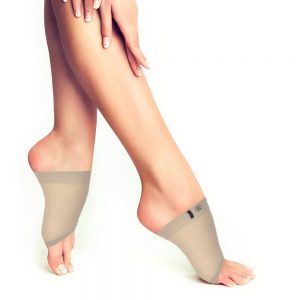
- 1x Pair of Arch support sleeve socks designed to help ease foot pain caused by plantar fasciitis and speed up your injury recovery
- For both Men & Women
- One size fits most
- Made from medical grade silicone gel that moulds to the exact shape and contours of your arches to support your feet and take the strain and pressure off your plantar fascia ligament allowing your to recover faster from Plantar fasciitis
- Helps to correct your gait and stops biomechanical imbalances such as Overpronation and supination during the gait cycle from placing abnormal load on your feet which can lead to overuse injuries such as plantar fasciitis
- Recommended by podiatrists to help treat and prevent Plantar fasciitis, Heel Spurs, Achilles tendonitis, Bunions, Calluses, Blisters, Poor circulation, Neuropathy, Metatarsalgia, Morton’s Neuroma, Sesamoiditis, Foot fatigue, Sprains and Strains, rheumatoid Arthritis and Osteoarthritis
- Quickly and effectively eases foot pain caused by plantar fasciitis by providing soothing compression to your foot that will also help to stimulate blood flow and reduce inflammation and swelling
- Helps absorb shock and prevents pressure points from forming underneath your foot to protect your weakened plantar fascia ligament from further damage
- Simply and easy to wear and can be worn with or without shoes or socks to provide soothing relief around the house
- Perfect for runners and athletes wanting extra support to avoid foot injuries
- Made from soft, breathable and skin friendly fabric that does not rub or chaff even when wearing the foot sleeves for long periods of time
- Can be chilled in a fridge for a few minutes to then provide soothing cold therapy to your feet
- Includes a full 30 day money back guarantee!
£7.99£10.99