
Overpronation insoles
If a walk that used to feel easy now leaves you wincing, or if the same problem keeps coming back to your feet, knees, hips or back, the answer is often not in the place where it hurts. Problems like these tend to follow the same course. One area starts complaining, you rest it, it settles, and then the same thing returns a few weeks later. When that happens more than once, it’s worth looking at how you move rather than blaming a single unlucky twist.
For many people the cause sits at the foot, in how it meets the ground and rolls inward as you move over it. When that inward roll goes further than it should, it’s called overpronation. FootReviver’s range of insoles for overpronation is designed to support feet that behave this way, with the aim of making everyday movement feel more controlled and less of a strain.
None of that means every ache traces back to your feet. Pain is rarely that tidy. But if you have flat feet, wear shoes with worn or minimal support, or have watched your own footprint and noticed your foot rolling heavily inward, it’s worth understanding what that inward roll does to the rest of your body. Once you can see the mechanism, it’s much easier to judge whether an orthotic insole is a sensible practical step or just another thing to buy and forget.
Below is a quick summary of the FootReviver range and what these insoles are designed to do.
-
- All are removable and sit inside your shoe, supporting the foot in a more balanced position.
-
- FootReviver makes insoles for adults whose feet roll inward too far as they walk, which is what overpronation means.
-
- The range includes full-length insoles, three-quarter length insoles, heel cups, arch support insoles, insoles with a metatarsal pad, and insoles built on a slight incline, raised along the inner edge.
-
- The styles differ in length and in what they’re shaped to support, so it’s worth matching the insole to where your symptoms sit.
-
- A firmer heel cradle, where present, holds the back of the foot as your body first settles onto it — the moment the rearfoot begins its roll.
-
- Arch support holds the arch up through the middle of the step, so the tendon underneath isn’t taking the full drop.
-
- A metatarsal pad spreads pressure across the ball of the foot as you push off.
-
- A slight incline under the whole length, raised along the inner edge, tips the foot away from its heavy inward roll so it starts each step closer to neutral.
-
- Where an insole brings those features together, they cover the whole step from heel strike to toe-off.
-
- The insole should sit flat in the shoe without bunching, curling at the edges or sliding forward.
-
- New arch support can feel noticeable at first, and improvement is usually gradual rather than instant.
-
- An incline is the most noticeable feature at first, so short walks are better than a full day out.
-
- If it causes sharp pressure, numbness or a new pain that wasn’t there before, it isn’t the right fit.
-
- A support, not a diagnosis. It doesn’t replace advice about a problem that is persistent or getting worse.
-
- Comes with a 30-day money-back guarantee if it doesn’t suit you.
What overpronation is and why it can affect more than your feet
Your gait is simply the way you walk or run. A normal gait includes a small inward roll of the foot just after the heel lands. That movement is called pronation, and it isn’t a fault. Pronation is how your foot absorbs shock and adapts to ground that isn’t perfectly flat. Without it, every step would send a harsh jolt straight up through the foot and leg.
The arch compresses slightly as you land, then releases as you push off. That compression and release spreads pressure across the sole rather than concentrating it in one place, and pronation is the arch doing that job.
A good deal of the work comes from a tendon that runs behind the inner ankle and down under the arch. It holds the arch up while you stand, and lets it lower in a controlled way as you walk. When overpronation develops, that tendon has to hold the arch against more pull than it was designed for, step after step. It’s one reason flat feet and a heavy, rolling gait so often go together.
Overpronation happens when the inward roll goes further than the foot needs. The arch lowers or flattens more than usual, and the foot turns inward heavily as you move through the step. The consequences reach beyond the sole. As the foot rolls in, the lower leg rotates with it, the knee is drawn inward, the hip adjusts to compensate, and the lower back ends up absorbing movement it wasn’t designed to manage step after step. The foot isn’t causing every ache above it, but this does explain how something that starts at the ground can produce pain in places that feel unrelated.
Some people are more likely to overpronate than others. Flat feet are the most common factor, because a lower arch gives the foot less natural resistance to rolling in. Carrying more body weight increases the force travelling through the foot with every step. Shoes with poor arch support, a soft midsole or a worn-out sole can let the foot roll further than it would in something more supportive. These factors tell you where support might actually help.
The effects usually build slowly. You might notice tired, heavy feet first, then a sore arch, then a knee that aches after longer walks, then a back that feels stiff on standing. A problem that begins in a single joint becomes a problem of the whole lower limb, because each step repeats the same movement. Managing the foot position is one way to interrupt that cycle. It won’t undo every cause of pain, and it won’t help a problem that has nothing to do with foot mechanics, but it can reduce the repeated stress that keeps certain areas irritated.
Where overpronation can show up
Overpronation doesn’t produce one neat set of symptoms. Different people feel it in different places depending on their foot shape, their activity, their footwear and how much their joints are used to carrying. The conditions below aren’t interchangeable. Each one has its own signs, and its own reason for appearing when the foot rolls in. What they share is a foot that isn’t supported evenly, and the repeated pressure that follows from it.
Metatarsalgia: pain in the ball of the foot
If the ball of your foot feels bruised, tender or as though you’ve been walking on a stone, metatarsalgia may fit what you’re feeling. The metatarsals are the long bones running from the midfoot to the toes, and the heads of those bones — the rounded ends just behind your toes — are what take the pressure as you push off. Foot pain in this area is common, and it’s one of the usual reasons people begin to think about support inside their shoes.
Overpronation changes when the ball of the foot is pressed, and how much of that force lands in one place. As the foot rolls inward, the push-off is delayed and pressure sits across the ball for longer than it should, so the same spot is being pressed for longer with every step. It also stops spreading. Instead of sharing the effort across all five metatarsal heads, an overpronating foot tends to concentrate it through the second and third, which are usually the ones to become sore first.
You’ll usually notice it on harder ground and after longer spells on your feet — a walk into town, a day standing in a queue, a shift on a hard floor. The ache tends to build rather than arrive suddenly, and it’s often worse in thin-soled shoes and easier in something with a thicker sole. A metatarsal pad built into an insole sits just behind the ball of the foot and takes some of that pressure before it lands on the bone ends, so it’s shared across a wider band. People often find the sharp, burning quality eases before the deeper ache does.
Morton’s neuroma: the pebble you can’t find
Morton’s neuroma often feels as though you’re standing on a pebble you can’t locate, or on a folded sock. It usually affects the area between the toes, most often the third and fourth, and it can cause sharp, burning or shooting pain. The condition involves thickening of tissue around one of the small nerves that runs between the metatarsal bones out to the toes. It isn’t a growth on the skin, and it isn’t a sign that you need different socks.
Space is part of the problem. Those nerves pass through a narrow gap between the metatarsal heads, and anything that narrows that gap presses on the nerve. A foot that overpronates tends to splay and then close the forefoot with each step, which squeezes the metatarsal heads together and compresses the nerve between them. Tight, narrow or high-heeled shoes make it worse by crowding the toes and shifting pressure forward onto the ball of the foot. Some people only feel it in certain pairs.
The symptoms may begin only in those shoes, then start appearing on longer walks. Some people describe a burning feeling spreading into the toes; others notice numbness or a sensation that’s hard to put into words. Ignoring it isn’t wise, because a nerve that’s compressed repeatedly becomes more sensitive and easier to set off, and people start walking on the outer edge of the foot to avoid it. That change in walking then adds pressure somewhere else.
Plantar fasciitis: the first-step heel pain
Pain that’s worst with your first few steps out of bed usually points to this one. Plantar fasciitis causes pain under the heel or along the sole of the foot, and it’s sharpest first thing in the morning or after a period of rest. The plantar fascia is a thick band of tissue running from the heel bone to the toes. When you bend your toes back to push off, the band tightens and lifts the arch, storing a little energy for the next step.
When the foot overpronates, the arch drops further than it should and that band is pulled again and again. Overnight the tissue settles into a shortened position. That’s why the first steps hurt most — you’re stretching a band that tightened while you slept. People who run regularly, those carrying extra body weight, and anyone in worn-out shoes are more likely to develop it. Standing all day on a hard floor without much give does the same job more slowly. A long walk on a hard pavement does it too, because there’s nothing soft under the foot to spread the pressure.
Arch support doesn’t change the tissue itself. It holds the arch closer to where it should sit, so the band isn’t being pulled from both ends with every step, and the repeated stretch settles down. Many people notice the morning pain start to shorten before the daytime ache does, and that gradual change is more realistic to expect than a sudden fix.
Achilles tendonitis: pain at the back of the heel
Achilles tendonitis shows up at the back of the heel, where the Achilles tendon connects the calf muscles to the heel bone. It’s the largest tendon in the body and does a great deal of work every time you push off. Pain, stiffness or a thickened feeling in the tendon is often worse in the morning or after exercise, and it may ease as you warm up before returning later. It’s a common overuse problem, especially among runners and anyone whose days involve a lot of stairs or repeated pushing off.
The tendon works best when force travels straight up the leg. When the foot rolls inward, the lower leg rotates with it, and the tendon meets each push-off at an angle rather than straight on. Add a tight calf and the tendon has even less slack to work with. The first few steps downstairs in the morning often feel stiffest.
A firmer heel cradle in an insole holds the back of the foot more steadily as you push off, which cuts how much the rearfoot rolls. That reduces the awkward angle reaching the tendon during the long stretches of ordinary walking rather than in the gym. If the tendon has been sore for weeks, it’s worth having it assessed rather than strapping the foot up and carrying on.
Bunions: more than a bump
A bunion is a change in shape at the base of the big toe, where the joint begins to drift and a bony bump appears on the inner edge. The joint can become painful, inflamed and stiff, and the big toe may start to angle towards the other toes. People who wear narrow or high-heeled shoes are frequently affected, but footwear is only part of the picture.
Force arrives at that joint from two directions at once. As the arch drops with overpronation, more of it passes through the inside of the foot, and the big toe joint is right at the point where it lands. A narrow toe box then presses the toe inward, so the joint is being pushed from below and from the side at the same time. The combination is what gradually changes the joint’s shape over years rather than months.
The visible bump can take a long time to develop, but the discomfort usually arrives earlier: soreness in the joint, redness, and difficulty finding shoes that don’t press on it. Nothing reverses a bunion that has already formed, so the practical aim is to reduce the pressure going through that joint. Support under the arch reduces how far the inside of the foot drops, which takes some of that pressure off the big toe joint during standing and walking. Where shoes are part of the problem, choosing a wider toe box and a sole with more structure tends to make the biggest difference, and support inside the shoe works better alongside that than instead of it.
Heel spurs: a bony response to repeated pressure
A heel spur is a bony growth on the underside of the heel bone. It’s often spotted when someone has imaging for heel pain, but the spur itself isn’t always the source of that pain. Plenty of people have one and feel nothing at all. The more useful question is why the heel is being strained in the first place.
The spur forms where the plantar fascia and the muscles of the sole attach to the heel bone. When those tissues are pulled repeatedly, the bone responds over time by laying down extra material at the point of pull. Overpronation is one factor that increases that pull, because a dropping arch drags on the tissue attached to the heel. Separately, a heavier or harder landing sends impact straight through the same spot, so standing and walking on hard surfaces often feels worse than a softer path.
The pain is usually sharp and worst with the first steps in the morning or after sitting for a while, and it tends to feel like a bruise deep inside the heel. That first-step sharpness is the tissue complaining as it stretches after resting. Cushioning under the heel takes the edge off the impact, and arch support reduces the repeated pull. Neither one is guaranteed to make the spur disappear — most don’t — but the pain around it often settles once the pressure through that area eases.
Fat pad atrophy: when the natural cushion thins
The heel and ball of the foot rely on a natural cushion of fat, held in small compartments, to absorb shock. When that cushion thins, the foot can feel as though it’s walking directly on bone. This is called fat pad atrophy, and it can affect the heel, the ball of the foot, or both. Older adults and long-distance walkers often notice it, and people who overpronate are more likely to develop it because the force through the foot is less evenly spread.
Thinning changes how that force is shared out, and an uneven share makes the thinning worse. As the cushion becomes less able to absorb impact, more of it reaches the bone underneath. An overpronating foot then presses more heavily through the inside edge than the outside, so the thinning is often worse in one band of the heel or the ball rather than evenly across it. Some people can press a thumb into one side of the heel and find it tender while the other side feels fine.
The result is often a deep ache or a bruised feeling after prolonged standing or walking, and it can make even a short trip to the shops feel like a chore. It tends to be worse on hard floors and better on carpet or grass. Extra padding alone doesn’t fully solve this, because if the foot is still rolling inward heavily the same area keeps receiving the same pressure. A softer, shaped layer under the heel combined with arch support spreads that pressure over a wider area, which is usually more useful than padding on its own.
Sesamoiditis: pain under the big toe
Under the big toe are two small bones called the sesamoids. They sit within the tendon that runs under the big toe and bends it downwards, giving the toe something fixed to bend against as you lift your heel. Sesamoiditis is irritation of these bones and the surrounding tissues, and it produces a dull, persistent pain under the big toe that sharpens when you walk, run or climb.
The pressure comes at the very end of the step. As you rise onto the ball of the foot, the big toe bends back and the sesamoids take a concentrated share of your body weight through a very small area. An overpronating foot often pushes off through the inside edge, so that force lands on the sesamoids at an angle rather than straight, and shoes with a stiff sole or a high heel shift even more forward onto them. Dancers and athletes who spend long hours on the ball of the foot are commonly affected, but anyone who spends a lot of time on stairs or slopes can develop it.
The pain is easy to mistake for a bruise or a stubborn corn at first. If it continues, pushing off becomes difficult and you start to change how you walk without meaning to, which adds pressure at the ankle and knee. A metatarsal pad placed slightly behind the ball of the foot gives the sesamoids some relief by spreading the pressure backwards along the foot rather than letting it all land under the big toe.
Cuboid syndrome: pain on the outer edge of the foot
Cuboid syndrome involves the small cube-shaped bone on the outer side of the foot, sitting between the heel bone and the base of the long bones to the toes. It can cause pain, tenderness and a feeling that the foot is locking or not moving smoothly. It’s often linked to overpronation, because when the arch drops, the midfoot twists and the cuboid is caught between the heel bone and the bones in front of it.
The cuboid has to slide and tilt as your foot adapts to the ground. When the foot rolls in heavily, that joint is twisted into a position it can’t move freely from, and the muscles around it tighten to protect it. That’s why the pain often has a locking quality rather than a simple ache. Athletes who jump or run tend to develop it more often, but it also appears after a long spell of increased walking or after an awkward landing.
The pain is usually felt along the outside of the foot towards the base, and it may be worse when you put pressure through it or push off. Turning sharply, walking on uneven ground, or shifting your body quickly from one foot to the other are the sorts of moments that bring it on. Ignoring it tends to produce a cautious, slightly turned-out walking style, and that altered style then adds pressure at the ankle, knee and beyond. Supporting the arch gives the outer edge of the foot somewhere to sit rather than being dragged out of line with every step, which is often what lets the joint settle.
Ankle sprains: when the foot rolls and the ankle pays
An ankle sprain is an injury to the ligaments that support the ankle joint. It usually happens when the ankle turns or rolls awkwardly, causing pain, swelling, bruising and difficulty walking. Some people sprain an ankle once and recover well. Others find that the ankle gives way repeatedly or feels unstable, and the difference often comes down to how well the foot and ankle control balance between those moments.
Overpronation affects that balance. A foot that rolls inward heavily takes longer to settle back into a stable position, so the ankle spends more of each step in a position where it has to correct. That doesn’t make a sprain happen on its own, and plenty of people who overpronate never sprain anything. What it does is leave less margin for error on uneven ground, coming down off a kerb, or changing direction quickly. The ligaments are most at risk in the split second when the heel lands and the foot is still settling.
Support that cradles the heel gives the back of the foot a more predictable place to land, which is what the ankle needs in that split second. It won’t rebuild an injured ligament, and repeated sprains usually point to a strength and control problem that needs its own attention. But a steadier foot reduces how often the ankle is put in a position where it has to catch itself.
Shin splints: the ache along the inner shin
Shin splints, also called medial tibial stress syndrome, cause a throbbing or aching pain along the inner side of the shin bone. The pain may appear at the start of activity, ease as you warm up, and then return afterwards, and it often feels better with rest before coming back the moment you resume. It’s common in runners and in people who suddenly increase how much they walk.
The shin bone takes a jolt every time your foot lands, and it copes fine with that when the pattern is predictable. What it doesn’t like is a sudden increase in volume, or a foot that rolls in and changes the angle at which force travels up the leg. An overpronating foot makes the lower leg rotate slightly with every step, so the shin is being bent and twisted rather than simply taking a straight downward push. That combination — a foot that rolls in, plus a quick jump in how much you’re doing — is often why shin splints appear soon after someone takes up a new activity.
Shoes with poor support add to it, and replacing them often settles the problem on its own. Arch support reduces how much the foot rolls with each step, which lowers the twisting reaching the shin. That makes it a sensible background measure, but it doesn’t replace managing how fast you build up your walking or running. Push through shin pain and it can progress to an injury in the bone itself, which takes far longer to settle.
Knee pain: when the knee is pulled inward
Not every sore knee starts at the knee. When the foot rolls inward, the lower leg rotates with it, and the knee is drawn off its usual line. The kneecap, which should track up and down in a groove at the front of the thigh bone, gets pulled slightly to one side. That’s one reason walkers, runners and cyclists develop a dull ache around the front of the knee, sometimes called runner’s knee or patellofemoral pain syndrome.
That sideways pull tends to show up in particular situations: going down stairs, squatting, or after sitting for a long spell with the knee bent. Some people notice grinding or a clicking sensation, which isn’t automatically a sign of damage but is worth taking seriously if it persists.
A more supported foot position reduces how much inward rotation reaches the knee, so the kneecap glides on a straighter line. That won’t fix every knee, and it won’t help a knee whose problem sits entirely above the foot. Where the foot is clearly driving the rotation, though, it’s a sensible place to start, and many people notice stairs feel less guarded before anything else changes.
Hip pain: the pressure travels upward
Hip pain can appear as a twinge when you stand up, a dull ache after a long walk, or discomfort in the groin or outer thigh. The hip joint and the muscles around it carry a great deal of the body’s force, and they’re affected by what happens lower down. If the foot overpronates, the whole leg rotates inward, which turns the thigh bone slightly within the hip socket and changes how the muscles around the hip have to work.
The muscles at the side of the hip, which normally keep the pelvis level as you stand on one leg, end up working harder when the leg is rotating underneath them. Hip pain often shows up not on the first step but after a while — coming up from a low chair, or on the last stretch of a longer walk when those muscles are tired. People who cover long distances on foot or stand for long periods notice it more.
A balanced base under the foot reduces how much the leg rotates, so the hip muscles aren’t correcting from the ankle upward with every step. That doesn’t replace building strength in the hip itself, which is often what settles this kind of pain in the long run. It simply makes the daily pressure through the hip a little more even while you do it.
Back pain: how the pressure reaches the lower back
Back pain can feel far removed from the foot, but the body moves as a connected system. When one foot rolls inward excessively, the pelvis tilts and rotates slightly to keep you upright and balanced, and the lower back absorbs that movement. Over time, that repeated compensation contributes to a dull ache or stiffness. Back pain is rarely caused by one factor alone.
The clue is usually that it affects one side more than the other. If one foot rolls in more than the other, the pelvis is being pulled unevenly with every step, and the muscles either side of the spine end up working at different rates. You might notice this as stiffness after standing for a while, or an ache that’s worse on that side after a longer walk. It often eases when you sit down, which usually points to how much is being carried rather than to something structural, though it doesn’t settle the question on its own.
A more even base under both feet reduces that uneven pull. That isn’t a treatment for all back pain, and persistent or worsening back symptoms always deserve proper assessment rather than guesswork. But where the foot mechanics are clearly part of the picture, correcting them removes one of the repeated stresses the back has been managing.
Arthritis: long-term joint wear
Arthritis is a long-term condition affecting the joints. Osteoarthritis is the most common form, and it involves gradual change in the joint surfaces and the tissues around them. It can cause pain, stiffness, swelling and reduced movement, and in the lower limb the knee and hip are common sites. Overpronation adds to the pressure through the joints because it changes the alignment of the foot and leg and increases the force passing through the knee and hip over many years.
No insole reverses joint change, and arthritis has many contributing factors. What support can do is reduce the peak force reaching an already sensitive joint. Walking on a foot that rolls in heavily means the knee is pressed along a different line with each step; holding the foot in a more balanced position spreads that force more evenly across the joint. For someone with arthritis, that can make the difference between a walk that leaves them sore and one they can repeat.
Keeping active is one of the most useful things you can do for an arthritic joint. Movement keeps the muscles around the joint working, which takes some of the pressure off the joint surfaces themselves, and it keeps the joint moving through its range rather than stiffening up. Anything that makes walking less punishing helps you do more of it.
Why orthotic insoles make sense for overpronation
An orthotic insole is a removable insert that sits inside your shoe and supports the foot in a more controlled position. It isn’t the same as a soft cushion you add for comfort. A properly shaped insole follows the contours of the foot and gives support under the arch, the heel and, depending on the design, the metatarsal area under the ball of the foot.
Its job is straightforward: help the foot meet the ground more evenly, and reduce how far it rolls inward with each step. The roll in an overpronating foot is significant enough to change how force travels through the sole, the ankle, the shin, the knee, and sometimes the hip and back. Every step repeats it, which is why the same areas keep getting sore.
Support like this shares the work. When the foot is guided into a more balanced position, the effort of controlling each step is spread between the foot, the insole and the shoe rather than falling entirely on the tendon and tissues of the arch. That doesn’t change the shape of your foot permanently, and it can’t undo years of wear. What it does is reduce the repeated stress that keeps a problem going while you’re wearing it. The aim isn’t to hold the foot rigid; it’s to keep the movement within a more comfortable range so that walking stops concentrating pressure in the same painful places.
How FootReviver insoles are designed to help
FootReviver’s range of insoles for overpronation is built for adults whose foot mechanics are part of the problem. The insoles are made from medical-grade materials, and the range covers more than one style: full-length insoles that run the length of the shoe, three-quarter length insoles, heel cups that sit under the back of the foot, arch support insoles, insoles with a metatarsal pad, and insoles built on a slight incline raised along the inner edge. Those styles differ in how much of the foot they cover and in what they’re shaped to support, so the one that suits you depends on where your symptoms sit.
The features themselves do different jobs. A heel cradle holds the back of the foot as your body first settles onto it, which is the moment the rearfoot begins its roll. Arch support then takes over through the middle of the step, holding the arch up so the tendon underneath isn’t taking the full drop. A metatarsal pad eases the pressure on the bone ends under the ball of the foot as you push off, so it isn’t all landing on one or two of them. The incline does a different job again: it doesn’t hold or cushion anything, it changes the angle the foot sits at, so there’s less distance to roll before the step is already under way. Where an insole brings them together, they cover the whole sequence from heel strike to toe-off.
The range is intended specifically for people dealing with excessive inward roll, rather than as a general comfort insert for anyone with tired feet. That focus shapes how the insoles are built and how they’re meant to be worn. They’re a support, not a diagnosis, and not a promise that every ache disappears. If your pain is persistent or getting worse, the insole should sit alongside proper advice rather than take the place of it.
Fitting, use, and what to expect
An insole only helps if it fits properly. It should sit flat in the shoe without bunching, curling at the edges or sliding forward as you walk. A heel cup should sit centred under the heel, a metatarsal pad just behind the ball of the foot, and a full-length insole should run from heel to toe without lifting at either end. If it makes the shoe feel too tight across the top of the foot, that’s a sign the shoe or the insole size isn’t right, rather than something to force.
New arch support can feel noticeable at first. Some people are aware of it straight away, others less so. An incline is usually the most noticeable feature of all, because the whole foot is sitting at a slightly different angle rather than just the arch being held. A few short walks before wearing it all day is more comfortable than starting with a full day out. What you can reasonably expect is a more supported foot position during everyday movement. Some people notice less heaviness in the feet or less of that rolled-in feeling by the end of the day. What you shouldn’t expect is an instant cure for a long-standing problem. The aim is gradual, practical improvement.
If the insole creates sharp pressure, numbness or a new pain that wasn’t there before, it isn’t the right fit for you.
When to seek help
If you experience persistent pain in your feet, knees, hips or back, or if you suspect you have one of the conditions described here, speak to a GP, physiotherapist or podiatrist. They can assess your foot mechanics, talk through your symptoms properly, and advise on the right treatment. Self-diagnosis can be misleading, particularly because several of these conditions produce very similar pain in the same areas.
If you are unsure whether an insole is appropriate for you, or if an existing problem is changing rather than settling, that is also a good reason to ask before buying. An insole can be a helpful support, but it is not a substitute for proper assessment.
What this means for you
Excessive inward roll begins at the foot, but the effects don’t stay there. They travel through the ankle, shin, knee, hip and back, and when the same problem keeps coming back, the foot is usually the place to look. Not everyone with these aches has a foot-driven cause, and not everyone who overpronates develops pain. Where the foot is clearly rolling inward too far, though, support is a sensible thing to consider.
FootReviver’s insoles for overpronation are shaped to give the foot a more balanced base, hold the arch and heel, and spread pressure more evenly through the foot. Because the range covers different lengths and shapes, it’s worth checking which style suits the area you need support before you commit, and asking a clinician if you’re not sure whether support is right for your situation. For anyone dealing with a recurring problem rather than a one-off twinge, that kind of support can be a practical step towards more comfortable movement.
30-day money-back guarantee
All FootReviver insoles come with a 30-day money-back guarantee. If they don’t suit you, you can ask for a refund. No questions asked. That gives you room to try them without committing to something that may not be right for your feet.
Disclaimer
The information on this page is general guidance about overpronation and the kind of support an insole can offer. It isn’t a substitute for individual medical advice, diagnosis or treatment, and it doesn’t promise any particular outcome. If you’re unsure whether an insole is right for you, or you have new or more complex symptoms, speak to a GP, physiotherapist or podiatrist for advice about your own situation.
-

FootReviver™ Orthotic Heel cups for Shoes & High Heels
- 1x Pair of FootReviver™ Orthotic Heel cups for Shoes & High Heels perfect for plantar fasciitis and heel pain
- Eases a number of foot and lower limb injuries including plantar fasciitis, heel spurs, Achilles tendinitis, shin splints and knee tendinitis
- Designed specially to support and restore balance to your heels and ankles
- Medical grade silicone gel absorbs shock and impacts and spreads pressure underneath your heels and prevents pressure points from developing
- The lightweight and compact design means that these heel cups can be fitted into a wide variety of shoes and boots
- Inbuilt arch support eases pressure on your arches and prevents excessive pronation which can cause injuries to develop
£7.99 -
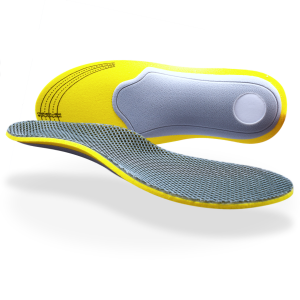
FootReviver™ Orthotic Plantar Fasciitis Insoles
- Designed specifically for plantar fasciitis heel and arch pain: Sharp first‑step pain in the morning, aching after time on your feet, or soreness along the arch that keeps coming back.
- Targets the real source of the problem – how your foot is loaded: Supports the band under your foot (plantar fascia), steadies the heel, and helps stop the arch dropping and rolling in more than it can comfortably cope with.
- Firm 3/4‑length support where you need it, not a hard block under your whole foot: A structured base under the heel and arch holds its shape to support you, while the front of the insole stays softer and more flexible for natural push‑off.
- Deep heel cup with cushioning to calm sore heels in shoes: Cradles the heel, holds the fat pad under the heel bone, and spreads impact away from the tender spot where the plantar fascia attaches.
- Shaped arch support with gentle control of extra inward roll: Meets the arch earlier in the step so it cannot collapse as far, and reduces extra rolling‑in that repeatedly tugs on the fascia at the heel.
- Full‑length cushioned top layer to protect the forefoot as well as the heel: Runs from heel to toes, gradually shaping to your foot to share pressure under the ball of the foot and give space for wider or splayed toes.
- Helps on hard floors, long periods of standing or walking, and higher‑impact days: Combines firm rearfoot support with cushioning under heel and forefoot to make standing, walking, and even light running or sport more manageable.
- Trim‑to‑fit design for most closed‑back shoes: Cut to size at the front, drop into your usual shoes, and the anti‑slip base helps keep them in place under your heel and arch.
- Normal to feel them at first – then expect steadier, more comfortable steps: Start with a few hours a day and build up. A mild awareness under the arch and heel is common at first; as your feet adjust, many people find standing and walking become easier and less painful.
- One practical part of managing plantar fasciitis – clear support, not a magic cure: Works best alongside sensible changes in time on your feet and any exercises or advice from your GP, physiotherapist, or podiatrist.
£9.99 -
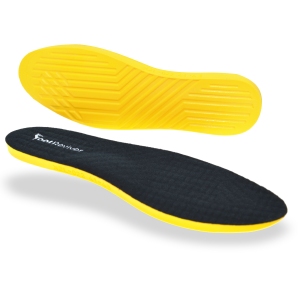
FootReviver™ Pronation insoles for Overpronation
Are you tired of the constant pain and discomfort that comes with overpronation? Do you crave a solution that’s both effective and comfortable? Look no further! Our orthotic insoles for overpronation are the perfect blend of medical grade materials, expert design, and years of experience in foot care and biomechanics.
Why Choose Our Insoles? We know how debilitating overpronation and other biomechanical imbalances can be. They don’t just affect your feet, they can cause pain and injury in your knees, legs, hips, and back. But why should you choose our insoles over others? Well, unlike ordinary insoles, ours are the result of extensive research and development, years of expertise, and rigorous testing.
- 1x FootReviver Pronation insoles for correcting Overpronation
- For both Men & Women
- Available in the following shoe sizes (XS: (EU 32-34) (UK: 1-2), Small (35-37) (2 – 3), Medium (38-40) (4-6), Large (41-43) (7-8.5), Extra Large (9-11)
- Recommended by Podiatrists to help treat and prevent a wide range of foot and lower limb injuries such as Plantar Fasciitis, Morton’s Neuroma, Metatarsalgia, Heel Spurs, Bunions, Foot Fatigue, Shin Splints, Achilles Tendinitis, Jumpers Knee, Runners Knee as well as hip and lower back pain
- Helps to correct your gait by titling your feet and stopping your foot from rolling inward to prevent overpronation and ease abnormal load off your feet
£10.99