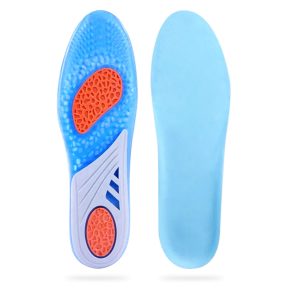
Shock absorbing insoles
-
Gel Shock Absorbing Insoles for Trainers & Running shoes
- Who these insoles are for
FootReviver Gel Shock Absorbing Insoles for Trainers & Running shoes are aimed at adults who run, play sport or spend long hours on hard floors and are starting to notice familiar problems – for example:- sharp or bruised pain under the heel,
- burning or “stone under the foot” pain under the ball of the foot,
- arches that feel tired or as if they are “giving up” towards the end of a run or long day,
- shins, knees, hips or lower back that feel more sore or jarred after impact‑heavy days than you would expect.
- How this FootReviver insole is built
This FootReviver design uses a specific combination of parts to deal with that mix of impact and foot movement:- a full‑length gel layer to cushion the whole sole from heel to toe, rather than just small gel pods under the heel,
- separate pads under the heel and ball of the foot, positioned under the areas that most often become sore in runners and in people on their feet a lot,
- a three‑quarter length firm base under the heel and arch to steady the rearfoot without making the front of the foot feel stiff,
- a moderate arch contour that supports low, neutral and higher arches within a comfortable amount of movement,
- a shaped heel cup to help the heel sit more centrally in the shoe, reducing extreme inward or outward tipping,
- a breathable, slim top layer so they fit into most trainers and many roomier work or casual shoes without feeling bulky.
Clinicians who work with runners and people on their feet all day helped shape this design. Within the FootReviver range, it is a commonly used model when impact and general foot fatigue are the main concerns.
- What you may notice when you use them
Once you have fitted them into your trainers or sports shoes and built up wear time gradually, you may notice several changes:- heel landings in shoes feel less like landing on a bruise and more like a cushioned contact,
- the “hot spot” under one or two forefoot joints feels less intense and slower to build,
- arches feel better supported through runs and long days, with less tired pulling under the foot,
- the heel rolls in or out less extremely, so there is less twisting strain on the shin and knee,
- similar runs and long days on hard floors leave your knees, hips and lower back feeling less jarred than they used to.
Put simply, this FootReviver insole is built to soften landings and steady the heel and arch inside your trainers, tackling the mix of impact and movement that often leads to common heel, forefoot, arch, shin and knee aches.
- When this FootReviver insole is especially useful
This design is particularly relevant if:- you have heel pain that is sharp when you first put weight through it and still flares when you start walking in shoes or after runs,
- you feel burning or “pebble‑like” pain under one or two forefoot joints (often described as metatarsalgia or Morton‑type problems),
- your arches ache or feel tired towards the end of training blocks or long shifts on firm floors,
- you struggle with shin splints, impact‑linked knee pain, or a sense that your hips and lower back are being jarred by firm surfaces.
If you recognise several of these problems and feel your current insoles are very thin and offer little support, this FootReviver model is a more substantial option to consider.
- Practical fit and safety points
- Available in two size ranges (UK 3–9 and 9–12) that you can trim to match your existing insole; slim enough for most trainers and many roomier work or casual shoes.
- Best introduced gradually so your feet and lower legs can adjust – start with shorter wear periods and build up step by step.
- If you have been advised that you need strong correction for very flat or very high arches, one of the firmer FootReviver orthotic models may suit you better.
- If you have diabetes with a history of ulcers, a lot of numbness in your feet, recent major surgery or fractures, or significant foot deformity, speak to a GP, physiotherapist or podiatrist before relying on any new insoles.
- Seek prompt medical assessment if you notice warning signs such as sudden severe pain after an injury, obvious deformity, large or quickly increasing swelling, new numbness or weakness, or new ulcers.
The aim here is not to alarm you, but to make sure you know when to get things checked rather than trying to manage everything with insoles alone.
- 30‑day FootReviver guarantee
These insoles come with a 30‑day money‑back guarantee from the time you receive them. The guarantee is there so you can:- fit them properly in your trainers or sports shoes,
- build up wear time gradually,
- and judge whether this FootReviver design makes your usual runs, walks and long days on your feet feel easier to manage.
If they do not feel right for you and they are still in similar, untrimmed condition, you can return them within this period. Most people would like a quick fix; while no insole can promise that, this guarantee gives you time to see whether this level of cushioning and support suits you. If you are unsure what to expect, it is perfectly reasonable to ask a clinician who knows your history for their view.
£9.99£12.99 - Who these insoles are for