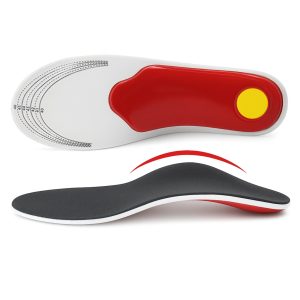
Arch Support Insoles
Are you worn down by constant foot pain—or aches in your knees, hips or lower back that seem to creep in after a long day? If standing, walking or running leaves you sore and tired, weak or uneven arch support could be part of the problem. FootReviver Arch Support Insoles are designed to give your body a more stable foundation, so every step feels better supported.
With structured arch support built into every insole in this range, plus options for different shoe types, arch heights and activity levels, you can choose the level of control and cushioning that fits your feet and your life.
- Help ease common pains in the heels, arches, balls of the feet, knees, hips and lower back
- Improve comfort on hard surfaces and during long days on your feet
- Support feet that roll in (overpronation) or roll out (supination)
- Fit a wide range of everyday shoes, trainers and boots
With the right support under your arches, you may notice less pain, less fatigue and a smoother, more confident stride.
Why arch support matters
Every step you take sends force up through your feet, into your ankles, knees, hips and lower back. Your arches are meant to act as part of your body’s natural shock‑absorbing system. When they don’t have enough support—or are allowed to collapse or twist too far—that system stops working as well as it should.
When your arches are unsupported:
- Your feet may roll too far inwards or outwards as you walk
- Pressure builds up under small areas such as the heel, inside edge of the foot or ball of the foot
- The ankle tilts, which changes how your knees track and how your hips and pelvis sit
Over time, this can overload the band of tissue under your foot, tendons that steady your ankle, the joints in your knees and hips, and the muscles that work constantly to keep you upright. The body tries to compensate, but that often means extra strain somewhere else.
A good arch support insole fills the space under your arch, cradles your heel and gently guides how your foot rolls. This helps:
- Stop the arch collapsing too far with each step
- Spread your weight more evenly from heel to toes
- Reduce sharp pressure on irritated spots
- Limit excessive twisting at the ankle and knee
With each step, less force is pushed through one small area and more is shared across the whole foot. That may mean less pulling on sore tissues, fewer jolts at the heel or forefoot, and less strain travelling up into your legs and back.
Clinical research has shown that supportive insoles can reduce pain and improve daily function for many people with problems such as plantar fasciitis, overuse tendon pain, forefoot pressure and certain types of knee and back pain. While they are not a cure‑all, they offer a practical way to change how your feet handle the stresses of everyday life.
The FootReviver arch support range at a glance
Every FootReviver insole in this range includes structured arch support. The differences between models lie in how high the arch sits, how firm it feels, how much cushioning it adds and how much room it takes up in your shoes. That means you can choose a style that matches your foot shape, your shoes and your day‑to‑day demands.
Support shells and cushioning layers
Across the range, FootReviver insoles use:
- Support shells made from firm plastic or carbon‑based materials to hold the arch and guide the way your foot moves
- Cushioning layers in foam, gel or EVA‑type materials to soften impact under the heel and forefoot
- Top covers chosen for comfort against the skin or sock and to help your foot sit securely on the insole
Support shells provide the structure that keeps your arch from dropping too far. The cushioning layers then help absorb the repeated impact of walking or running, especially on hard surfaces.
Arch height and firmness
Feet and arches vary widely. That is why the FootReviver range includes different arch heights and levels of firmness.
- Lower arch profiles offer gentler lift and suit feet that react badly to strong support, or people trying arch support for the first time
- Medium arch profiles match the shape of many feet and are often a good starting point if you are unsure what you need
- Higher arch profiles are designed for naturally high or more rigid arches that need more contact and lift to help spread pressure
Alongside height, you can choose how firm the support feels:
- Firmer support shells hold the arch more decisively and help control excess rolling in or out. They can be especially useful if your arches flatten under load, your feet overpronate or supinate, or your ankles feel wobbly
- More flexible designs still lift and guide the arch but allow slightly more natural movement, which can feel kinder if your feet are sensitive or you are on them all day
Across the range you will find lower, medium and higher arch shapes in both firmer and more flexible designs, so you can match the insole to your own arch and comfort level.
Length and profile: space inside the shoe
Different shoes offer different amounts of space. FootReviver insoles are designed with this in mind:
- Full‑length insoles run from heel to toes, supporting and cushioning the whole foot. They work well in most trainers, everyday shoes and boots, particularly where you can remove the existing insole
- 3/4‑length insoles stop just behind the ball of the foot, focusing on the heel and arch. They are ideal when space is limited, or when you want solid arch and heel support without changing the feel under your toes
You can also choose between:
- Low‑profile designs, which are thinner and fit better in closer‑fitting shoes while still lifting and guiding your arch
- More cushioned designs, which add extra softness under the heel and forefoot for long days on hard surfaces, but need a little more space inside the shoe
Heel control and padding
The way your heel sits and lands is key to how the rest of the foot behaves. FootReviver insoles address this in two main ways:
- Heel cup depth
- Shallower heel cups provide a cleaner surface under the heel when you mainly want added comfort
- Deeper heel cups cradle the heel and help limit excessive rolling in or out, useful if you overpronate, supinate or have a history of ankle sprains
- Targeted heel cushioning
- Some insoles in the range add dedicated cushioning under the heel to soften each impact and ease pressure on sensitive heel structures
Together, heel cups and cushioning can help calm sharp heel pain and steady the ankle.
Forefoot and metatarsal support
Pressure at the front of the foot is a common source of discomfort. Selected FootReviver insoles include extra help here:
- Shaped pads or responsive cushioning placed under the ball of the foot to gently lift and support the metatarsal area
- Features that spread pressure away from one or two sore spots and across a wider area
- Designs that give a little more space to sensitive nerves between the long bones of the foot
These options are particularly relevant if you struggle with ball‑of‑foot pain, burning under the toes, tingling, or soreness around a bunion.
Shock absorption and surface feel
Repeated impact on hard surfaces can wear you down, even if you do not have a specific diagnosis.
- Shock‑absorbing layers in foam or gel help soften the jolt of each step
- Some designs keep a firmer, more controlled feel under the arch but add extra softness at the heel and forefoot, so you get stability and cushioning where you need them most
This balance of control and comfort makes the range suitable for both everyday use and more active days.
Trim‑to‑fit options
Several full‑length FootReviver insoles are trim‑to‑fit, with guidelines marked so you can shape them more closely to your shoe size. Other models are sized to fit directly into your footwear. In both cases, the goal is for the arch support to sit correctly under your own arch, without bunching or slipping.
You will find more detailed fitting guidance further down this page.
Shoe types and everyday use
Most FootReviver insoles are designed for closed shoes: everyday shoes, trainers and boots with enough depth to accept an insole.
- Full‑length, more cushioned styles suit roomier footwear best
- Slimmer, low‑profile and 3/4‑length designs work better in closer‑fitting shoes that do not have much spare space
- These insoles are not intended for very high heels or footwear that cannot accommodate an insole at all
Within this framework, you will find insoles aimed at:
- Everyday walking and commuting
- Sport and running, with lighter construction and focused shock absorption
- Long hours on hard floors, with generous cushioning combined with stable arch support
Whatever you choose, every insole in the FootReviver range is built around the same principle: stable arch support that helps your feet share the load more evenly.
How to choose the right FootReviver insoles
Different feet, shoes and daily demands call for different combinations of support and cushioning. Use these pointers as a starting guide:
- Stabbing heel or arch pain, especially with first steps
Choose a full‑length insole with a deeper heel cup, a firmer arch and good cushioning under the heel and midfoot. - High arches with pressure on the ball and heel of your foot
Choose an insole with a higher arch profile and generous cushioning at both heel and forefoot to help spread pressure. - Ball‑of‑foot pain, burning or tingling in the toes
Look for insoles with added forefoot cushioning and metatarsal support features that gently lift and spread the front of the foot. - Feet that roll in (overpronation) or roll out (supination)
Choose firmer arch support with a secure, slightly deeper heel cup to help guide your heel and limit excessive rolling. - Flat or “fallen” arches
Start with a medium‑height, firmer arch profile that supports the inside of the foot and helps prevent the arch from collapsing under load. - Sensitive feet or long days on hard surfaces
Consider a more cushioned insole with a slightly softer arch feel, so you get support with extra comfort for prolonged standing or walking. - Tight shoes or dress footwear
Choose a slim or 3/4‑length insole that adds arch and heel support without filling too much space at the front of the shoe.
Most people find it helpful to remove any loose, flat original insoles before inserting FootReviver models, especially with fuller, more structured designs.
Conditions we commonly help
Many people arrive at arch support insoles because of a specific diagnosis or recurring pain pattern. The sections below explain, in more detail, how foot mechanics relate to different types of problems and how FootReviver insoles may help.
Why choose FootReviver?
Not all insoles are built to do the same job. FootReviver Arch Support Insoles are designed from the ground up to give your feet structured support and your body a more reliable base.
Designed around how your feet really move
FootReviver insoles are shaped to follow the natural contours of your arches and heels. The support shells are firm where they need to be, to hold the arch and guide motion, while the cushioning layers are placed where impact and pressure are highest. This combination means your feet are encouraged to move in a smoother, more controlled way, rather than being left to collapse into the path of least resistance.
Built for different feet, shoes and days
Because no two pairs of feet—or days—are the same, the range includes:
- Lower, medium and higher arch profiles to suit flatter, average and higher arches
- Firmer models for stronger control of rolling in or out, and more flexible designs for those who prefer a gentler feel
- Full‑length and 3/4‑length options to match different shoe shapes and space
- Slim, low‑profile insoles for closer‑fitting footwear and more cushioned versions for long days on hard surfaces
- Styles with deep heel cups, targeted heel pads or extra forefoot support, depending on where you feel strain most
Whichever style you choose, every insole in the range shares the same goal: to help your feet share load more fairly and support the rest of you more effectively.
Materials chosen for comfort and durability
The firm parts of each insole are chosen to hold their shape under regular use, while the cushioning materials are selected to feel comfortable underfoot without turning into a flat pad after a few wears. When you look after your insoles and replace them once the top cover or cushioning clearly wears down, they can offer consistent support over time.
What to expect when you start wearing them
Switching from a flat or very soft insole to structured arch support can feel different at first. That is normal. A few simple steps can help you adjust more comfortably.
- If your shoes have loose, flat insoles, remove those before placing your FootReviver insoles inside, so the arch support can sit correctly under your foot
- If you are using a trim‑to‑fit model, cut gradually along the marked lines to avoid taking off too much at once
- Start by wearing your new insoles for shorter periods—perhaps a few hours a day—then build up as your feet get used to the new support
- Expect to feel the arch and heel cup more clearly underfoot than with soft, flat inserts; this should not feel painful, but it may feel firm at first
Many people notice that their feet feel better supported within a few days of regular use. For some, the most obvious change is less sharp pain when first standing up, for others it is less aching at the end of a busy day. Discomfort higher up the body can take longer to shift, as joints and muscles adapt to a different pattern of movement.
If wearing the insoles causes new, increasing or sharp pain, especially in areas that were not sore before, it is sensible to ease back, stop using them and seek advice from a healthcare professional.
Guarantee and support
We want you to feel confident trying FootReviver Arch Support Insoles. Every purchase is backed by a 30‑day money‑back guarantee. If they are not right for you, you can return them within that time.
If you are unsure which style to choose, or you are not certain you are using them correctly, our customer support team is ready to help by email. Our aim is not simply to sell you an insole, but to help you find support that genuinely suits your feet, your shoes and your day‑to‑day life.
Take your next step with FootReviver
A stronger, more stable arch can change how your whole body feels at the end of the day. Whether you are dealing with stubborn heel pain, tired arches, aching knees or a sore lower back, FootReviver Arch Support Insoles offer a practical way to support your feet and ease the strain on the rest of you.
Explore the styles in this range, use the guidance above to match your needs to the right type of insole, and take your next steps with more comfort and confidence.
Important information
FootReviver Arch Support Insoles are designed to provide comfort and support, but they are not a substitute for professional medical advice, diagnosis or treatment. The information on this page is general in nature and cannot take account of your individual medical history or needs.
If you have persistent or worsening pain in your feet, ankles, knees, hips or back, or if you suspect you have any of the conditions described here, you should consult a suitable healthcare professional such as a doctor, podiatrist, physiotherapist or orthopaedic specialist. They can assess you properly, rule out serious problems and advise on the best overall plan for your situation, which may include insoles alongside other treatments.
Extra care is needed if you have conditions such as diabetes, reduced sensation in your feet, circulation problems, active ulcers, recent surgery or complex joint disease. In these situations, speak with your clinician before using any new insole or support.
Use FootReviver insoles as one part of a wider approach to your health and mobility agreed with a healthcare professional. If you notice new or rapidly worsening pain, marked swelling, colour changes, numbness, or any other worrying symptoms while using insoles, stop using them and seek medical advice promptly.
-
FootReviver™ Flat Feet Insoles
- Designed for flat feet and over‑pronation
This FootReviver flat‑feet insole is made for adults who live with aching arches, sharp heel pain after rest, or a burning, “stone under the foot” feeling after time on hard floors. - Firm arch support that actually holds the arch
A high, rigid arch contour with a small inner ridge helps stop the arch collapsing in and the heel rolling too far over, so the band under the foot and the midfoot joints are not constantly overstretched. - Rigid carbon fibre base that doesn’t flatten out
A three‑quarter‑length carbon fibre base under the heel and arch keeps the support shape stable from morning to evening, unlike simple foam or gel insoles that tend to sag with use. - Targeted cushioning under heel and forefoot
A separate heel pad and full‑length EVA layer soften impact under the heel and ball of the foot without blunting the support, helping to spread pressure away from single sore spots. - Extra help under the ball of the foot
A metatarsal dome sits just behind the ball of the foot to share load across the front of the foot and ease that bruised, “standing on a pebble” sensation many people with flat feet describe. - Slim enough for most lace‑up shoes and trainers
Designed to replace the original insole in many everyday shoes and trainers. Most of the height is under the arch, so the heel and toes stay relatively low‑bulk. - Gradual wear‑in for firm, long‑term support
The arch and heel sections are firm and will feel obvious at first. Building up use over a few days to a few weeks lets your feet adapt so the support can do its job without overwhelming your arches. - One part of managing flat‑foot‑related pain
This FootReviver flat‑feet insole is a serious, structured orthotic you can try yourself to change how your feet take load. For severe, unusual, or unclear pain, it is still sensible to speak to a GP, physiotherapist or podiatrist.
Supplied as a pair, in sizes 3–7 and 7–11 (trim‑to‑fit). Designed for adult feet. Scroll down for a full explanation of how flat feet cause pain, what is happening inside your feet and legs, and how each part of this design is built to help.
£9.99£11.99 - Designed for flat feet and over‑pronation